Influenced but Without Surrender

In an odd scene in the life of King Saul is recorded in 1 Samuel 19:18–24, where Saul, enraged, sends soldiers to capture David. Three groups are overpowered by the Holy Spirit, and each group begins prophesying instead of arresting David. Finally, a frustrated Saul himself goes to Ramah, and there he too is overcome by the Spirit: 

1 Samuel 19:18-24 

“Influence Without Surrender” is one of the better ways to explain this strange passage. Even after several readings, this seems to be the best interpretation. Saul (and three groups of soldiers) come under “the influence” of the Holy Spirit and are prevented from capturing David. 

God proactively intervenes in the life of His anointed one. 

David must have been in shock. God defends him in an astonishing way, but in a manner that amazed the onlookers. And David was learning what God was really like. When the Lord goes to battle, anything can happen. In His powerful sovereignty, God decides the weapons He will use. In Saul’s case, the prophetic works perfectly. 

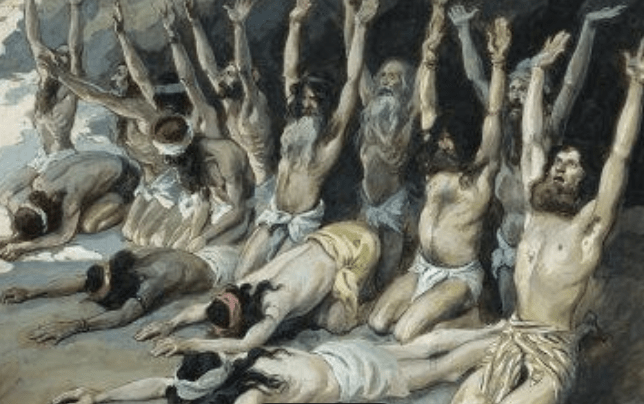
Troop after troop is floored by the presence of a mighty God. Finally, Saul decides to intervene. Why isn’t David in custody? Saul intends to find out; when he steps into the prophet’s presence. When this happens, Saul falls under the very presence of God and encounters the Lord. 

And really, we must understand that Saul comes under the influence of God but refuses to surrender. Isn’t this the epitome of his life? He may understand, but Saul refuses to surrender and to yield and submit to the Lord God. 

That’s what God does to His rebellious and disobedient children. 

For rebellion is as the sin of witchcraft, and stubbornness is as iniquity and idolatry. Because thou hast rejected the word of the Lord, He hath also rejected thee from being king.

1 Samuel 15:23

Saul does this every time.

Evil Carries a Spear

1 Samuel 19:8-10, NLT 

There are things in this passage that I don’t fully understand. I will try to share what little I do know. Let’s have a go at it. 

If I could, I would get out my X-Acto Knife and carefully cut out verse 9, I would do it. The very idea that the Lord would send “a harmful spirit” to come to Saul is hard to grasp. Perhaps we need to recognize that after his sin, sparing Agag in 1 Sam. 15:20, nothing good is ever spoken of Saul in scripture. 

Sin develops over time. Nothing is a mere trifle or insignificant. 

Saul’s sin metastasizes, and any real repentance becomes impossible. This is sobering. And scary. It’s no wonder we’re warned repeatedly to renounce our sin. At this point Saul comes under the direct influence of evil powers. His continued disobedience becomes his very character. 

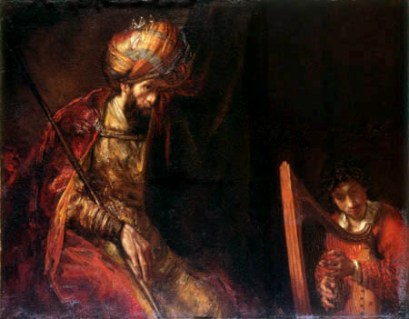
Saul sits with his spear in hand, and David, his arch enemy, stands before Saul playing the harp. Instead of being comforted, he becomes murderous. It seems he cannot control himself. And with that spear Saul throws it at David, and Saul intends to “pin David to the wall.” 

Somehow David eludes it, and escapes into the night. 

Some of this seems logical and understandable. The “good” escapes; but the evil in the heart of Saul remains. From this point on, Saul is basically “unreachable.” He becomes full of darkness. 

And without God’s Holy Spirit convicting and leading us through our own sin, we too will destroy ourselves. The lesson of Saul’s repeated rebellion should terrify the believer who wants to follow Jesus. Let’s not trifle with sin; if not dealt with will also destroy us. 

 Andrew Murray 

Overcoming With an Opposite Spirit

1 Samuel 18:17-19 

Saul’s deceit is now effective. His heart wants to manipulate David; he wants to destroy him. As I read this portion, I’m struck by Saul’s evil. He wants David dead but is unwilling to do this sin on his own. He wants the ungodly Philistines to do this dirty deed. 

He falsely believes that David’s success is based on his military prowess. He thinks the skill of David militarily acumen is secular and superb. But it isn’t. David’s ability is grace. A gift of God to men. It really can’t be explained otherwise. 

Saul was a man bereft of the Spirit of God. 

I don’t think otherwise. Saul discovers his “kryptonite.” It is his denial of the belief of God’s presence on a simple man. Maybe he knows, but he also understands that something has changed; Saul has lost the anointing of the Lord. 

Saul has lost his way. And now he resorts to the human way of thinking. 

David is on a completely wavelength. In verse 18 he shows the humility and meekness of a heart that is saturated with God’s residence. I believe that this is called “overcoming with an opposite spirit.” I don’t think you can see this any other way. 

God is using David to communicate to us His heart. David’s humility is something built inside; He responds in an innocence that is seldom seen. He was sincere; what you see is what you get. 

David responds with a heartfelt love for Saul. David is totally sincere, and he responds reveals God’s heart toward Saul. (If only King Saul would listen to God. But that wasn’t going to happen.) 

The marriage between David and Merab was just pretense. Saul stepped in and blocked it; he would never allow David’s ascendance into the royal line.  

Something significant, I think. David still has his harp. He worships himself through this morass. That worship sustains him. When David plays, it’s a level of protection from his enemies. 

A word about “overcoming with an opposite spirit.” 

Faith does some amazing things in a simple believer’s heart. We must (incessantly) respond to evil in the way of David. He shows us how. 

Much could be said about how we interpret this passage, and yet I keep focusing upon David’s humility here. But the work is His. And we must see this insight of a man who is giving himself to the ways of God, even in the tumult of the moment, David rests in the Lord.

This will test the heart of David.

“The Battle is the Lords”

David knew what would happen before it actually did. Most likely it had to do with a faith that understood God, he truly accepted that “the battle was/is the Lord’s. He accepted this.

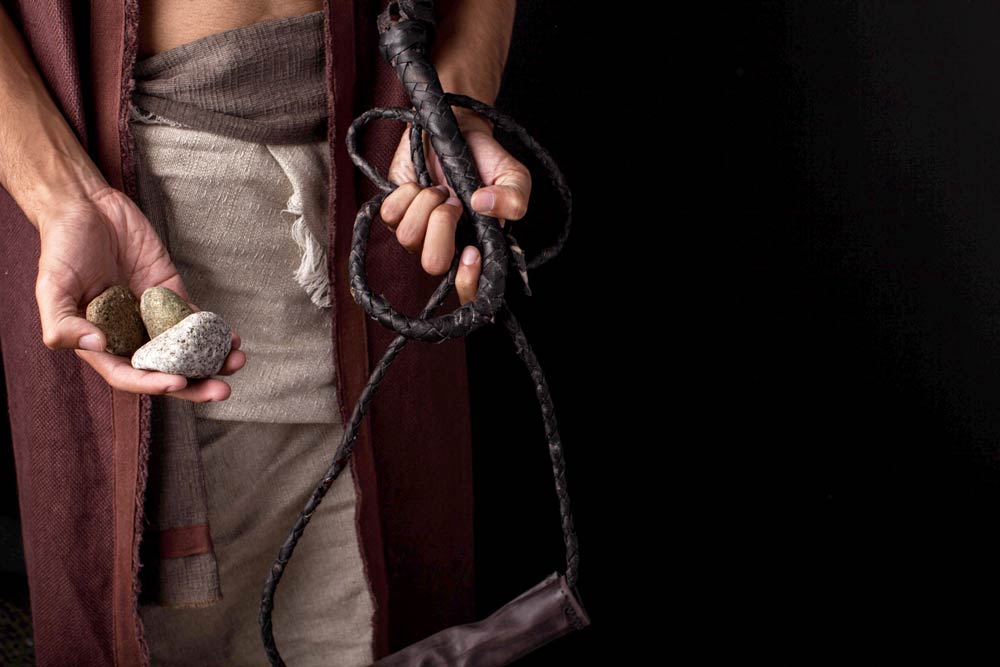
Not only did David see this in Goliath, but notice this in the text, “I will give the dead bodies of the host of the Philistines this day to the birds of the air and to the wild beasts of the earth, that all the earth may know that there is a God in Israel.”

David understood that David would be killed by him, but the entire army would also die that day.

It would be a total victory over the entire Philistine army.

Also, let’s consider this phrase “the battle is the Lord’s. David says this and establishes something each believer must embrace today. We live in a war that Satan has instigated. Each of us must know exactly what we’re up against. A killer, and a destroyer of people!

Check this out:

“The thief comes only to steal and kill and destroy. I came that they may have life and have it abundantly.” John 10:10

(Notice Jesus’ ministry on us though in this “wonderful” verse.)

Let’s go back to David. It seems when he was good he was very good, but if we’re to be honest, when he was bad, he was very bad. (But forgiven.) Now I don’t understand what you think about all of this. But he did repent, and he was pardoned.

The Smear of the Holy Spirit

I’d like to step back a little. Something quite significant happened when the boy David was anointed by the prophet Samuel. David the shepherd boy had been divinely chosen to become the future king of Israel.

Why two, not exactly sure. Maybe the first was done privately, but the second was done publicly. The first was for the boy, David, and his family. The second was done openly in front of the nation.

When David the boy was anointed by Samuel it gave him the power and strength to face Goliath. That first event was one of consecration for it gave David confidence and awareness of his destiny. He now operated with a new awareness that the sovereign God was now with him.

A.W. Tozer

I believe that these anointings gave David the awareness of the Father’s special presence to be bold and confident. The second anointing not only placed him as king but also assured the people that David was different. People needed to know that this new king had God’s special touch.

Later on David would sin greatly with Bathsheba and Uriah. Sin diminishes the anointing. Compromising with sin does this; it always drains away God’s favor. (We need to understand this.) David would lose much by turning away from his calling.

That is why Psalm 32 and 51 are quite critical in his (and God’s eyes). David frittered away God’s special touch, but he would regain it by his deep repentance.

Psalm 53:10-11

He Had God’s Heart

What kind of heart does God have? I suppose that should be our starting point to where this blog is going. Since we must start somewhere. I suspect 1 Samuel 13 declares one of the first references to David’s story. 

In this passage the prophet is confronting Saul, the king. We see Samuel declaring that Saul, is rejected, and another is going to be anointed. Saul is extremely disturbed, but this is the firm will of God. 

What does it really mean “to be a man after God’s own heart?” 

  • Ordering Your Life with God’s Will: Passionately desire to do what God wants. 
  • A Broken and Repentant Heart: When sinning, they do not deny or make excuses, but sincerely confess, as shown in Psalm 51. 
  • Dependence & Faith: Relying completely on God, not on one’s own strength, work and effort. This trust in Him is wisdom that discerns. 
  • Worship, Prayer and Praise: A heart that consistently praises and thanks God, regardless of circumstances. A heart that wants to be closer to God. 
  • Deep Love for God: Valuing God’s presence and character above position, power, or personal desire. He is not ashamed of serving God openly.