A Plan to Understand Saul

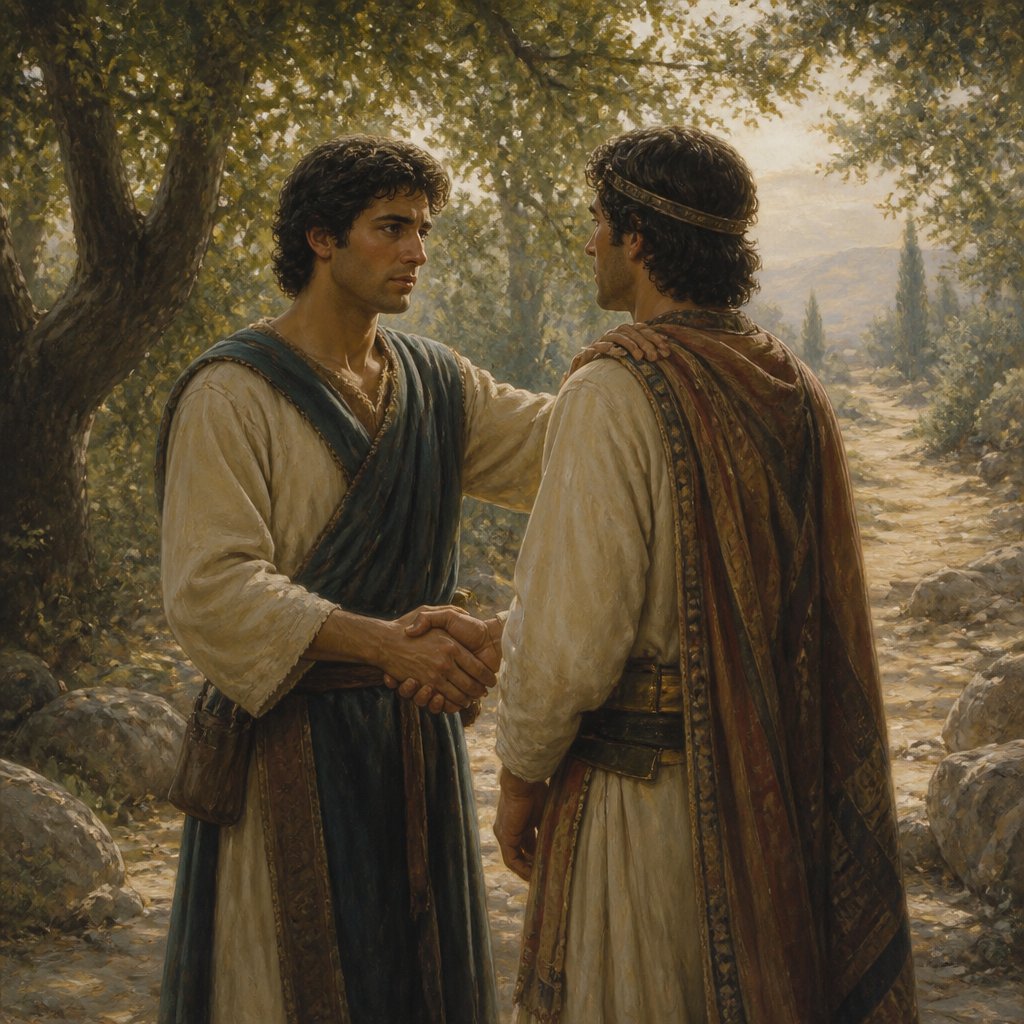
This entire scene is a bit strange. David and Jonathan meet; they are careful as they should be. David is hiding and I strongly suspect that David is discouraged. He has done nothing wrong—quite the opposite. David suspects that king Saul’s bitterness and jealousy, and bitterness are out of control. Saul intends to murder David. The entire story is found in 1 Samuel 20:5-23.  

“Tomorrow, we celebrate the new moon festival. I’ve always eaten with the king on this occasion, but tomorrow I’ll hide in the field and stay there until the evening of the third day. If your father asks where I am, tell him I asked permission to go home to Bethlehem for an annual family sacrifice. If he says, ‘Fine!’ you will know all is well. But if he is angry and loses his temper, you will know he is determined to kill me.” 

1 Samuel 20:5-7 

These verses reveal David’s plan. They describe a maneuver that will reveal Saul’s heart toward David: will it be reinstatement or will it be murder? Obviously, David must find out. Will he continue to run and evade death or will he be restored? He obviously must know. 

David has no idea, but he has a plan to find out for sure. 

But let’s switch to Jonathan as he will be David’s eyes and ears into the banquet room. David will rely on the report of Jonathan, one way or the other. The plan is carefully made, and it seems like a wise one. Obviously, it involves Jonathan’s participation.   

“Jonathan’s response to David’s discouragement wasn’t theological rebuke but practical help; he offered concrete assistance to a friend walking through despair, modeling genuine support.” -David Guzik 

Jonathan only asks for a promise from David. (Which David fulfills later to Mephibosheth in 2 Samuel 9). He asks that, “If I am still alive, show me the steadfast love of the Lord, that I may not die; 15 and do not cut off your steadfast love from my house forever, when the Lord cuts off every one of the enemies of David from the face of the earth.” 

Jonathan reminds David of their covenant together after the slaying of Goliath. There’s now a political element added: David will need to protect the house of Jonathan, his heirs.  

It is Jonathan and not Saul who understands God’s heart. 

It is Jonathan’s humility that makes the whole plan work. There seems to be no guile here; he understands what the Lord wants to do. Many believers want to be a “David,” but it is Jonathan that seems to show more integrity, decency and honor. 

Jonathan proves that he is a man of integrity, and he asks that David be one also. It’s Jonathan that models that deep decency to the heart of David. 

This plan will reveal Saul’s motives; it’s designed to uncover his heart. That’s what the Holy Spirit does. David must know; his life depends on it. Jonathan is key to David’s survival and he must trust him. He depends on him to “pull off” this off. This strategy will determine David’s next step. 

I believe David still praises God.

I believe David still writes and sings. Worship is in his blood, and even if he sits on a knife’s edge, David praises Jehovah even if it seems illogical. 

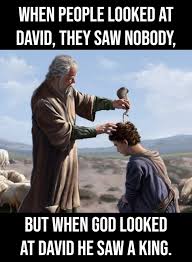
God has anointed Davd and nothing has changed; when Samuel poured oil on his head it became the evidence of the Lord’s choice, blessing and approval. David’s calling was a done deal. David worships. 

    Rick Warren

Overcoming With an Opposite Spirit

1 Samuel 18:17-19 

Saul’s deceit is now effective. His heart wants to manipulate David; he wants to destroy him. As I read this portion, I’m struck by Saul’s evil. He wants David dead but is unwilling to do this sin on his own. He wants the ungodly Philistines to do this dirty deed. 

He falsely believes that David’s success is based on his military prowess. He thinks the skill of David militarily acumen is secular and superb. But it isn’t. David’s ability is grace. A gift of God to men. It really can’t be explained otherwise. 

Saul was a man bereft of the Spirit of God. 

I don’t think otherwise. Saul discovers his “kryptonite.” It is his denial of the belief of God’s presence on a simple man. Maybe he knows, but he also understands that something has changed; Saul has lost the anointing of the Lord. 

Saul has lost his way. And now he resorts to the human way of thinking. 

David is on a completely wavelength. In verse 18 he shows the humility and meekness of a heart that is saturated with God’s residence. I believe that this is called “overcoming with an opposite spirit.” I don’t think you can see this any other way. 

God is using David to communicate to us His heart. David’s humility is something built inside; He responds in an innocence that is seldom seen. He was sincere; what you see is what you get. 

David responds with a heartfelt love for Saul. David is totally sincere, and he responds reveals God’s heart toward Saul. (If only King Saul would listen to God. But that wasn’t going to happen.) 

The marriage between David and Merab was just pretense. Saul stepped in and blocked it; he would never allow David’s ascendance into the royal line.  

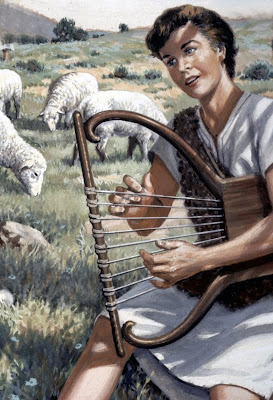
Something significant, I think. David still has his harp. He worships himself through this morass. That worship sustains him. When David plays, it’s a level of protection from his enemies. 

A word about “overcoming with an opposite spirit.” 

Faith does some amazing things in a simple believer’s heart. We must (incessantly) respond to evil in the way of David. He shows us how. 

Much could be said about how we interpret this passage, and yet I keep focusing upon David’s humility here. But the work is His. And we must see this insight of a man who is giving himself to the ways of God, even in the tumult of the moment, David rests in the Lord.

This will test the heart of David.

An Irrational Fear

1 Samuel 18:12-16 

This account is saturated with Saul’s fear. He dreads David’s success, and he’s terrified by it. Saul wants David dead. Obviously, the spears didn’t work. David was not dead. 

I suspect that Saul was not only disturbed by David’s success, but more importantly he no longer had the presence of God. Saul was uncomfortable around David. Afraid, and that fear now motivates him to hate, and also throw spears. He wanted to murder David. 

David must now have to face a new “Goliath.” 

He innately understood this. And what must he do to defuse this? Israel loved David, and that was a good thing, but it was also difficult. The praise of the people only stirred up Saul. That was very dangerous. David has now become a target. 

I think that when God took His presence away it only accelerated the destruction of Saul. “Nature abhors a vacuum,” and if God withholds Himself nothing but jealousy would control him. Murder was now free to rule Saul.

Saul now has an intimate understanding of being afraid.

Decapitating the Monster

1 Samuel 17:51-54, NKJV

The war has been decided, Goliath is quite dead. The shepherd boy David has killed him, and the “coup de grace’ is when he chops the head of his (or, God’s) enemy.

There’s a finality about it all. When David raises up the severed head, the Philistines run. They understand that it was God who has given the victory to the army of Israel. They weren’t fighting against them, they were fighting against the Lord God.

I believe that the “battle is the Lords.”

As believing Christians, we’re starting to understand that we live in battle–a war has developed around us. It came about when we committed ourselves to walk in the grace of God. The enemy understands, even before we do. It’s the believer that is a threat.

We are dangerous to Satan, a very real threat to his kingdom.

Clothed in God’s grace, and wearing His “invisible” armor, we stand like David before Goliath. Our faith in the living God will always give us the victory. I believe that it was the Lord who guided the stone that was slung from David’s sling.

We must step out in faith–the victory is ours, and God guides the rock.

R.A. Torrey

“The Battle is the Lords”

David knew what would happen before it actually did. Most likely it had to do with a faith that understood God, he truly accepted that “the battle was/is the Lord’s. He accepted this.

Not only did David see this in Goliath, but notice this in the text, “I will give the dead bodies of the host of the Philistines this day to the birds of the air and to the wild beasts of the earth, that all the earth may know that there is a God in Israel.”

David understood that David would be killed by him, but the entire army would also die that day.

It would be a total victory over the entire Philistine army.

Also, let’s consider this phrase “the battle is the Lord’s. David says this and establishes something each believer must embrace today. We live in a war that Satan has instigated. Each of us must know exactly what we’re up against. A killer, and a destroyer of people!

Check this out:

“The thief comes only to steal and kill and destroy. I came that they may have life and have it abundantly.” John 10:10

(Notice Jesus’ ministry on us though in this “wonderful” verse.)

Let’s go back to David. It seems when he was good he was very good, but if we’re to be honest, when he was bad, he was very bad. (But forgiven.) Now I don’t understand what you think about all of this. But he did repent, and he was pardoned.

David Faces Goliath

David Kills Goliath

1 Samuel 17:48-51

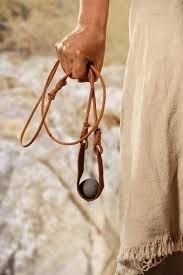
He moved in to attack. David had no sword, no shield. It was just him, and this monster from Philistia. He entered this valley, and he had nothing. Well, he did have his sling.

There was no one else from the Israelite who would engage the giant. No one but David. All were frightened, and yet all watched David step up. Keep in mind that Goliath blasphemed God, and even that didn’t matter. It seemed to have no effect. This was an army of cowards.

David was a man of faith.

He stepped out with courage and confidence, actually running to meet Goliath. And Goliath ran out to attack him. From the story of David and Goliath, we can learn that the God we serve is capable of defeating any of the giants in our lives—fear, depression, financial issues, doubts of faith—if we know Him and His nature well enough to step out in faith. When we do not know what the future holds, we have to trust Him. 

David becomes a vote of faith even for us today When he slung that rock he became our example. And we definitely need that.

“My attitude was and still is like that of David, who was ashamed that the armies of Israel would tremble before Goliath. Without hesitation he stepped forward with complete confidence in the God who had proven Himself to be faithful (1 Sam 17). For David, the size of the giant was irrelevant.”

David Hunt

Lions and Bears

He looked straight in the eyes of the predator. Lions and bears would be faced down, and the lamb would be freed.

David understood his duty to protect. When he encountered predators he didn’t retreat, rather he faced them down. He protected the flock, even if the bear or the lion attacked his flock. Perhaps David was being trained to be king?

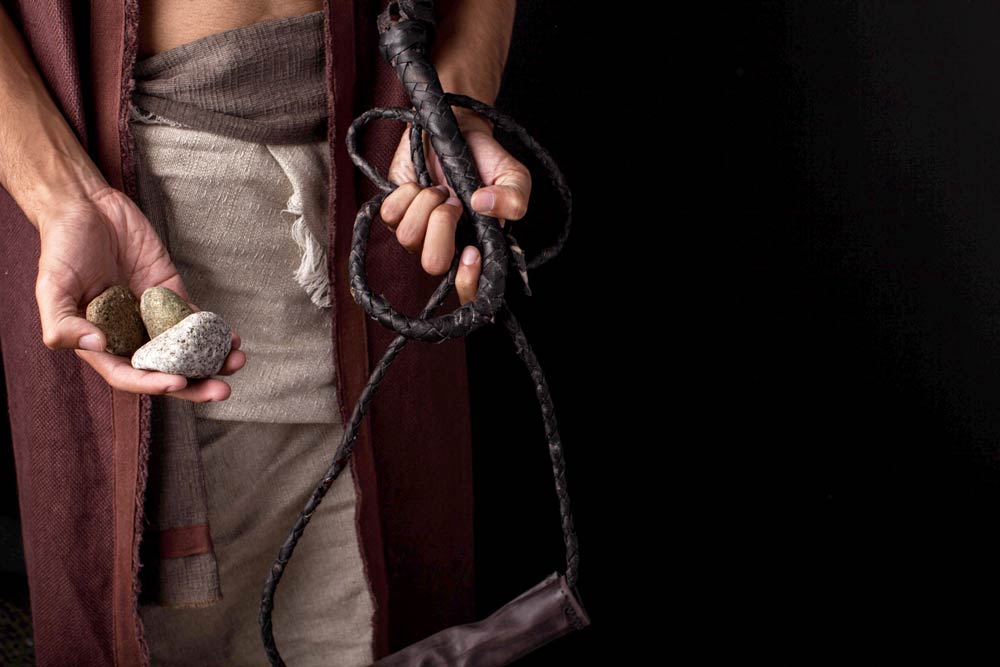
David carried two weapons. He had a cudgel, a hard stick designed to be a club. He also carried a sling, that could be accurate to 100 yards. He most likely trained with both, until he became lethal. Nothing was left to chance or luck.

In the future, David would face Goliath, and he would be ready.

What David faced down is a clear statement of our own situation. Those around us, family maybe or more, are being attacked by the enemy. He comes and wants to seize them. We must stand in this if we want to rescue them.

We must use the weapons that have been assigned to us.

If we resist and attack, we may overcome the predators, and drive him away. That decision is yours. What you perceive or understand will determine your response, what will you do. Maybe your “rod” or your “sling” will determine the reality of their eternity.

Lions and bears. Both will attack, count on it. Will you be ready, or will you even fight against them?

We dare not minimize their strength, so, we must be ready. So much is riding on us. Will we step up, will we attack the enemy? You must decide what you will do.

Learning to Sing

Sometimes we desperately need to sing. And perhaps we should write down a simple, faltering poem. I would suggest that you not make it public, unless told otherwise. This is just between you and your heavenly Father.

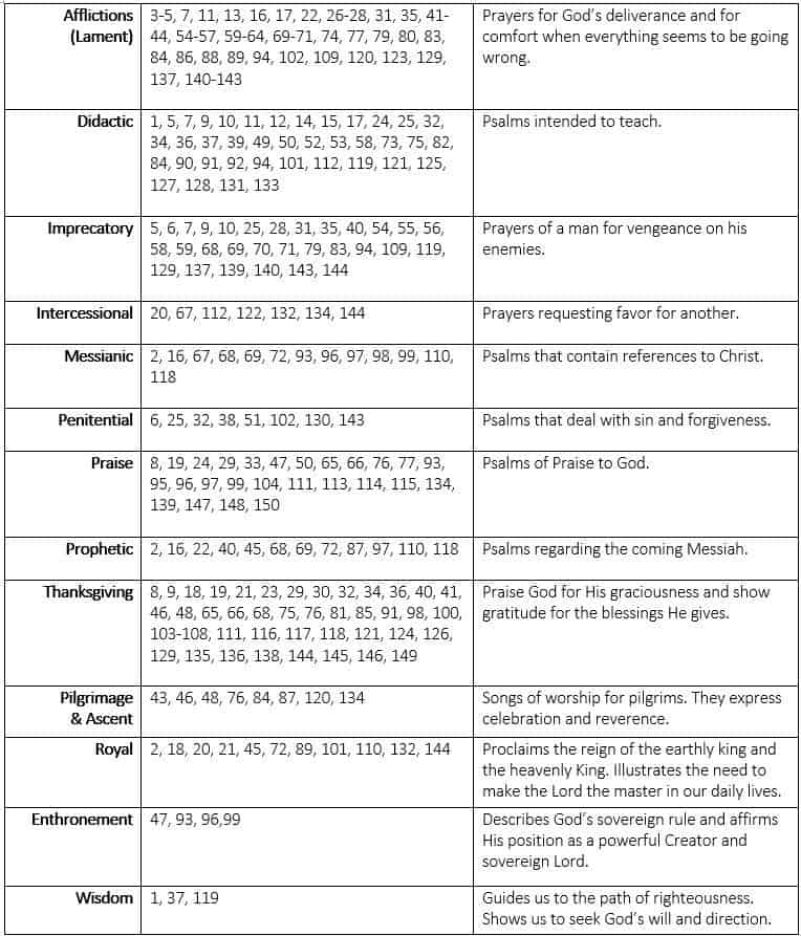
I’m told that David wrote 73 psalms.

These psalms are contextual (that is his experiences). They can be prophetic. They also declare a devotional meaning. Whatever. But one overriding truth is very present: the Holy Spirit infuses David’s words. What he writes is inspired and guided by God Himself.

That is remarkable.

This is David’s best Psalm. I strongly suspect that it was heavily influenced by the sheep, the pasture, and even the predators. I also think loneliness and isolation enabled him to write and sing with such power, and beauty.

Psalm 23 has brought comfort to millions. The sick and dying, the captive and prisoner, believer and non-believer have found profound consolation from David’s simple words.

23 The Lord is my shepherd;
I shall not want.
He makes me to lie down in green pastures;
He leads me beside the still waters.
He restores my soul;
He leads me in the paths of righteousness
For His name’s sake.

Yea, though I walk through the valley of the shadow of death,
I will fear no evil;
For You are with me;
Your rod and Your staff, they comfort me.

You prepare a table before me in the presence of my enemies;
You anoint my head with oil;
My cup runs over.
Surely goodness and mercy shall follow me
All the days of my life;
And I will dwell in the house of the Lord
Forever.

A Boy is Anointed

1 Samuel 12:12-13 

He was just a boy. The youngest, a mere 24/7 shepherd of a little flock in backwater, blue-collar Bethlehem. David brought nothing to the table, except a heart that God had chosen. I think the prophet Samuel was as shocked as anyone, as he closely examined the 7 brothers, one by one. 

“For the Lord sees not as man sees: man looks on the outward appearance, but the Lord looks on the heart.” (v. 7) 

But it wasn’t a logical choice, it was not rational. But it was God’s, and Samuel obeyed the Voice, for he was very obedient. It soon will become apparent to all Israel that God had made a very good choice. 

I must point out in this story something you may have (or haven’t) heard. It’s something done for every believer. 

“For we know, brothers loved by God, that he has chosen you.” 

1 Thess. 1:4 

He chose you! And if that isn’t enough, this verse declares that He LOVES you! “The phrase beloved by God was a phrase which the Jews applied only to supremely great men like Moses and Solomon, and to the nation of Israel itself. Now the greatest privilege of the greatest men of God’s chosen people has been extended to the humblest of the Gentiles.” William Barclay 

Do you understand? You have been selected from billions of others, His choice, made of agape love. He has anointed you with His Holy Spirit. Like David, who returned to his very routine “sheep-watching,” he walked away spiritually altered by his encounter with the oil of Samuel. 

You also have been altered. Like the scruffy grimy boy David, when the Holy Spirit comes, nothing will ever be the same. History has been changed 

I know this. You are now His. Selah. 

A Grinding Humility

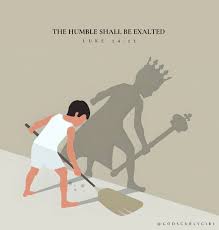
Luke 14:11

David was the eighth and youngest son of Jesse. They lived in Bethlehem and David served his father by tending his sheep. Like Moses, David learned the skills from life as a shepherd. He wasn’t valued by his family. He lived out in the field and simply did whatever he was told.

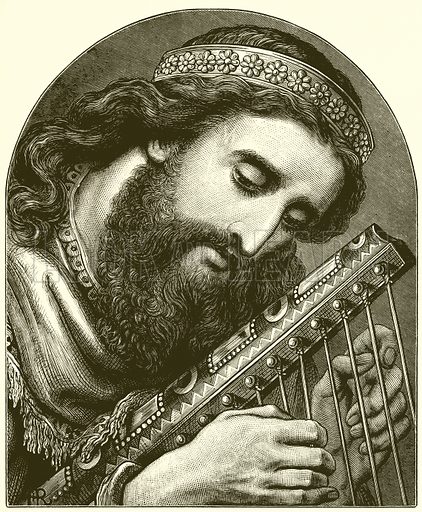
A diversion for young David was to sit and play a lyre. It calmed the sheep, and gave himself something to break the blind-numbing boredom of watching over a flock. He also learned the sling, punching rocks at targets both near and far. He got really good at both.

These things will determine David’s role as a king, and a shepherd of the nation of Israel.

But these are humble acts which seem small at best. And yet, given time, they will grow and will become the very basic foundations of a good king. Being a shepherd and protecting the flock is exactly what God wants. He seeks out those who have His heart.

Just perhaps this is what it really means to be a pastor, an elder, or a deacon. May we look to those who love the flock, and who can throw a stone or two.

John Stott

He Had God’s Heart

What kind of heart does God have? I suppose that should be our starting point to where this blog is going. Since we must start somewhere. I suspect 1 Samuel 13 declares one of the first references to David’s story. 

In this passage the prophet is confronting Saul, the king. We see Samuel declaring that Saul, is rejected, and another is going to be anointed. Saul is extremely disturbed, but this is the firm will of God. 

What does it really mean “to be a man after God’s own heart?” 

  • Ordering Your Life with God’s Will: Passionately desire to do what God wants. 
  • A Broken and Repentant Heart: When sinning, they do not deny or make excuses, but sincerely confess, as shown in Psalm 51. 
  • Dependence & Faith: Relying completely on God, not on one’s own strength, work and effort. This trust in Him is wisdom that discerns. 
  • Worship, Prayer and Praise: A heart that consistently praises and thanks God, regardless of circumstances. A heart that wants to be closer to God. 
  • Deep Love for God: Valuing God’s presence and character above position, power, or personal desire. He is not ashamed of serving God openly.