
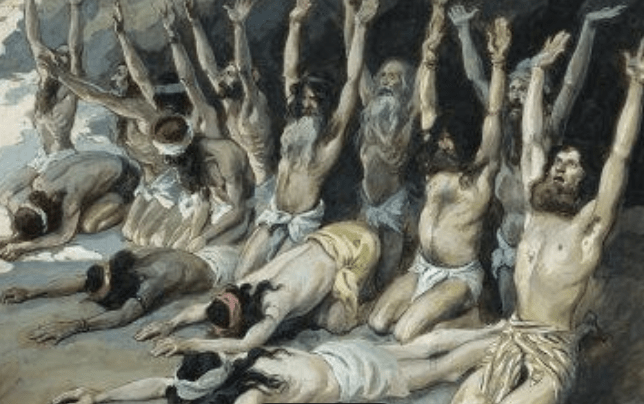
In an odd scene in the life of King Saul is recorded in 1 Samuel 19:18–24, where Saul, enraged, sends soldiers to capture David. Three groups are overpowered by the Holy Spirit, and each group begins prophesying instead of arresting David. Finally, a frustrated Saul himself goes to Ramah, and there he too is overcome by the Spirit:
“He tore off his clothes and lay naked on the ground all day and all night, prophesying in the presence of Samuel. The people who were watching exclaimed, “What? Is even Saul a prophet?”
1 Samuel 19:18-24
“Influence Without Surrender” is one of the better ways to explain this strange passage. Even after several readings, this seems to be the best interpretation. Saul (and three groups of soldiers) come under “the influence” of the Holy Spirit and are prevented from capturing David.
God proactively intervenes in the life of His anointed one.
David must have been in shock. God defends him in an astonishing way, but in a manner that amazed the onlookers. And David was learning what God was really like. When the Lord goes to battle, anything can happen. In His powerful sovereignty, God decides the weapons He will use. In Saul’s case, the prophetic works perfectly.
Troop after troop is floored by the presence of a mighty God. Finally, Saul decides to intervene. Why isn’t David in custody? Saul intends to find out; when he steps into the prophet’s presence. When this happens, Saul falls under the very presence of God and encounters the Lord.
And really, we must understand that Saul comes under the influence of God but refuses to surrender. Isn’t this the epitome of his life? He may understand, but Saul refuses to surrender and to yield and submit to the Lord God.
That’s what God does to His rebellious and disobedient children.
For rebellion is as the sin of witchcraft, and stubbornness is as iniquity and idolatry. Because thou hast rejected the word of the Lord, He hath also rejected thee from being king.
1 Samuel 15:23
Saul does this every time.
Please understand. God “is longsuffering toward us, not willing that any should perish, but that all should come to repentance.” (2 Peter 3:9.)