
Evil Carries a Spear

1 Samuel 19:8-10, NLT 

There are things in this passage that I don’t fully understand. I will try to share what little I do know. Let’s have a go at it. 

If I could, I would get out my X-Acto Knife and carefully cut out verse 9, I would do it. The very idea that the Lord would send “a harmful spirit” to come to Saul is hard to grasp. Perhaps we need to recognize that after his sin, sparing Agag in 1 Sam. 15:20, nothing good is ever spoken of Saul in scripture. 

Sin develops over time. Nothing is a mere trifle or insignificant. 

Saul’s sin metastasizes, and any real repentance becomes impossible. This is sobering. And scary. It’s no wonder we’re warned repeatedly to renounce our sin. At this point Saul comes under the direct influence of evil powers. His continued disobedience becomes his very character. 

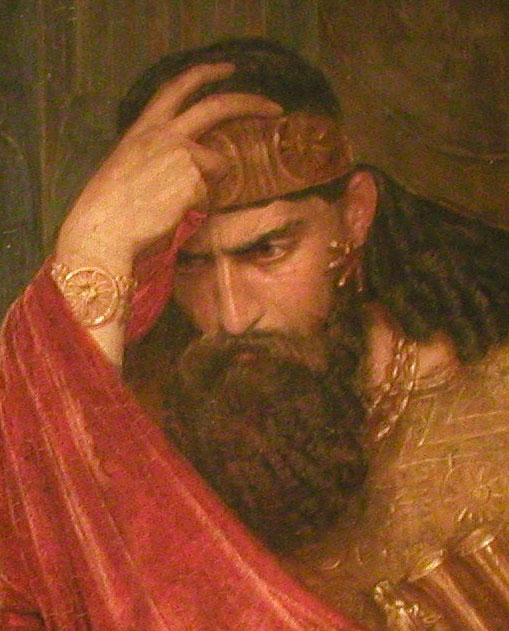
Saul sits with his spear in hand, and David, his arch enemy, stands before Saul playing the harp. Instead of being comforted, he becomes murderous. It seems he cannot control himself. And with that spear Saul throws it at David, and Saul intends to “pin David to the wall.” 

Somehow David eludes it, and escapes into the night. 

Some of this seems logical and understandable. The “good” escapes; but the evil in the heart of Saul remains. From this point on, Saul is basically “unreachable.” He becomes full of darkness. 

And without God’s Holy Spirit convicting and leading us through our own sin, we too will destroy ourselves. The lesson of Saul’s repeated rebellion should terrify the believer who wants to follow Jesus. Let’s not trifle with sin; if not dealt with will also destroy us. 

 Andrew Murray 

Saul Hates David

1 Samuel 18:28-30 

David was fighting two battles at once. He had to face King Saul’s hostility, and the ongoing war with the Philistine’s army. I suppose that it was a tremendous drain. After the battle he came home and found nothing but jealousy and anger. 

Saul was very afraid of David. 

Fear like this turned into deep seated malevolence and hatred. Despite his tremendous success he, upon returning home, found zero recognition. To many he was a hero, but to Saul he was despised and detested. And again, Saul was deeply afraid of David. 

Fear accomplishes nothing. Fear only destroys. 

Saul was in a spiritual downward spiral. It was just a matter of time before the end. King Saul had become evil. God’s Spirit had left him, and he was nothing more than a shell, vacant and empty of anything good. Perhaps David was grieved to see the king turn into something unrecognizable and dark. 

David had been anointed as the next king. 

The prophet’s word had been spoken. There would be resistance and hostility which seemed to contradict this prophecy. David would soon discover the enemies battle against what God had declared. (But what choice did he have?) 

God’s declaration of David’s anointing didn’t matter to Saul. He would continue the path he had chosen. David would continue to find success against the Philistines.

David Guzik 

BFF: A Covenant Between Brothers

I Samuel 18:1-4 

It seems that Saul met with David immediately after the altercation with Goliath, a sort of debriefing. I can still see David carrying the decapitated head of the Philistine warrior. It would’ve been a bloody sight. 

After this meeting with Saul, he was no longer just a shepherd; David was now a warrior. 

There is something else–a new development, a commitment, or a covenant between David and Jonathan. Something significant happened there, and like most matters of the heart, it was difficult to explain. Some might think it was erotic, but that sullies and distorts this relationship. No, it was far more than that. 

Men generally avoid real friendship. In my 65 years I can think of 1-2 similar connections that approach this kind of depth or attachment. Almost all of my friends are more or less superficial. I rarely press beyond this. Maybe it’s kind of scary? 

David was anointed by Samuel to be the next king. He had been chosen to wield the power and authority of Israel with humility and grace. David knew it, but Jonathan saw it. 

I believe that Jonathan’s calling was perhaps more difficult: he had to yield the throne to David. Jonathan had to renounce ambition and pride. He would turn his back on his ego and drive. He would never be king. (Some would destroy themselves before we did this.) 

The text reveals some of the “covenant love” between these two men. Jonathan sheds off the trappings of his identity and gives them to David. In doing so, David is declared to be the future king.  

Jonathan commits to serving David. In his mind he rejects the notion of a hereditary monarchy. Being the king of Israel must be one of anointing, not who your father is. Both men recognize this implicitly. 

Romans 12:10, ESV

The Smear of the Holy Spirit

I’d like to step back a little. Something quite significant happened when the boy David was anointed by the prophet Samuel. David the shepherd boy had been divinely chosen to become the future king of Israel.

Why two, not exactly sure. Maybe the first was done privately, but the second was done publicly. The first was for the boy, David, and his family. The second was done openly in front of the nation.

When David the boy was anointed by Samuel it gave him the power and strength to face Goliath. That first event was one of consecration for it gave David confidence and awareness of his destiny. He now operated with a new awareness that the sovereign God was now with him.

A.W. Tozer

I believe that these anointings gave David the awareness of the Father’s special presence to be bold and confident. The second anointing not only placed him as king but also assured the people that David was different. People needed to know that this new king had God’s special touch.

Later on David would sin greatly with Bathsheba and Uriah. Sin diminishes the anointing. Compromising with sin does this; it always drains away God’s favor. (We need to understand this.) David would lose much by turning away from his calling.

That is why Psalm 32 and 51 are quite critical in his (and God’s eyes). David frittered away God’s special touch, but he would regain it by his deep repentance.

Psalm 53:10-11