Influenced but Without Surrender

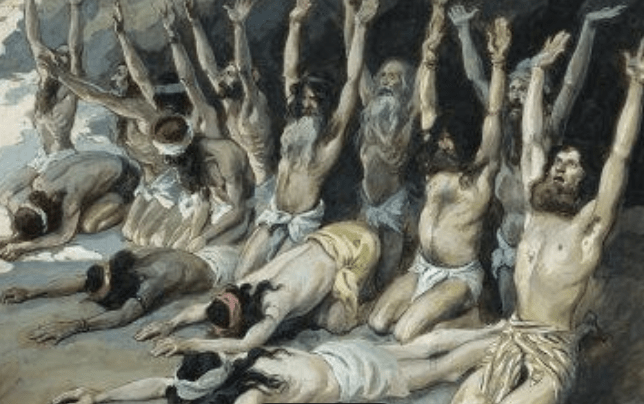
In an odd scene in the life of King Saul is recorded in 1 Samuel 19:18–24, where Saul, enraged, sends soldiers to capture David. Three groups are overpowered by the Holy Spirit, and each group begins prophesying instead of arresting David. Finally, a frustrated Saul himself goes to Ramah, and there he too is overcome by the Spirit: 

1 Samuel 19:18-24 

“Influence Without Surrender” is one of the better ways to explain this strange passage. Even after several readings, this seems to be the best interpretation. Saul (and three groups of soldiers) come under “the influence” of the Holy Spirit and are prevented from capturing David. 

God proactively intervenes in the life of His anointed one. 

David must have been in shock. God defends him in an astonishing way, but in a manner that amazed the onlookers. And David was learning what God was really like. When the Lord goes to battle, anything can happen. In His powerful sovereignty, God decides the weapons He will use. In Saul’s case, the prophetic works perfectly. 

Troop after troop is floored by the presence of a mighty God. Finally, Saul decides to intervene. Why isn’t David in custody? Saul intends to find out; when he steps into the prophet’s presence. When this happens, Saul falls under the very presence of God and encounters the Lord. 

And really, we must understand that Saul comes under the influence of God but refuses to surrender. Isn’t this the epitome of his life? He may understand, but Saul refuses to surrender and to yield and submit to the Lord God. 

That’s what God does to His rebellious and disobedient children. 

For rebellion is as the sin of witchcraft, and stubbornness is as iniquity and idolatry. Because thou hast rejected the word of the Lord, He hath also rejected thee from being king.

1 Samuel 15:23

Saul does this every time.

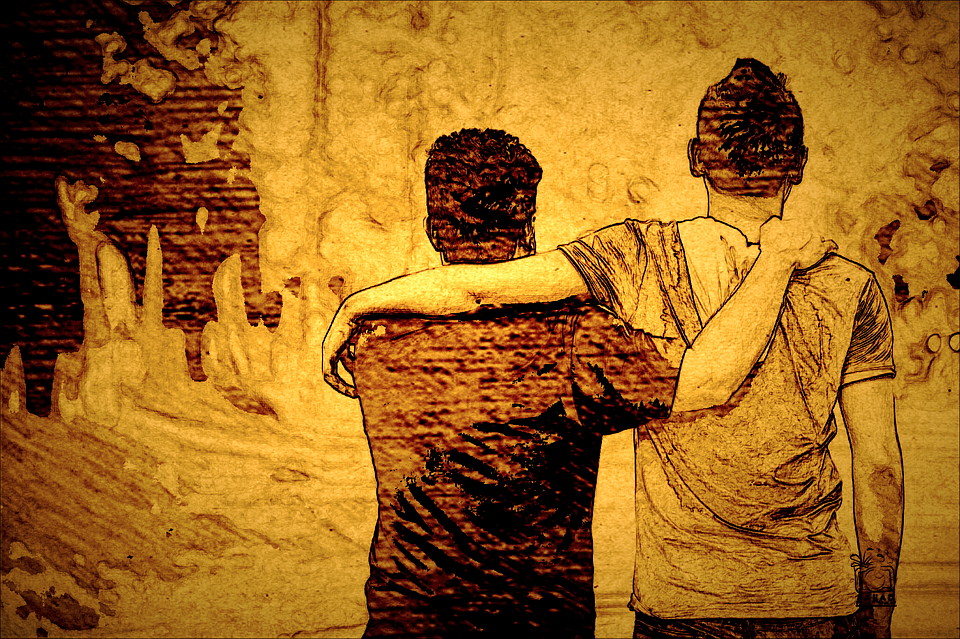
BFF: A Covenant Between Brothers

I Samuel 18:1-4 

It seems that Saul met with David immediately after the altercation with Goliath, a sort of debriefing. I can still see David carrying the decapitated head of the Philistine warrior. It would’ve been a bloody sight. 

After this meeting with Saul, he was no longer just a shepherd; David was now a warrior. 

There is something else–a new development, a commitment, or a covenant between David and Jonathan. Something significant happened there, and like most matters of the heart, it was difficult to explain. Some might think it was erotic, but that sullies and distorts this relationship. No, it was far more than that. 

Men generally avoid real friendship. In my 65 years I can think of 1-2 similar connections that approach this kind of depth or attachment. Almost all of my friends are more or less superficial. I rarely press beyond this. Maybe it’s kind of scary? 

David was anointed by Samuel to be the next king. He had been chosen to wield the power and authority of Israel with humility and grace. David knew it, but Jonathan saw it. 

I believe that Jonathan’s calling was perhaps more difficult: he had to yield the throne to David. Jonathan had to renounce ambition and pride. He would turn his back on his ego and drive. He would never be king. (Some would destroy themselves before we did this.) 

The text reveals some of the “covenant love” between these two men. Jonathan sheds off the trappings of his identity and gives them to David. In doing so, David is declared to be the future king.  

Jonathan commits to serving David. In his mind he rejects the notion of a hereditary monarchy. Being the king of Israel must be one of anointing, not who your father is. Both men recognize this implicitly. 

Romans 12:10, ESV

“The Battle is the Lords”

David knew what would happen before it actually did. Most likely it had to do with a faith that understood God, he truly accepted that “the battle was/is the Lord’s. He accepted this.

Not only did David see this in Goliath, but notice this in the text, “I will give the dead bodies of the host of the Philistines this day to the birds of the air and to the wild beasts of the earth, that all the earth may know that there is a God in Israel.”

David understood that David would be killed by him, but the entire army would also die that day.

It would be a total victory over the entire Philistine army.

Also, let’s consider this phrase “the battle is the Lord’s. David says this and establishes something each believer must embrace today. We live in a war that Satan has instigated. Each of us must know exactly what we’re up against. A killer, and a destroyer of people!

Check this out:

“The thief comes only to steal and kill and destroy. I came that they may have life and have it abundantly.” John 10:10

(Notice Jesus’ ministry on us though in this “wonderful” verse.)

Let’s go back to David. It seems when he was good he was very good, but if we’re to be honest, when he was bad, he was very bad. (But forgiven.) Now I don’t understand what you think about all of this. But he did repent, and he was pardoned.

David Faces Goliath

David Kills Goliath

1 Samuel 17:48-51

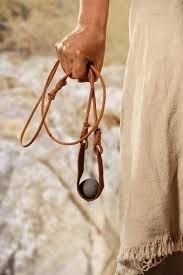
He moved in to attack. David had no sword, no shield. It was just him, and this monster from Philistia. He entered this valley, and he had nothing. Well, he did have his sling.

There was no one else from the Israelite who would engage the giant. No one but David. All were frightened, and yet all watched David step up. Keep in mind that Goliath blasphemed God, and even that didn’t matter. It seemed to have no effect. This was an army of cowards.

David was a man of faith.

He stepped out with courage and confidence, actually running to meet Goliath. And Goliath ran out to attack him. From the story of David and Goliath, we can learn that the God we serve is capable of defeating any of the giants in our lives—fear, depression, financial issues, doubts of faith—if we know Him and His nature well enough to step out in faith. When we do not know what the future holds, we have to trust Him. 

David becomes a vote of faith even for us today When he slung that rock he became our example. And we definitely need that.

“My attitude was and still is like that of David, who was ashamed that the armies of Israel would tremble before Goliath. Without hesitation he stepped forward with complete confidence in the God who had proven Himself to be faithful (1 Sam 17). For David, the size of the giant was irrelevant.”

David Hunt

Learning to Sing

Sometimes we desperately need to sing. And perhaps we should write down a simple, faltering poem. I would suggest that you not make it public, unless told otherwise. This is just between you and your heavenly Father.

I’m told that David wrote 73 psalms.

These psalms are contextual (that is his experiences). They can be prophetic. They also declare a devotional meaning. Whatever. But one overriding truth is very present: the Holy Spirit infuses David’s words. What he writes is inspired and guided by God Himself.

That is remarkable.

This is David’s best Psalm. I strongly suspect that it was heavily influenced by the sheep, the pasture, and even the predators. I also think loneliness and isolation enabled him to write and sing with such power, and beauty.

Psalm 23 has brought comfort to millions. The sick and dying, the captive and prisoner, believer and non-believer have found profound consolation from David’s simple words.

23 The Lord is my shepherd;
I shall not want.
He makes me to lie down in green pastures;
He leads me beside the still waters.
He restores my soul;
He leads me in the paths of righteousness
For His name’s sake.

Yea, though I walk through the valley of the shadow of death,
I will fear no evil;
For You are with me;
Your rod and Your staff, they comfort me.

You prepare a table before me in the presence of my enemies;
You anoint my head with oil;
My cup runs over.
Surely goodness and mercy shall follow me
All the days of my life;
And I will dwell in the house of the Lord
Forever.

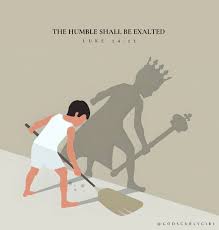
A Grinding Humility

Luke 14:11

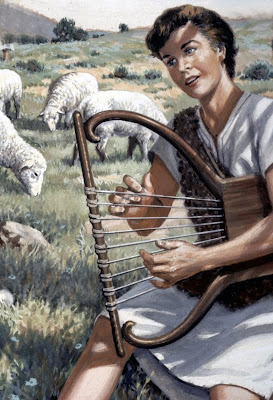
David was the eighth and youngest son of Jesse. They lived in Bethlehem and David served his father by tending his sheep. Like Moses, David learned the skills from life as a shepherd. He wasn’t valued by his family. He lived out in the field and simply did whatever he was told.

A diversion for young David was to sit and play a lyre. It calmed the sheep, and gave himself something to break the blind-numbing boredom of watching over a flock. He also learned the sling, punching rocks at targets both near and far. He got really good at both.

These things will determine David’s role as a king, and a shepherd of the nation of Israel.

But these are humble acts which seem small at best. And yet, given time, they will grow and will become the very basic foundations of a good king. Being a shepherd and protecting the flock is exactly what God wants. He seeks out those who have His heart.

Just perhaps this is what it really means to be a pastor, an elder, or a deacon. May we look to those who love the flock, and who can throw a stone or two.

John Stott

He Had God’s Heart

What kind of heart does God have? I suppose that should be our starting point to where this blog is going. Since we must start somewhere. I suspect 1 Samuel 13 declares one of the first references to David’s story. 

In this passage the prophet is confronting Saul, the king. We see Samuel declaring that Saul, is rejected, and another is going to be anointed. Saul is extremely disturbed, but this is the firm will of God. 

What does it really mean “to be a man after God’s own heart?” 

  • Ordering Your Life with God’s Will: Passionately desire to do what God wants. 
  • A Broken and Repentant Heart: When sinning, they do not deny or make excuses, but sincerely confess, as shown in Psalm 51. 
  • Dependence & Faith: Relying completely on God, not on one’s own strength, work and effort. This trust in Him is wisdom that discerns. 
  • Worship, Prayer and Praise: A heart that consistently praises and thanks God, regardless of circumstances. A heart that wants to be closer to God. 
  • Deep Love for God: Valuing God’s presence and character above position, power, or personal desire. He is not ashamed of serving God openly.