100 Foreskins

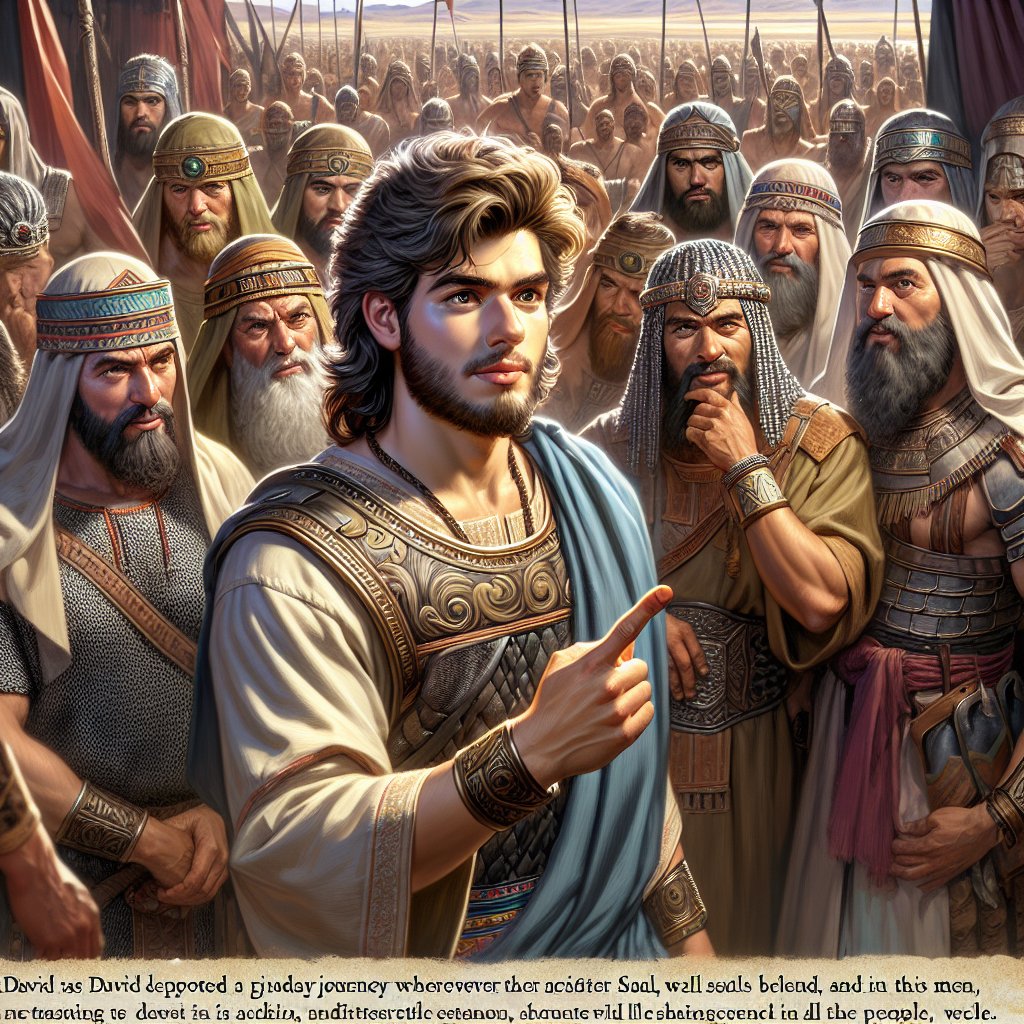
24 When Saul’s men reported this back to the king, 25 he told them, “Tell David that all I want for the bride price is 100 Philistine foreskins! Vengeance on my enemies is all I really want.” But what Saul had in mind was that David would be killed in the fight. 

26 David was delighted to accept the offer. Before the time limit expired, 27 he and his men went out and killed 200 Philistines. Then David fulfilled the king’s requirement by presenting all their foreskins to him. So Saul gave his daughter Michal to David to be his wife. 

28 When Saul realized that the Lord was with David and how much his daughter Michal loved him, 29 Saul became even more afraid of him, and he remained David’s enemy for the rest of his life. 30 Every time the commanders of the Philistines attacked, David was more successful against them than all the rest of Saul’s officers. So David’s name became very famous. 

1 Samuel 18:24-30, NLT 

A snare had been set. King Saul wanted David dead. A trap would destroy him; Saul had the bait, and he also knew that nothing could be traced back to him. David had become very popular, and so Saul had to be very careful. 

Saul had a plan, and yet it seemed it was a good one. 

David was called upon to do what seemed impossible. Saul declared that David was to bring him back 100 “foreskins” taken from the dead Philistines. Now the Philistines had been a terrible problem for the people of Israel. They had been attacking and destroying without any restraint. 

Saul surmised that whether to win or lose, that the David problem would be resolved. If anything, David would be tarnished in the minds of the Philistines. Perhaps a bounty would be placed on David’s head. He would become a “target” and be especially hated. Perhaps this is true? 

But David would ultimately prevail. 

David exceeded and even doubled Saul’s wishes. Instead of just meeting, he doubled what Saul had required. Returning from the battle, he carried 200 of the foreskins back to the king. He returned with not just the minimum but surpassed it. 

Ah yes, the matter of the foreskins. First, we must understand how the Philistines had attacked and harmed Israel. They continued to advance and Israel hadn’t really responded to their continual harassment. Saul understood that many had died and he had no answer to their constant attacks. 

Second, David was a man of his times. Things were brutal and the very survival of Israel demanded a response. Yes, David needed to respond with force. The Philistines needed to know that Israel could return fire with fire. David did this. 

Third, these were dead men. David collected these foreskins from the dead his men had already killed. He didn’t seize the enemy and forced them to endure “surrender” their penises at “gunpoint.” David collected these foreskins from the Philistines that were already dead. 

Now granted this wasn’t perfect or New Testament theology, and yet it was the need of the moment.

War Band Leader

1 Samuel 18:5, NKJV 

David was now part of Saul’s army. The Goliath incident had propelled him into serving as a “man of war” now. The shepherd now led a war band. Saul seems to recognize David’s faith and skill. I don’t believe King Saul recognized exactly who this young man really was. 

The humble shepherd was soon given authority, “over the men of war.” 

David would have known little of the practical aspects of being a leader and the obligations involved. That would need to be earned before it could be appreciated. I really believe that King Saul was quite pleased with David at this point. 

Maybe though Saul’s need was for leadership in the top ranks of his army? We read that, “Now there was a fierce war with the Philistines all the days of Saul. And when Saul saw any strong man or any valiant man, he took him for himself.” (1 Sam. 14:52.) 

Saul saw with his own eyes Goliath being slaughtered. He recognized the audacious faith of the shepherd boy, and the incredible faith it instilled in the Israelite army. Yes, the king knew that David was a prodigy. 

Verse 10 points out what David’s strength was that he “behaved wisely.” In Hebrew is śāḵal, a verb that explains much. It means to be prudent, to have insight or to comprehend, or even to be an alert student. It seems that he grasped all that happened, whether good or bad. 

David understood that he was under the king’s authority. 

The people accepted the young David. The men in Saul’s government also supported David. He was accepted and well received. However, this is going to be a problem in the future. 

Wisdom is the power to see and the inclination to choose the best and highest goal, together with the surest means of attaining it. (JI Packer.)

Proverbs 4:7 

Wearing Armor that Fits You

1 Samuel 17:38-39, see also NLT

I sense that king Saul was worried and scared. Facing Goliath was a man’s job, not for a skinny boy. A defeat would be catastrophic. But the terms offered by Goliath would allow the Philistines total control over Israel. This was unacceptable.

But David had heard Goliath’s bellowing blasphemy, The God of Israel was being challenged and mocked. Something inside of David rose up. God’s honor was at stake.

No one thought that David had a “snowball’s chance in hell.”

In this passage we read that Saul offered David his own armor. Now I don’t know what was going through Saul’s mine–did he feel guilty or embarrassed? Why did he do this?

To allow David the boy to go ahead and fight Goliath was disturbing but David presents his case rather forcibly; he tells of his encounters with bears and lions attacking his flock. (1 Samuel 17:34-36.)

So, what traits is he showing? I think the first is zeal, and then courage, faith, self-sacrifice and righteous anger. But perhaps the most significant (and easily forgotten) is love. He simply loved God, and loved the nation (and armies) of Israel. Love is not always gushy. It’s action. It pushes one to take risks.

As I survey this passage I’m struck by Psalm 23. Most commentators believe this particular Psalm was written previously before this fight with Goliath. It was composed while David was with his flock out in the pasture.

Wearing armor is necessary as a Christian. If you’re a born again believer, then it’s to be a critical part of who you are spiritually. When the apostle Paul writes to the Ephesian believers he pointedly refers to what we’re to wear spiritually when we stand against our personal “Goliath.” I would stress that this isn’t an optional feature.

Ephesians 6:11-12, NLT