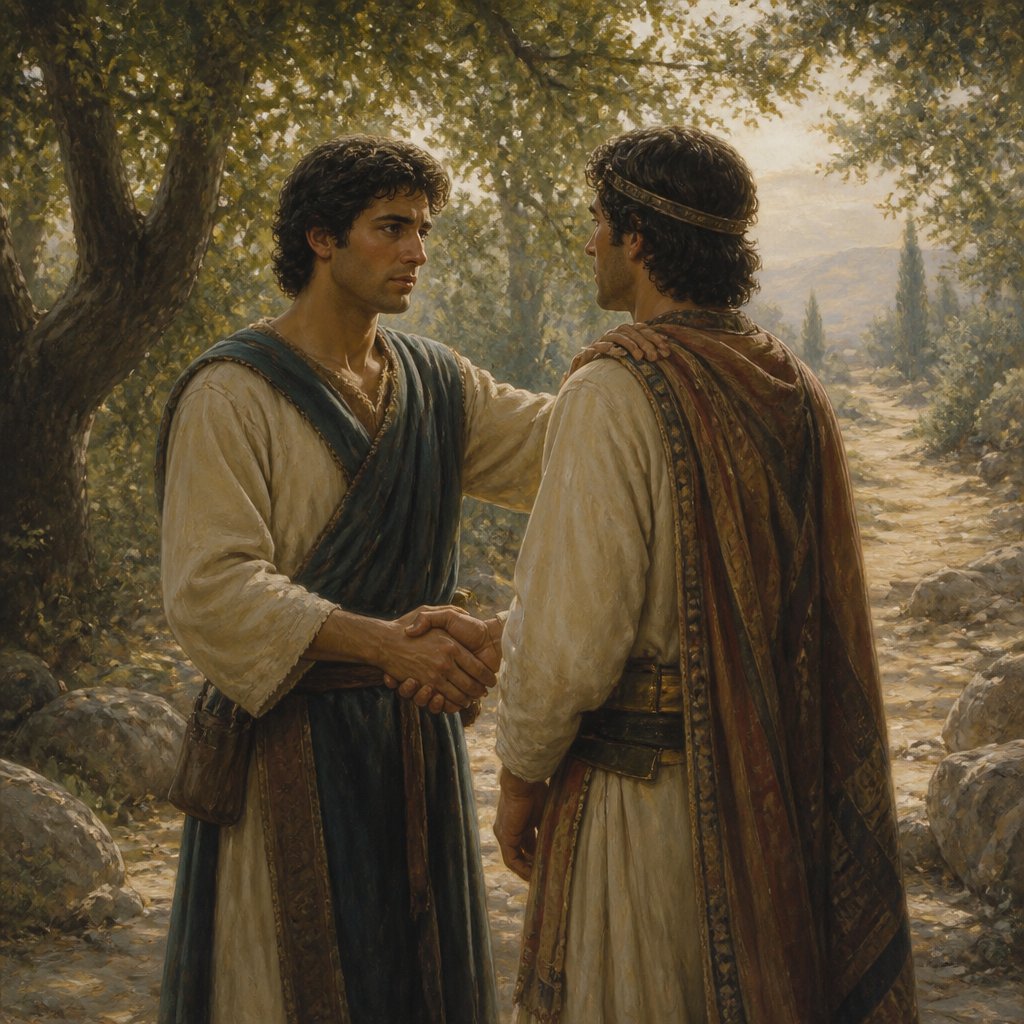
A Plan to Understand Saul

This entire scene is a bit strange. David and Jonathan meet; they are careful as they should be. David is hiding and I strongly suspect that David is discouraged. He has done nothing wrong—quite the opposite. David suspects that king Saul’s bitterness and jealousy, and bitterness are out of control. Saul intends to murder David. The entire story is found in 1 Samuel 20:5-23.  

“Tomorrow, we celebrate the new moon festival. I’ve always eaten with the king on this occasion, but tomorrow I’ll hide in the field and stay there until the evening of the third day. If your father asks where I am, tell him I asked permission to go home to Bethlehem for an annual family sacrifice. If he says, ‘Fine!’ you will know all is well. But if he is angry and loses his temper, you will know he is determined to kill me.” 

1 Samuel 20:5-7 

These verses reveal David’s plan. They describe a maneuver that will reveal Saul’s heart toward David: will it be reinstatement or will it be murder? Obviously, David must find out. Will he continue to run and evade death or will he be restored? He obviously must know. 

David has no idea, but he has a plan to find out for sure. 

But let’s switch to Jonathan as he will be David’s eyes and ears into the banquet room. David will rely on the report of Jonathan, one way or the other. The plan is carefully made, and it seems like a wise one. Obviously, it involves Jonathan’s participation.   

“Jonathan’s response to David’s discouragement wasn’t theological rebuke but practical help; he offered concrete assistance to a friend walking through despair, modeling genuine support.” -David Guzik 

Jonathan only asks for a promise from David. (Which David fulfills later to Mephibosheth in 2 Samuel 9). He asks that, “If I am still alive, show me the steadfast love of the Lord, that I may not die; 15 and do not cut off your steadfast love from my house forever, when the Lord cuts off every one of the enemies of David from the face of the earth.” 

Jonathan reminds David of their covenant together after the slaying of Goliath. There’s now a political element added: David will need to protect the house of Jonathan, his heirs.  

It is Jonathan and not Saul who understands God’s heart. 

It is Jonathan’s humility that makes the whole plan work. There seems to be no guile here; he understands what the Lord wants to do. Many believers want to be a “David,” but it is Jonathan that seems to show more integrity, decency and honor. 

Jonathan proves that he is a man of integrity, and he asks that David be one also. It’s Jonathan that models that deep decency to the heart of David. 

This plan will reveal Saul’s motives; it’s designed to uncover his heart. That’s what the Holy Spirit does. David must know; his life depends on it. Jonathan is key to David’s survival and he must trust him. He depends on him to “pull off” this off. This strategy will determine David’s next step. 

I believe David still praises God.

I believe David still writes and sings. Worship is in his blood, and even if he sits on a knife’s edge, David praises Jehovah even if it seems illogical. 

God has anointed Davd and nothing has changed; when Samuel poured oil on his head it became the evidence of the Lord’s choice, blessing and approval. David’s calling was a done deal. David worships. 

    Rick Warren

Influenced but Without Surrender

In an odd scene in the life of King Saul is recorded in 1 Samuel 19:18–24, where Saul, enraged, sends soldiers to capture David. Three groups are overpowered by the Holy Spirit, and each group begins prophesying instead of arresting David. Finally, a frustrated Saul himself goes to Ramah, and there he too is overcome by the Spirit: 

1 Samuel 19:18-24 

“Influence Without Surrender” is one of the better ways to explain this strange passage. Even after several readings, this seems to be the best interpretation. Saul (and three groups of soldiers) come under “the influence” of the Holy Spirit and are prevented from capturing David. 

God proactively intervenes in the life of His anointed one. 

David must have been in shock. God defends him in an astonishing way, but in a manner that amazed the onlookers. And David was learning what God was really like. When the Lord goes to battle, anything can happen. In His powerful sovereignty, God decides the weapons He will use. In Saul’s case, the prophetic works perfectly. 

Troop after troop is floored by the presence of a mighty God. Finally, Saul decides to intervene. Why isn’t David in custody? Saul intends to find out; when he steps into the prophet’s presence. When this happens, Saul falls under the very presence of God and encounters the Lord. 

And really, we must understand that Saul comes under the influence of God but refuses to surrender. Isn’t this the epitome of his life? He may understand, but Saul refuses to surrender and to yield and submit to the Lord God. 

That’s what God does to His rebellious and disobedient children. 

For rebellion is as the sin of witchcraft, and stubbornness is as iniquity and idolatry. Because thou hast rejected the word of the Lord, He hath also rejected thee from being king.

1 Samuel 15:23

Saul does this every time.

Evil Carries a Spear

1 Samuel 19:8-10, NLT 

There are things in this passage that I don’t fully understand. I will try to share what little I do know. Let’s have a go at it. 

If I could, I would get out my X-Acto Knife and carefully cut out verse 9, I would do it. The very idea that the Lord would send “a harmful spirit” to come to Saul is hard to grasp. Perhaps we need to recognize that after his sin, sparing Agag in 1 Sam. 15:20, nothing good is ever spoken of Saul in scripture. 

Sin develops over time. Nothing is a mere trifle or insignificant. 

Saul’s sin metastasizes, and any real repentance becomes impossible. This is sobering. And scary. It’s no wonder we’re warned repeatedly to renounce our sin. At this point Saul comes under the direct influence of evil powers. His continued disobedience becomes his very character. 

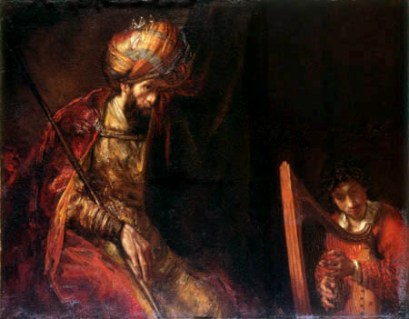
Saul sits with his spear in hand, and David, his arch enemy, stands before Saul playing the harp. Instead of being comforted, he becomes murderous. It seems he cannot control himself. And with that spear Saul throws it at David, and Saul intends to “pin David to the wall.” 

Somehow David eludes it, and escapes into the night. 

Some of this seems logical and understandable. The “good” escapes; but the evil in the heart of Saul remains. From this point on, Saul is basically “unreachable.” He becomes full of darkness. 

And without God’s Holy Spirit convicting and leading us through our own sin, we too will destroy ourselves. The lesson of Saul’s repeated rebellion should terrify the believer who wants to follow Jesus. Let’s not trifle with sin; if not dealt with will also destroy us. 

 Andrew Murray 

Saul Hates David

1 Samuel 18:28-30 

David was fighting two battles at once. He had to face King Saul’s hostility, and the ongoing war with the Philistine’s army. I suppose that it was a tremendous drain. After the battle he came home and found nothing but jealousy and anger. 

Saul was very afraid of David. 

Fear like this turned into deep seated malevolence and hatred. Despite his tremendous success he, upon returning home, found zero recognition. To many he was a hero, but to Saul he was despised and detested. And again, Saul was deeply afraid of David. 

Fear accomplishes nothing. Fear only destroys. 

Saul was in a spiritual downward spiral. It was just a matter of time before the end. King Saul had become evil. God’s Spirit had left him, and he was nothing more than a shell, vacant and empty of anything good. Perhaps David was grieved to see the king turn into something unrecognizable and dark. 

David had been anointed as the next king. 

The prophet’s word had been spoken. There would be resistance and hostility which seemed to contradict this prophecy. David would soon discover the enemies battle against what God had declared. (But what choice did he have?) 

God’s declaration of David’s anointing didn’t matter to Saul. He would continue the path he had chosen. David would continue to find success against the Philistines.

David Guzik 

Decapitating the Monster

1 Samuel 17:51-54, NKJV

The war has been decided, Goliath is quite dead. The shepherd boy David has killed him, and the “coup de grace’ is when he chops the head of his (or, God’s) enemy.

There’s a finality about it all. When David raises up the severed head, the Philistines run. They understand that it was God who has given the victory to the army of Israel. They weren’t fighting against them, they were fighting against the Lord God.

I believe that the “battle is the Lords.”

As believing Christians, we’re starting to understand that we live in battle–a war has developed around us. It came about when we committed ourselves to walk in the grace of God. The enemy understands, even before we do. It’s the believer that is a threat.

We are dangerous to Satan, a very real threat to his kingdom.

Clothed in God’s grace, and wearing His “invisible” armor, we stand like David before Goliath. Our faith in the living God will always give us the victory. I believe that it was the Lord who guided the stone that was slung from David’s sling.

We must step out in faith–the victory is ours, and God guides the rock.

R.A. Torrey

“The Battle is the Lords”

David knew what would happen before it actually did. Most likely it had to do with a faith that understood God, he truly accepted that “the battle was/is the Lord’s. He accepted this.

Not only did David see this in Goliath, but notice this in the text, “I will give the dead bodies of the host of the Philistines this day to the birds of the air and to the wild beasts of the earth, that all the earth may know that there is a God in Israel.”

David understood that David would be killed by him, but the entire army would also die that day.

It would be a total victory over the entire Philistine army.

Also, let’s consider this phrase “the battle is the Lord’s. David says this and establishes something each believer must embrace today. We live in a war that Satan has instigated. Each of us must know exactly what we’re up against. A killer, and a destroyer of people!

Check this out:

“The thief comes only to steal and kill and destroy. I came that they may have life and have it abundantly.” John 10:10

(Notice Jesus’ ministry on us though in this “wonderful” verse.)

Let’s go back to David. It seems when he was good he was very good, but if we’re to be honest, when he was bad, he was very bad. (But forgiven.) Now I don’t understand what you think about all of this. But he did repent, and he was pardoned.

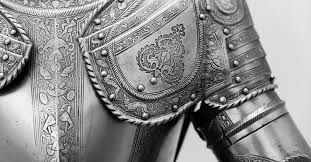
Wearing Armor that Fits You

1 Samuel 17:38-39, see also NLT

I sense that king Saul was worried and scared. Facing Goliath was a man’s job, not for a skinny boy. A defeat would be catastrophic. But the terms offered by Goliath would allow the Philistines total control over Israel. This was unacceptable.

But David had heard Goliath’s bellowing blasphemy, The God of Israel was being challenged and mocked. Something inside of David rose up. God’s honor was at stake.

No one thought that David had a “snowball’s chance in hell.”

In this passage we read that Saul offered David his own armor. Now I don’t know what was going through Saul’s mine–did he feel guilty or embarrassed? Why did he do this?

To allow David the boy to go ahead and fight Goliath was disturbing but David presents his case rather forcibly; he tells of his encounters with bears and lions attacking his flock. (1 Samuel 17:34-36.)

So, what traits is he showing? I think the first is zeal, and then courage, faith, self-sacrifice and righteous anger. But perhaps the most significant (and easily forgotten) is love. He simply loved God, and loved the nation (and armies) of Israel. Love is not always gushy. It’s action. It pushes one to take risks.

As I survey this passage I’m struck by Psalm 23. Most commentators believe this particular Psalm was written previously before this fight with Goliath. It was composed while David was with his flock out in the pasture.

Wearing armor is necessary as a Christian. If you’re a born again believer, then it’s to be a critical part of who you are spiritually. When the apostle Paul writes to the Ephesian believers he pointedly refers to what we’re to wear spiritually when we stand against our personal “Goliath.” I would stress that this isn’t an optional feature.

Ephesians 6:11-12, NLT

The Smear of the Holy Spirit

I’d like to step back a little. Something quite significant happened when the boy David was anointed by the prophet Samuel. David the shepherd boy had been divinely chosen to become the future king of Israel.

Why two, not exactly sure. Maybe the first was done privately, but the second was done publicly. The first was for the boy, David, and his family. The second was done openly in front of the nation.

When David the boy was anointed by Samuel it gave him the power and strength to face Goliath. That first event was one of consecration for it gave David confidence and awareness of his destiny. He now operated with a new awareness that the sovereign God was now with him.

A.W. Tozer

I believe that these anointings gave David the awareness of the Father’s special presence to be bold and confident. The second anointing not only placed him as king but also assured the people that David was different. People needed to know that this new king had God’s special touch.

Later on David would sin greatly with Bathsheba and Uriah. Sin diminishes the anointing. Compromising with sin does this; it always drains away God’s favor. (We need to understand this.) David would lose much by turning away from his calling.

That is why Psalm 32 and 51 are quite critical in his (and God’s eyes). David frittered away God’s special touch, but he would regain it by his deep repentance.

Psalm 53:10-11

Learning to Sing

Sometimes we desperately need to sing. And perhaps we should write down a simple, faltering poem. I would suggest that you not make it public, unless told otherwise. This is just between you and your heavenly Father.

I’m told that David wrote 73 psalms.

These psalms are contextual (that is his experiences). They can be prophetic. They also declare a devotional meaning. Whatever. But one overriding truth is very present: the Holy Spirit infuses David’s words. What he writes is inspired and guided by God Himself.

That is remarkable.

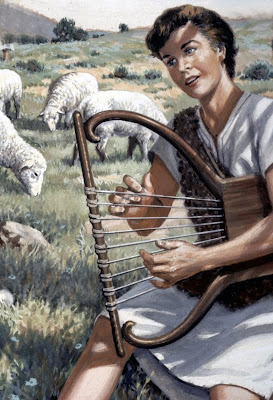
This is David’s best Psalm. I strongly suspect that it was heavily influenced by the sheep, the pasture, and even the predators. I also think loneliness and isolation enabled him to write and sing with such power, and beauty.

Psalm 23 has brought comfort to millions. The sick and dying, the captive and prisoner, believer and non-believer have found profound consolation from David’s simple words.

23 The Lord is my shepherd;
I shall not want.
He makes me to lie down in green pastures;
He leads me beside the still waters.
He restores my soul;
He leads me in the paths of righteousness
For His name’s sake.

Yea, though I walk through the valley of the shadow of death,
I will fear no evil;
For You are with me;
Your rod and Your staff, they comfort me.

You prepare a table before me in the presence of my enemies;
You anoint my head with oil;
My cup runs over.
Surely goodness and mercy shall follow me
All the days of my life;
And I will dwell in the house of the Lord
Forever.

A Boy is Anointed

1 Samuel 12:12-13 

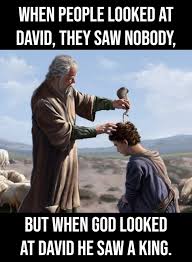
He was just a boy. The youngest, a mere 24/7 shepherd of a little flock in backwater, blue-collar Bethlehem. David brought nothing to the table, except a heart that God had chosen. I think the prophet Samuel was as shocked as anyone, as he closely examined the 7 brothers, one by one. 

“For the Lord sees not as man sees: man looks on the outward appearance, but the Lord looks on the heart.” (v. 7) 

But it wasn’t a logical choice, it was not rational. But it was God’s, and Samuel obeyed the Voice, for he was very obedient. It soon will become apparent to all Israel that God had made a very good choice. 

I must point out in this story something you may have (or haven’t) heard. It’s something done for every believer. 

“For we know, brothers loved by God, that he has chosen you.” 

1 Thess. 1:4 

He chose you! And if that isn’t enough, this verse declares that He LOVES you! “The phrase beloved by God was a phrase which the Jews applied only to supremely great men like Moses and Solomon, and to the nation of Israel itself. Now the greatest privilege of the greatest men of God’s chosen people has been extended to the humblest of the Gentiles.” William Barclay 

Do you understand? You have been selected from billions of others, His choice, made of agape love. He has anointed you with His Holy Spirit. Like David, who returned to his very routine “sheep-watching,” he walked away spiritually altered by his encounter with the oil of Samuel. 

You also have been altered. Like the scruffy grimy boy David, when the Holy Spirit comes, nothing will ever be the same. History has been changed 

I know this. You are now His. Selah. 

He Had God’s Heart

What kind of heart does God have? I suppose that should be our starting point to where this blog is going. Since we must start somewhere. I suspect 1 Samuel 13 declares one of the first references to David’s story. 

In this passage the prophet is confronting Saul, the king. We see Samuel declaring that Saul, is rejected, and another is going to be anointed. Saul is extremely disturbed, but this is the firm will of God. 

What does it really mean “to be a man after God’s own heart?” 

  • Ordering Your Life with God’s Will: Passionately desire to do what God wants. 
  • A Broken and Repentant Heart: When sinning, they do not deny or make excuses, but sincerely confess, as shown in Psalm 51. 
  • Dependence & Faith: Relying completely on God, not on one’s own strength, work and effort. This trust in Him is wisdom that discerns. 
  • Worship, Prayer and Praise: A heart that consistently praises and thanks God, regardless of circumstances. A heart that wants to be closer to God. 
  • Deep Love for God: Valuing God’s presence and character above position, power, or personal desire. He is not ashamed of serving God openly.