The Philistines

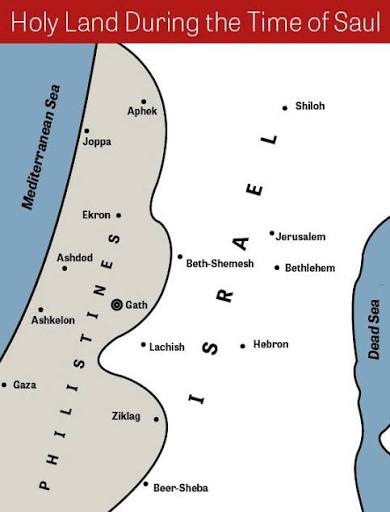
this is a good time to reacquaint ourselves with the Philistines. It seems they start off from the island of Crete, out of the Mediterranean. They were a seafaring people group that would expand its domain to the land of Israel but mainly on the coast land. Israel for the most regarded the sea with trepidation and suspicion.

Philista had one of the major trade routes that ran through their territory, which was carefully protected for economic reasons. It was very lucrative.

There were four gods in the spiritual life of the Philistines, which were:

  • Asherah, a pole of wood, a fertility god
  • Anat
  • Dagon, a fish god, half fish and half man

The gods of Philistia would soon become a stumbling issue with Israel which slowly embraced them over the real God, Elohim.

There were 5 fortified cities that were established in the mainland (Israel). Each of these had a king with armies protecting them: Gaza, Ashkelon, Ashdod, Gath, and Ekron. They had shrines to these gods in each of the five cities.

The Philistines had also innovated the use of iron, which was important for plows, spears, and swords. This was a development that these kings denied Israel the possession of. It would take a while for Israel would figure out how to do it for themselves.

They would also developed the art of brewing, and made beer, one of the very first to refine it.

The Philistines were a challenge.

They became more warlike and made repeatedly incursions into the territory of Israel. They were a severe problem for over 200 years. Samson, Samuel, Saul, and David each had difficulty over their activity in Israel.

For example, consider David, who killed Goliath (from the city of Gath) would undoubtedly had weapons of iron when he met David. At this time Israel still had inferior weapons. Their brass wasn’t as good as iron.

Israel regarded Philistia as the “uncircumcised,” and the religious leaders would claim that they should have no influence over Israel. Over time they disappeared from the biblical record.

The war coming from the expansion of Assyria would finally deplete the Philistines. After that we can find no real evidence of their existence.

However, Philistines, for what its worth still survives today as “Palestine.”

“You Shall Be King”

KingDavid101.com

1 Samuel 23:15-18

Somehow I think that if a hitman was actively following me, I would become fearful and a bit paranoid. I would see everyone through these fallen filters. I don’t know what I would do, and fear would consume everything.

Jonathan finds David hiding in the wilderness. Saul’s son, a man who could be king himself rejects the throne himself. Jonathan correctly sees the good in David: the anointing by Samuel, Goliath, the psalms David wrote, and all the victories over the Philistines.

There is no doubt in Jonathan’s heart. He believes in David and humbly steps aside. There is no bluster and no prideful desire for taking Saul’s throne. He understands that David will be the next king of Israel.

Jonathan’s presence to the wilderness of David was significant and timely. It’s written in verse 16 that he “strengthened his hand in God.” The word in Hebrew is somewhat broad, but it often means “to restore to strength” or “to make hard.” This is exactly what David needed to hear.

We all desperately need encouragement from someone else.

And we must be an encouragement to God’s people who are in a deep wilderness.

Sure, the Word, worship, and communion are places of encouragement for me. The “home groups” and my elders build me up (or edify).

1 Thessalonians 5:11, ESV

Jonathan become God’s agent to support and reassure David who hides from King Saul in a difficult place in the wilderness. What a powerful ministry. To come along the side of another and remind someone else of God’s calling, and to strengthen them of God’s purpose and work.

This passage should bless both the “would be king,” and those 600 men who have attached to David. What a blessing Jonathan is to David.

We are called to do what Jonathan did for David.

John Greenleaf Whittier

Being Betrayed

1 Samuel 23:7-12, NLT

This passage reveals three details that are especially important to the reader.

  • Saul still believes that he has God’s approval and blessing.
  • David is still seeking the Father’s will and wisdom
  • Keilah, freed from attack by the Philistines by David, will turn right around and betray David.

Saul still believes.

It’s odd how someone like King Saul can still believe that the Lord is guiding him. His heart is honeycombed with jealousy and murder, and yet he doesn’t see it. He still thinks that wearing a crown gives him the automatic privileges of divine kingship and blessing.

What self-deception, Saul has not had God’s approval for a very long time, (see 1 Samuel 15:10-30). Obedience is far better than any sacrifice. Saul has been living outside of the presence for a long time.

“As the salt flavors every drop in the Atlantic, so does sin affect every atom of our nature. It is so sad there, so abundantly there, that if you cannot detect it, you are deceived.”

Charles Spurgeon

David is still seeking.

Hearing the desperation of Keilah, and then seeking the Lord of what to do, he directs his men to protect the city. He makes no strategic decision that could possibly put him outside of God’s will. He will not do this.

“The greatest mistake any Christian can make is to substitute his own will for the will of God.”

Harry Ironside

Keilah, will betray David.

This is so treacherous, it can hardly be believed or understood. The hearts of lost men only seek their own benefit. The elders of Keilah turn around and sell out those who had just delivered them. David seeks again God’s will and finds out that they will be betrayed. What should have been a celebration of joy only discloses lies and falsehoods.

Ironic, isn’t it. David and his 400 men escape the town they had just saved.

Psalm 17:9

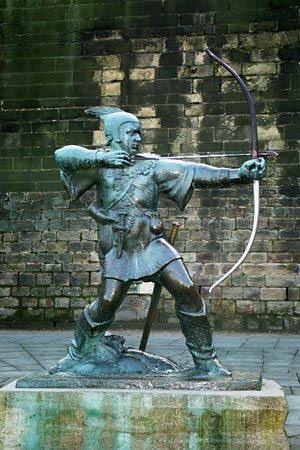
David Hood & His Merry Men

David can’t shake off the desperation of the Keilahites. Their plight becomes a passionate purpose for David. He hears of the need, and understands the injustice of these Philistine raiders. He knows deep down that they must be stopped.

Spiritual “wealth” is found here in this passage. Gold nuggets, and flawless diamonds for the taking. Let’s get started. 

But here’s a few things that might be helpful. 

  • It seems that David is quite approachable. He listens to the guidance of his men. He listens and then responds. David never diminishes their concerns, they’re depending upon him.
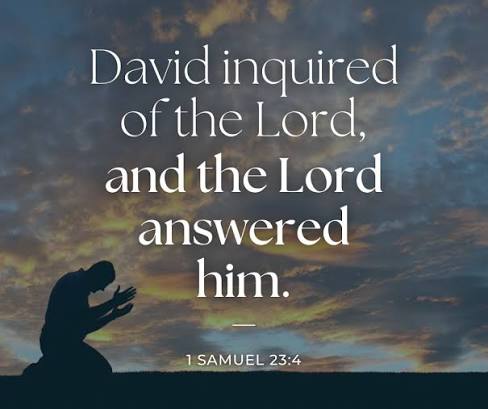
  • David seeks the guidance and will of the Lord twice because of their caution. 
  • David is going to do what King Saúl was supposed to do; to protect and defend the city of Keilah. It seems Saul had abdicated his call as king in his desperate pursuit of David. 
  • There seems to be a real risk involved. This was not a summer stroll. 
  • David knows in his heart what he has to do. Since Saul didn’t come to defend Keilah, he must do what is needed. 
  • God does not chide David for asking twice. There seems that there were several men in the Old Testament that required another ‘conversation’ with God. 

Can we do what is right when the situation demands it? Sometimes we see a need that others have neglected to meet. Can we step into what is needed at that moment?

What if the “detours” and the interruptions are really the path we were meant to take?  

These are good questions to ask ourselves.  Our compassion should not be rigid. I remember a time when the Lord asked me to be interruptible. That is, to set aside what I thought was essential, to take up something that made little sense, but did matter to the one asking. 

When I learned to be interrupted, it ended up giving me a blessing that came out of nowhere. Hitting the pause button is rarely a mistake if you believe the Holy Spirit is leading you.