A Plan to Understand Saul

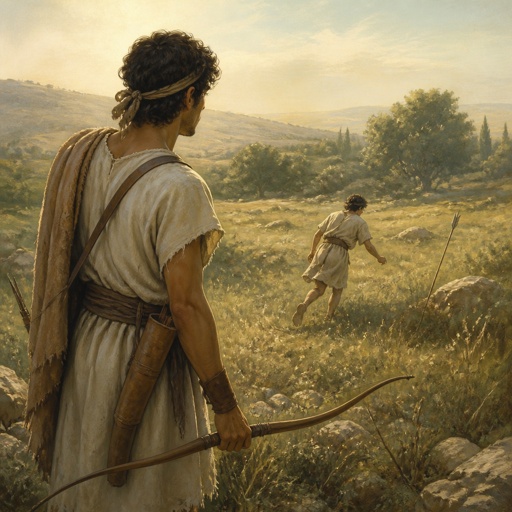
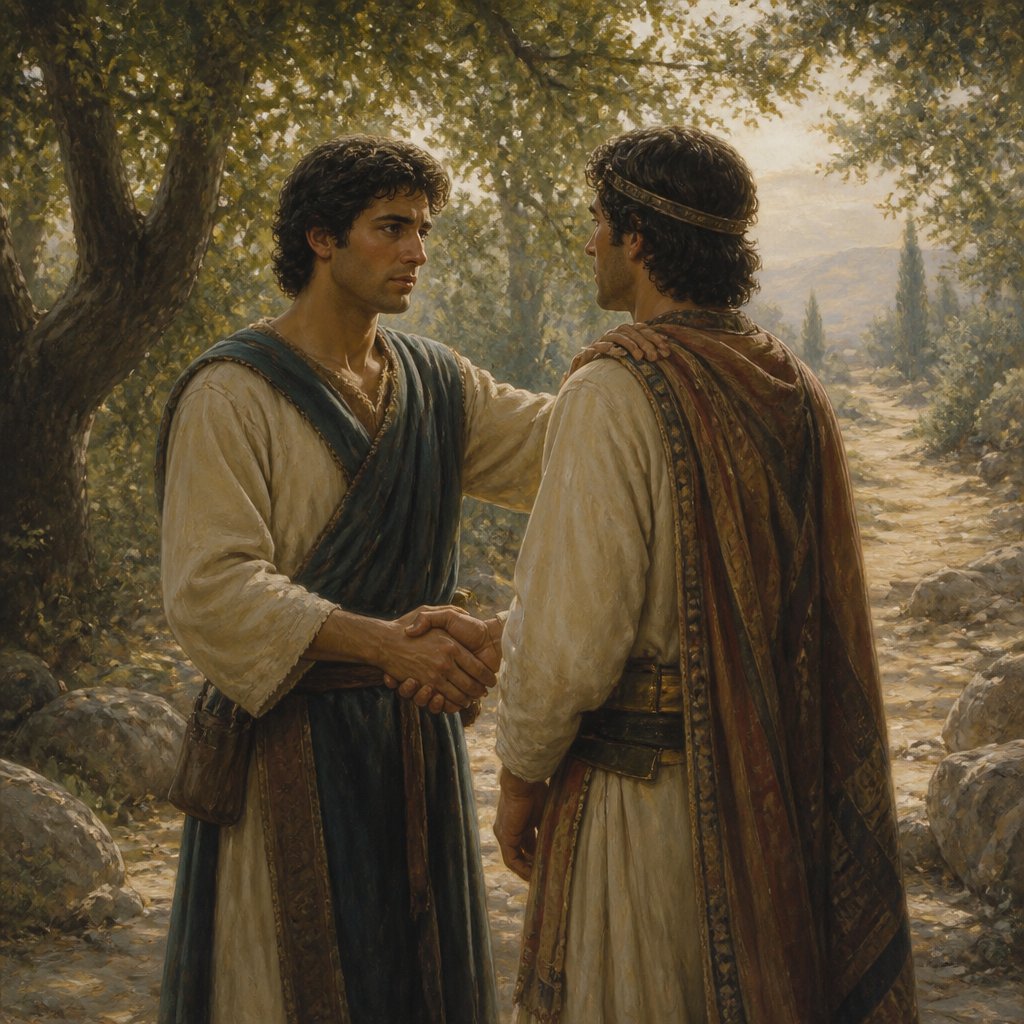
This entire scene is a bit strange. David and Jonathan meet; they are careful as they should be. David is hiding and I strongly suspect that David is discouraged. He has done nothing wrong—quite the opposite. David suspects that king Saul’s bitterness and jealousy, and bitterness are out of control. Saul intends to murder David. The entire story is found in 1 Samuel 20:5-23.  

“Tomorrow, we celebrate the new moon festival. I’ve always eaten with the king on this occasion, but tomorrow I’ll hide in the field and stay there until the evening of the third day. If your father asks where I am, tell him I asked permission to go home to Bethlehem for an annual family sacrifice. If he says, ‘Fine!’ you will know all is well. But if he is angry and loses his temper, you will know he is determined to kill me.” 

1 Samuel 20:5-7 

These verses reveal David’s plan. They describe a maneuver that will reveal Saul’s heart toward David: will it be reinstatement or will it be murder? Obviously, David must find out. Will he continue to run and evade death or will he be restored? He obviously must know. 

David has no idea, but he has a plan to find out for sure. 

But let’s switch to Jonathan as he will be David’s eyes and ears into the banquet room. David will rely on the report of Jonathan, one way or the other. The plan is carefully made, and it seems like a wise one. Obviously, it involves Jonathan’s participation.   

“Jonathan’s response to David’s discouragement wasn’t theological rebuke but practical help; he offered concrete assistance to a friend walking through despair, modeling genuine support.” -David Guzik 

Jonathan only asks for a promise from David. (Which David fulfills later to Mephibosheth in 2 Samuel 9). He asks that, “If I am still alive, show me the steadfast love of the Lord, that I may not die; 15 and do not cut off your steadfast love from my house forever, when the Lord cuts off every one of the enemies of David from the face of the earth.” 

Jonathan reminds David of their covenant together after the slaying of Goliath. There’s now a political element added: David will need to protect the house of Jonathan, his heirs.  

It is Jonathan and not Saul who understands God’s heart. 

It is Jonathan’s humility that makes the whole plan work. There seems to be no guile here; he understands what the Lord wants to do. Many believers want to be a “David,” but it is Jonathan that seems to show more integrity, decency and honor. 

Jonathan proves that he is a man of integrity, and he asks that David be one also. It’s Jonathan that models that deep decency to the heart of David. 

This plan will reveal Saul’s motives; it’s designed to uncover his heart. That’s what the Holy Spirit does. David must know; his life depends on it. Jonathan is key to David’s survival and he must trust him. He depends on him to “pull off” this off. This strategy will determine David’s next step. 

I believe David still praises God.

I believe David still writes and sings. Worship is in his blood, and even if he sits on a knife’s edge, David praises Jehovah even if it seems illogical. 

God has anointed Davd and nothing has changed; when Samuel poured oil on his head it became the evidence of the Lord’s choice, blessing and approval. David’s calling was a done deal. David worships. 

    Rick Warren

Influenced but Without Surrender

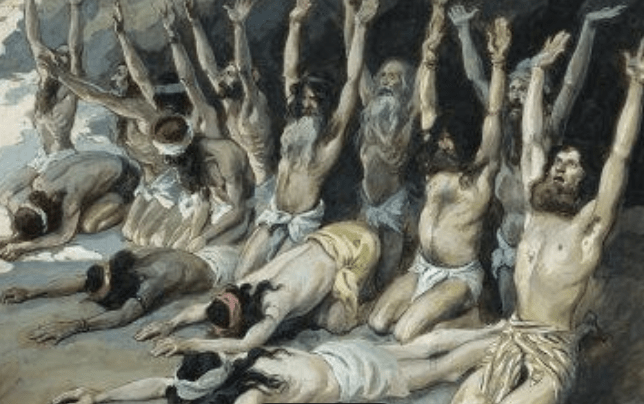
In an odd scene in the life of King Saul is recorded in 1 Samuel 19:18–24, where Saul, enraged, sends soldiers to capture David. Three groups are overpowered by the Holy Spirit, and each group begins prophesying instead of arresting David. Finally, a frustrated Saul himself goes to Ramah, and there he too is overcome by the Spirit: 

1 Samuel 19:18-24 

“Influence Without Surrender” is one of the better ways to explain this strange passage. Even after several readings, this seems to be the best interpretation. Saul (and three groups of soldiers) come under “the influence” of the Holy Spirit and are prevented from capturing David. 

God proactively intervenes in the life of His anointed one. 

David must have been in shock. God defends him in an astonishing way, but in a manner that amazed the onlookers. And David was learning what God was really like. When the Lord goes to battle, anything can happen. In His powerful sovereignty, God decides the weapons He will use. In Saul’s case, the prophetic works perfectly. 

Troop after troop is floored by the presence of a mighty God. Finally, Saul decides to intervene. Why isn’t David in custody? Saul intends to find out; when he steps into the prophet’s presence. When this happens, Saul falls under the very presence of God and encounters the Lord. 

And really, we must understand that Saul comes under the influence of God but refuses to surrender. Isn’t this the epitome of his life? He may understand, but Saul refuses to surrender and to yield and submit to the Lord God. 

That’s what God does to His rebellious and disobedient children. 

For rebellion is as the sin of witchcraft, and stubbornness is as iniquity and idolatry. Because thou hast rejected the word of the Lord, He hath also rejected thee from being king.

1 Samuel 15:23

Saul does this every time.

Evil Carries a Spear

1 Samuel 19:8-10, NLT 

There are things in this passage that I don’t fully understand. I will try to share what little I do know. Let’s have a go at it. 

If I could, I would get out my X-Acto Knife and carefully cut out verse 9, I would do it. The very idea that the Lord would send “a harmful spirit” to come to Saul is hard to grasp. Perhaps we need to recognize that after his sin, sparing Agag in 1 Sam. 15:20, nothing good is ever spoken of Saul in scripture. 

Sin develops over time. Nothing is a mere trifle or insignificant. 

Saul’s sin metastasizes, and any real repentance becomes impossible. This is sobering. And scary. It’s no wonder we’re warned repeatedly to renounce our sin. At this point Saul comes under the direct influence of evil powers. His continued disobedience becomes his very character. 

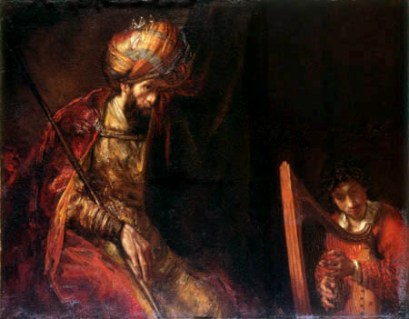
Saul sits with his spear in hand, and David, his arch enemy, stands before Saul playing the harp. Instead of being comforted, he becomes murderous. It seems he cannot control himself. And with that spear Saul throws it at David, and Saul intends to “pin David to the wall.” 

Somehow David eludes it, and escapes into the night. 

Some of this seems logical and understandable. The “good” escapes; but the evil in the heart of Saul remains. From this point on, Saul is basically “unreachable.” He becomes full of darkness. 

And without God’s Holy Spirit convicting and leading us through our own sin, we too will destroy ourselves. The lesson of Saul’s repeated rebellion should terrify the believer who wants to follow Jesus. Let’s not trifle with sin; if not dealt with will also destroy us. 

 Andrew Murray 

Saul Hates David

1 Samuel 18:28-30 

David was fighting two battles at once. He had to face King Saul’s hostility, and the ongoing war with the Philistine’s army. I suppose that it was a tremendous drain. After the battle he came home and found nothing but jealousy and anger. 

Saul was very afraid of David. 

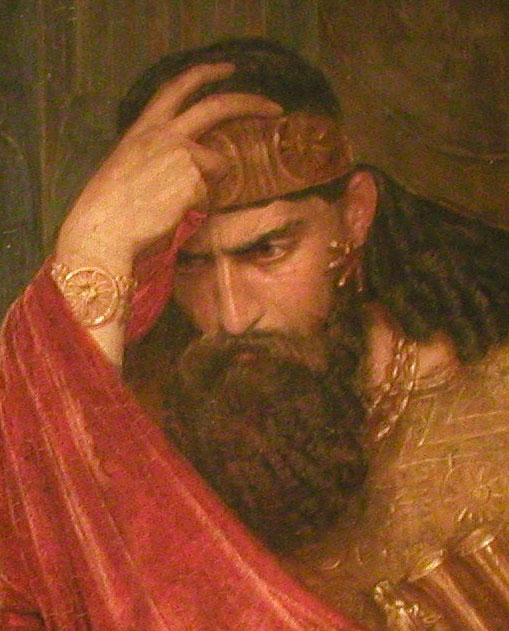
Fear like this turned into deep seated malevolence and hatred. Despite his tremendous success he, upon returning home, found zero recognition. To many he was a hero, but to Saul he was despised and detested. And again, Saul was deeply afraid of David. 

Fear accomplishes nothing. Fear only destroys. 

Saul was in a spiritual downward spiral. It was just a matter of time before the end. King Saul had become evil. God’s Spirit had left him, and he was nothing more than a shell, vacant and empty of anything good. Perhaps David was grieved to see the king turn into something unrecognizable and dark. 

David had been anointed as the next king. 

The prophet’s word had been spoken. There would be resistance and hostility which seemed to contradict this prophecy. David would soon discover the enemies battle against what God had declared. (But what choice did he have?) 

God’s declaration of David’s anointing didn’t matter to Saul. He would continue the path he had chosen. David would continue to find success against the Philistines.

David Guzik 

Leave the Spear Behind

And Saul hurled the spear, for he thought, “I will pin David to the wall.” But David evaded him twice.

1 Samuel 18:11, ESV

And Saul sought to pin David to the wall with the spear, but he eluded Saul so that he struck the spear into the wall. And David fled and escaped that night.

Saul attacked David twice.

But David spiritually understood God’s heart. He understood the spiritual principle of “turning the other cheek” and “loving your enemies.” He overcame with love and kindness. And lots of grace.

“Do not be overcome by evil, but overcome evil with good

Romans 12:21, ESV

The Greek word for “overcome” is νικάω which can be translated as “to conquer or to come forth victorious.” It is also used when someone is arraigned before a court of law but wins the case.

You cannot attack another without destroying yourself.

“We win by tenderness. We conquer by forgiveness.”

Frederick W. Robertson

We must leave the spear in the wall. You must not throw it back.

Jealousy Consumes Saul

1 Samuel 18:8-9, ESV

I once learned the proper way to kill a diamond-back rattlesnake. Obviously, you must be careful, and Saul was not. The snake’s venom would destroy him; he had been bitten, and he would not survive. Jealousy over David’s victories would totally ruin him. Saul’s envy will poison his heart and soul. 

Please do not be consumed by this sin. A disciple must learn how to work through the issues of jealousy, envy, and evil. The Holy Spirit will see that we will see these things head on. God will not allow us to fully enter His kingdom if we hold on to jealousy and anger. 

Jealousy is like drinking something poisonous and hoping that the other person will die.

King Saul is Poisoned

“Danger, Will Robinson, danger!”  

(B-9 Robot, “Lost in Space,” 1967) 

1 Samuel 18:6-8 

David was quite successful. His tactical prowess exceeded the other military leaders; he was a dream come true, and everyone knew it. But, there would be a downside to being victorious in battle. Gavid was about to find this out. Things would start to get crazy, and it wasn’t his fault. 

Out came those who could sing. 

Everyone knew it. David’s successes became the song of Israel. What he achieved was the stuff of legends. When he returned, he found those who received victory. They would sing, but those songs would create issues. Saul would become offended, and that would become dangerous. David would soon find this out. He understood, and yet, he really didn’t. King Saul would never really accept David’s accomplishments; Saul blocked out the wonderous battles of David. 

King Saul could never accept this. 

“The anger of the king is a deadly threat.”

Proverbs 16:14 

Saul’s anger would develop into jealousy, and that was dangerous. 

We’ll look at this closer.

Decapitating the Monster

1 Samuel 17:51-54, NKJV

The war has been decided, Goliath is quite dead. The shepherd boy David has killed him, and the “coup de grace’ is when he chops the head of his (or, God’s) enemy.

There’s a finality about it all. When David raises up the severed head, the Philistines run. They understand that it was God who has given the victory to the army of Israel. They weren’t fighting against them, they were fighting against the Lord God.

I believe that the “battle is the Lords.”

As believing Christians, we’re starting to understand that we live in battle–a war has developed around us. It came about when we committed ourselves to walk in the grace of God. The enemy understands, even before we do. It’s the believer that is a threat.

We are dangerous to Satan, a very real threat to his kingdom.

Clothed in God’s grace, and wearing His “invisible” armor, we stand like David before Goliath. Our faith in the living God will always give us the victory. I believe that it was the Lord who guided the stone that was slung from David’s sling.

We must step out in faith–the victory is ours, and God guides the rock.

R.A. Torrey

Wearing Armor that Fits You

1 Samuel 17:38-39, see also NLT

I sense that king Saul was worried and scared. Facing Goliath was a man’s job, not for a skinny boy. A defeat would be catastrophic. But the terms offered by Goliath would allow the Philistines total control over Israel. This was unacceptable.

But David had heard Goliath’s bellowing blasphemy, The God of Israel was being challenged and mocked. Something inside of David rose up. God’s honor was at stake.

No one thought that David had a “snowball’s chance in hell.”

In this passage we read that Saul offered David his own armor. Now I don’t know what was going through Saul’s mine–did he feel guilty or embarrassed? Why did he do this?

To allow David the boy to go ahead and fight Goliath was disturbing but David presents his case rather forcibly; he tells of his encounters with bears and lions attacking his flock. (1 Samuel 17:34-36.)

So, what traits is he showing? I think the first is zeal, and then courage, faith, self-sacrifice and righteous anger. But perhaps the most significant (and easily forgotten) is love. He simply loved God, and loved the nation (and armies) of Israel. Love is not always gushy. It’s action. It pushes one to take risks.

As I survey this passage I’m struck by Psalm 23. Most commentators believe this particular Psalm was written previously before this fight with Goliath. It was composed while David was with his flock out in the pasture.

Wearing armor is necessary as a Christian. If you’re a born again believer, then it’s to be a critical part of who you are spiritually. When the apostle Paul writes to the Ephesian believers he pointedly refers to what we’re to wear spiritually when we stand against our personal “Goliath.” I would stress that this isn’t an optional feature.

Ephesians 6:11-12, NLT

A Human Tank

1 Samuel 17:4-7, NLT

Goliath was like a human tank. First of all, he was almost twice the size of any other man. Secondly, decked out in his armor he was pretty much “bullet proof.”

The giant wore about 140 pounds of bronze armor, his thick spear weighed over 15 lbs. I guess Goliath wanted to keep it somewhat interesting, He “stood and shouted a taunt across to the Israelites.”

In the book of 1 Samuel 17 we read that the Israelite camp was “terrified.”

“I defy the armies of Israel today! Send me a man who will fight me!” 11 When Saul and the Israelites heard this, they were terrified and deeply shaken.”

Any infantry officer will tell you that if you can instill fear the battle is pretty much won. The Philistines already had the upper hand. The terror infected the Israel, in spite of some lucrative inducements no one moved–there still were no volunteers.

But here comes the boy David, “a man after God’s own heart.”

Goliath was arrogant and blasphemous. He believed that the Philistine army was superior in every way, and he was the ultimate Philistine.

How do you handle fear? As a believer do you listen to the enemy lies. If you are a believer (and I assume you are), the enemy has a “contract” out on you. Satan has marked you as a threat to his kingdom, and your fear is incredibly useful to him.

“Fear is born of Satan, and if we would only take time to think a moment we would see that everything Satan says is founded upon a falsehood.”

   A.B. Simpson

1 Thessalonians 3:2, LB