The Cave of Adullam

1 Samuel 22:1-2, NKJV. (Background: Psalm 57 and Psalms 142.) 

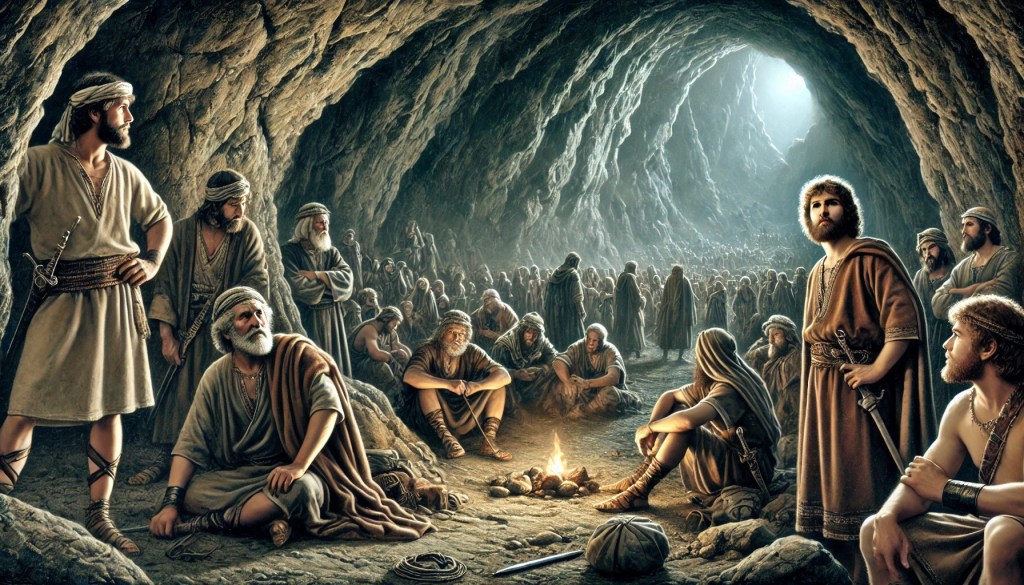
The cave of Abdullam is now a national park in Israel. It’s part of a system of caves, but this is the biggest and most well-known. Thousands visit it every year; it’s on the list that tourists want to visit. 

Our passage today tells us that immediately after the “insane” David skedaddled from Gath, he travelled to this cave. I suspect that Saul had spied everywhere, so the king had a general idea where David was. But the cave of Adullam was very close to the Philistine border. 

A state of war between Israel and Philistia existed, and king Saul could not risk any appearance of violating that without causing an incident. Perhaps Saul was somewhat content that David was isolated in a “hole in the ground,” and everyone would simply forget him. 

But the was not the case. 

First, it was family, then others came. I suspect David’s brothers may have realized that they now were on Saul’s “list.” 

The others had other reasons. Most knew of David’s prowess as a warband leader; some may have served with him. They may have known of his anointing by the prophet to be the next king. 

Now these I call the “three Ds.” The distressed, the debtors, the discontented, sought out David. Our text tells us there was 400 men (plus their families). If David thought, he was hidden and alone he was mistaken. 

Logistically, I’m not sure how that works out. Where did their support come from? And again, what was Saul thinking? 

I suspect that some of these would develop and become the “mighty men” of David, and they would become some of his generals that David would rely on when he became king. 

Verse 3 tell us that “he became captain over them.” They submitted to David and meshed themselves into whatever destiny may come.

Psalm 57:1, from a song written by David while in the cave of Adullum.

David Pretends Madness

‘Saul has struck down his thousands, 
    and David his ten thousands’?” 

1 Samuel 21:10-15, ESV 

David is now carrying Goliath’s sword, given to him by Abimelech the high priest. That sword was special, for David used it to cut off the head of the renown Philistine champion. I’m sure that David’s memories flooded back to him as he held it.

David was now carrying that sword into Goliath’s hometown. That was foolish and dangerous. He seems to move from the crisis of Saul to the crisis of seeking refuge with the Philistines. The risk was great, and yet David told himself that he had “no choice.” 

Is David still “a man after God’s own heart?” 

Sometimes as believers, we do very foolish things. God has a path for us, and instead of seeking Him we turn to our own understanding. When I think through this account, I come to the realization that I seldom look to the Lord for His wise direction. 

“When people do not accept divine guidance, they run wild. But whoever obeys the law is joyful.” Proverb 29:18 

On his arrival in Gath, David hears the murmuring of the crowd. Interestingly, they call David “the king of the land.” They recognized this before Saul did. This is the first time David has heard that they have known him. That song comes up, and it seems again (like always) it just creates even more problems.

David thought he could find anonymity or sympathy from the Philistines. 

Our passage tells us that David is now “much afraid.” I think he realizes then he has made a very stupid decision by going to Gath, (carrying Goliath’s sword for all to see). His reputation has proceeded with him, and yet David has another plan.

He feigns insanity. I suspect that this was just a split-second decision, something rash and impulsive. He knew that acting insane was the only way to escape. He attacked the doors, scratching them. He foamed at the mouth with his saliva dripping down his beard. 

One look at David acting crazy we see that king Achish dismissed David and his antics as beneath his deliberation. He sees David as a madman, and apparently the king has had his fill of madmen. Some have said that the very presence of an insane person was an evil omen. And to kill them was forbidden. 

The question I have is this. Was David walking in the Spirit or in the flesh? Was David outside of God’s will while he was in Gath?

The title of Psalm 34 reads: “A psalm of David, regarding the time he pretended to be insane in front of Abimelech, who sent him away.” 

The title of Psalm 56 reads: “A psalm of David, regarding the time the Philistines seized him in Gath.” 

Now these are beautiful psalms, and they describe David’s experience in the very heart of the Philistines’ stronghold. Things are getting strange, but David’s heart is still in God’s hand.

What happened here has given believers hope and guidance for centuries.

Jonathan Understands

“And Saul spoke to Jonathan his son and to all his servants, that they should kill David. But Jonathan, Saul’s son, delighted much in David. 2 And Jonathan told David, “Saul my father seeks to kill you. Therefore be on your guard in the morning. Stay in a secret place and hide yourself. 3 And I will go out and stand beside my father in the field where you are, and I will speak to my father about you. And if I learn anything I will tell you.”  

4 “And Jonathan spoke well of David to Saul his father and said to him, “Let not the king sin against his servant David, because he has not sinned against you, and because his deeds have brought good to you. 5 For he took his life in his hand and he struck down the Philistine, and the Lord worked a great salvation for all Israel. You saw it, and rejoiced. Why then will you sin against innocent blood by killing David without cause?” 6 And Saul listened to the voice of Jonathan. Saul swore, “As the Lord lives, he shall not be put to death.”  

7 “And Jonathan called David, and Jonathan reported to him all these things. And Jonathan brought David to Saul, and he was in his presence as before.” 

1 Samuel 19:1-7 

What a strange sequence of events, but stranger things have happened and will happen to David (the future king of Israel). 

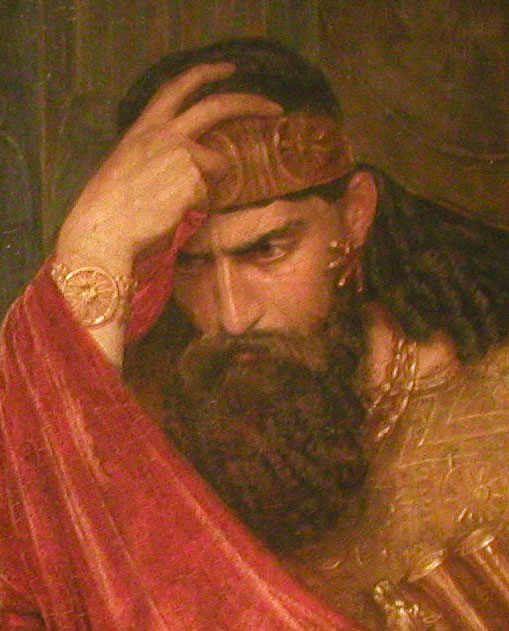
Saul finally takes his rage out into the open. He wants David to be executed, but he never offers any justification for his anger or decision. All he wants is David’s head. No explanation is given. David is regarded as a traitor, but to whom? 

Saul requires his court to take action. The king wants David dead. This proclamation has never happened before—the king of Israel demanding the death of another Israelite. This is the deep power of wickedness coming from a twisted heart. This can only come from something quite satanic. 

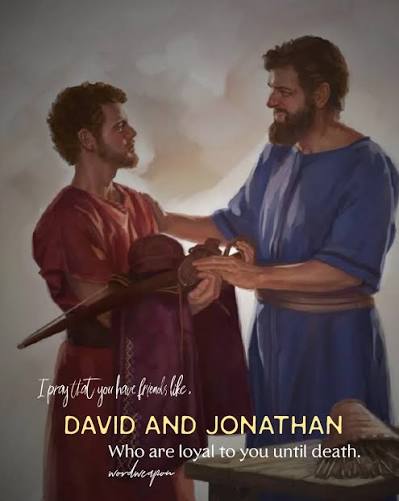
Jonathan, at this critical point, understands the strong power of covenant. He has vowed to defend David, no matter what the cost is. He will be true forever. So Jonathan determines to defend his “brother.” 

Jonathan has now become a spy. He listens closely and then passes to David about what has heard. He will defend him no matter the cost. Jonathan understands that the very life of David is in his hands. 

Jonathan reminds king Saul of the heroics of David on behalf of the nation of Israel. He speaks truth into untruth. Saul listens and is persuaded that his decrees are wrong. He backs off and vows to treat David favorably. 

Saul swears that David should not be touched (executed). That will be temporary as we can see. It seems that Saul’s wrath is simmering below the surface. His repentance is only for show, at least for this moment. Oh, the depth of an angry unforgiveness. 

Because of Jonathan’s intercession, David is forgiven temporarily, and he is restored to his place in court. Perhaps David’s past triumphs are the key to his present survival, at least for the moment.  

Saul Really Hates David

1 Samuel 18:28-30 

David was fighting two battles at once. He had to face King Saul’s hostility, and the ongoing war with the Philistine’s army. I suppose that it was a tremendous drain. After the battle he came home and found nothing but jealousy and anger. 

Saul was very afraid of David. 

Fear like this turned into deep seated malevolence and hatred. Despite his tremendous success he, upon returning home, found zero recognition. To many he was a hero, but to Saul he was despised and detested. And again, Saul was deeply afraid of David. 

Fear accomplishes nothing. Fear only destroys. 

Saul was in a spiritual downward spiral. It was just a matter of time before the end. King Saul had become evil. God’s Spirit had left him, and he was nothing more than a shell, vacant and empty of anything good. Perhaps David was grieved to see the king turn into something unrecognizable and dark. 

David had been anointed as the next king. 

The prophet’s word had been spoken. There would be resistance and hostility which seemed to contradict this prophecy. David would soon discover the enemies battle against what God had declared. (But what choice did he have?) 

God’s declaration of David’s anointing didn’t matter to Saul. He would continue the path he had chosen. David would continue to find success against the Philistines.

David Guzik 

100 Foreskins

24 When Saul’s men reported this back to the king, 25 he told them, “Tell David that all I want for the bride price is 100 Philistine foreskins! Vengeance on my enemies is all I really want.” But what Saul had in mind was that David would be killed in the fight. 

26 David was delighted to accept the offer. Before the time limit expired, 27 he and his men went out and killed 200 Philistines. Then David fulfilled the king’s requirement by presenting all their foreskins to him. So Saul gave his daughter Michal to David to be his wife. 

28 When Saul realized that the Lord was with David and how much his daughter Michal loved him, 29 Saul became even more afraid of him, and he remained David’s enemy for the rest of his life. 30 Every time the commanders of the Philistines attacked, David was more successful against them than all the rest of Saul’s officers. So David’s name became very famous. 

1 Samuel 18:24-30, NLT 

A snare had been set. King Saul wanted David dead. A trap would destroy him; Saul had the bait, and he also knew that nothing could be traced back to him. David had become very popular, and so Saul had to be very careful. 

Saul had a plan, and yet it seemed it was a good one. 

David was called upon to do what seemed impossible. Saul declared that David was to bring him back 100 “foreskins” taken from the dead Philistines. Now the Philistines had been a terrible problem for the people of Israel. They had been attacking and destroying without any restraint. 

Saul surmised that whether to win or lose, that the David problem would be resolved. If anything, David would be tarnished in the minds of the Philistines. Perhaps a bounty would be placed on David’s head. He would become a “target” and be especially hated. Perhaps this is true? 

But David would ultimately prevail. 

David exceeded and even doubled Saul’s wishes. Instead of just meeting, he doubled what Saul had required. Returning from the battle, he carried 200 of the foreskins back to the king. He returned with not just the minimum but surpassed it. 

Ah yes, the matter of the foreskins. First, we must understand how the Philistines had attacked and harmed Israel. They continued to advance and Israel hadn’t really responded to their continual harassment. Saul understood that many had died and he had no answer to their constant attacks. 

Second, David was a man of his times. Things were brutal and the very survival of Israel demanded a response. Yes, David needed to respond with force. The Philistines needed to know that Israel could return fire with fire. David did this. 

Third, these were dead men. David collected these foreskins from the dead his men had already killed. He didn’t seize the enemy and forced them to endure “surrender” their penises at “gunpoint.” David collected these foreskins from the Philistines that were already dead. 

Now granted this wasn’t perfect or New Testament theology, and yet it was the need of the moment.