
100 Foreskins

24 When Saul’s men reported this back to the king, 25 he told them, “Tell David that all I want for the bride price is 100 Philistine foreskins! Vengeance on my enemies is all I really want.” But what Saul had in mind was that David would be killed in the fight. 

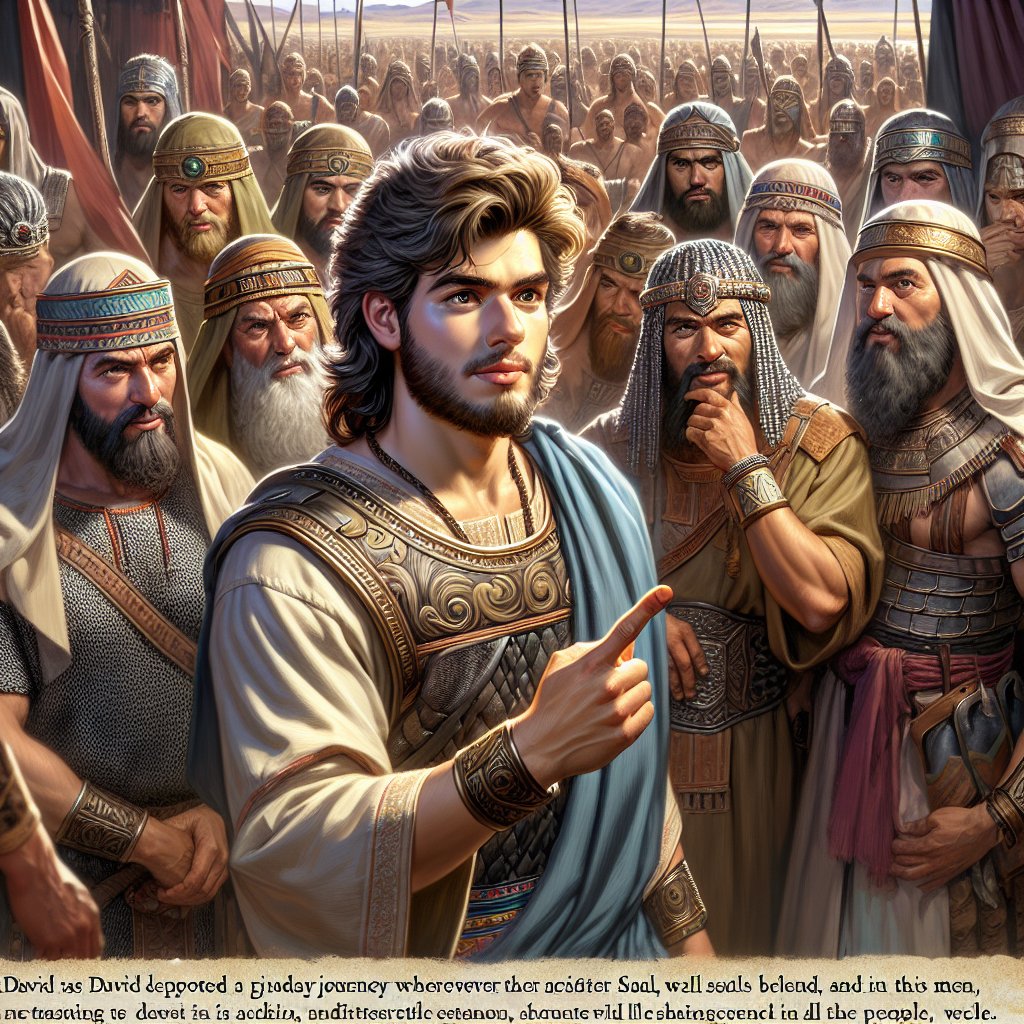
26 David was delighted to accept the offer. Before the time limit expired, 27 he and his men went out and killed 200 Philistines. Then David fulfilled the king’s requirement by presenting all their foreskins to him. So Saul gave his daughter Michal to David to be his wife. 

28 When Saul realized that the Lord was with David and how much his daughter Michal loved him, 29 Saul became even more afraid of him, and he remained David’s enemy for the rest of his life. 30 Every time the commanders of the Philistines attacked, David was more successful against them than all the rest of Saul’s officers. So David’s name became very famous. 

1 Samuel 18:24-30, NLT 

A snare had been set. King Saul wanted David dead. A trap would destroy him; Saul had the bait, and he also knew that nothing could be traced back to him. David had become very popular, and so Saul had to be very careful. 

Saul had a plan, and yet it seemed it was a good one. 

David was called upon to do what seemed impossible. Saul declared that David was to bring him back 100 “foreskins” taken from the dead Philistines. Now the Philistines had been a terrible problem for the people of Israel. They had been attacking and destroying without any restraint. 

Saul surmised that whether to win or lose, that the David problem would be resolved. If anything, David would be tarnished in the minds of the Philistines. Perhaps a bounty would be placed on David’s head. He would become a “target” and be especially hated. Perhaps this is true? 

But David would ultimately prevail. 

David exceeded and even doubled Saul’s wishes. Instead of just meeting, he doubled what Saul had required. Returning from the battle, he carried 200 of the foreskins back to the king. He returned with not just the minimum but surpassed it. 

Ah yes, the matter of the foreskins. First, we must understand how the Philistines had attacked and harmed Israel. They continued to advance and Israel hadn’t really responded to their continual harassment. Saul understood that many had died and he had no answer to their constant attacks. 

Second, David was a man of his times. Things were brutal and the very survival of Israel demanded a response. Yes, David needed to respond with force. The Philistines needed to know that Israel could return fire with fire. David did this. 

Third, these were dead men. David collected these foreskins from the dead his men had already killed. He didn’t seize the enemy and forced them to endure “surrender” their penises at “gunpoint.” David collected these foreskins from the Philistines that were already dead. 

Now granted this wasn’t perfect or New Testament theology, and yet it was the need of the moment.

The Shield of Meekness

1 Samuel 18:20-24 

There are a couple of layers here. In this passage we read 1) Saul’s thinking. 2) Saul’s men being faithful, 3) David’s response about it all. I suggest that we should gather up all three to understand what exactly is happening. 

In #1 we see something a bit sinister. Saul’s heart is full of evil. He wants David dead. When he finds that Michel really loves David, he manipulates that into his purposes. Saul doesn’t rejoice, rather he hates it. He devises a way to destroy David. 

In #2 we see that the king’s trusted men are those who smooth it all out. They manipulate it all to declare Saul’s “wonderful” offer of advancement. They are faithful, but not to the truth, but to Saul. (Every king, president or prime minister needs these sorts to do what he wishes.) 

In #3 we read about the thinking of David. He seems unaware of the evil that he has stepped into. We hear of his humility about it all. He recognizes that he’s unworthy to become a son-in-law. He brings up the subject of a dowery, the payment he must give to earn a marriage. 

It’s here that King Saul’s efforts seem to advance.  

Again, it’s how Saul works. He is still thinking that he’s in control (but he really isn’t). Saul doesn’t realize it, but he’s fighting against the purposes of God. It all seems simple to us now, but at that moment it’s not so easy. 

Andrew Murray 

Overcoming With an Opposite Spirit

1 Samuel 18:17-19 

Saul’s deceit is now effective. His heart wants to manipulate David; he wants to destroy him. As I read this portion, I’m struck by Saul’s evil. He wants David dead but is unwilling to do this sin on his own. He wants the ungodly Philistines to do this dirty deed. 

He falsely believes that David’s success is based on his military prowess. He thinks the skill of David militarily acumen is secular and superb. But it isn’t. David’s ability is grace. A gift of God to men. It really can’t be explained otherwise. 

Saul was a man bereft of the Spirit of God. 

I don’t think otherwise. Saul discovers his “kryptonite.” It is his denial of the belief of God’s presence on a simple man. Maybe he knows, but he also understands that something has changed; Saul has lost the anointing of the Lord. 

Saul has lost his way. And now he resorts to the human way of thinking. 

David is on a completely wavelength. In verse 18 he shows the humility and meekness of a heart that is saturated with God’s residence. I believe that this is called “overcoming with an opposite spirit.” I don’t think you can see this any other way. 

God is using David to communicate to us His heart. David’s humility is something built inside; He responds in an innocence that is seldom seen. He was sincere; what you see is what you get. 

David responds with a heartfelt love for Saul. David is totally sincere, and he responds reveals God’s heart toward Saul. (If only King Saul would listen to God. But that wasn’t going to happen.) 

The marriage between David and Merab was just pretense. Saul stepped in and blocked it; he would never allow David’s ascendance into the royal line.  

Something significant, I think. David still has his harp. He worships himself through this morass. That worship sustains him. When David plays, it’s a level of protection from his enemies. 

A word about “overcoming with an opposite spirit.” 

Faith does some amazing things in a simple believer’s heart. We must (incessantly) respond to evil in the way of David. He shows us how. 

Much could be said about how we interpret this passage, and yet I keep focusing upon David’s humility here. But the work is His. And we must see this insight of a man who is giving himself to the ways of God, even in the tumult of the moment, David rests in the Lord.

This will test the heart of David.

An Irrational Fear

1 Samuel 18:12-16 

This account is saturated with Saul’s fear. He dreads David’s success, and he’s terrified by it. Saul wants David dead. Obviously, the spears didn’t work. David was not dead. 

I suspect that Saul was not only disturbed by David’s success, but more importantly he no longer had the presence of God. Saul was uncomfortable around David. Afraid, and that fear now motivates him to hate, and also throw spears. He wanted to murder David. 

David must now have to face a new “Goliath.” 

He innately understood this. And what must he do to defuse this? Israel loved David, and that was a good thing, but it was also difficult. The praise of the people only stirred up Saul. That was very dangerous. David has now become a target. 

I think that when God took His presence away it only accelerated the destruction of Saul. “Nature abhors a vacuum,” and if God withholds Himself nothing but jealousy would control him. Murder was now free to rule Saul.

Saul now has an intimate understanding of being afraid.

Leave the Spear Behind

And Saul hurled the spear, for he thought, “I will pin David to the wall.” But David evaded him twice.

1 Samuel 18:11, ESV

And Saul sought to pin David to the wall with the spear, but he eluded Saul so that he struck the spear into the wall. And David fled and escaped that night.

Saul attacked David twice.

But David spiritually understood God’s heart. He understood the spiritual principle of “turning the other cheek” and “loving your enemies.” He overcame with love and kindness. And lots of grace.

“Do not be overcome by evil, but overcome evil with good

Romans 12:21, ESV

The Greek word for “overcome” is νικάω which can be translated as “to conquer or to come forth victorious.” It is also used when someone is arraigned before a court of law but wins the case.

You cannot attack another without destroying yourself.

“We win by tenderness. We conquer by forgiveness.”

Frederick W. Robertson

We must leave the spear in the wall. You must not throw it back.

Jealousy Consumes Saul

1 Samuel 18:8-9, ESV

I once learned the proper way to kill a diamond-back rattlesnake. Obviously, you must be careful, and Saul was not. The snake’s venom would destroy him; he had been bitten, and he would not survive. Jealousy over David’s victories would totally ruin him. Saul’s envy will poison his heart and soul. 

Please do not be consumed by this sin. A disciple must learn how to work through the issues of jealousy, envy, and evil. The Holy Spirit will see that we will see these things head on. God will not allow us to fully enter His kingdom if we hold on to jealousy and anger. 

Jealousy is like drinking something poisonous and hoping that the other person will die.

King Saul is Poisoned by His Sin

“Danger, Will Robinson, danger!”  

(B-9 Robot, “Lost in Space,” 1967) 

1 Samuel 18:6-8 

David was quite successful. His tactical prowess exceeded the other military leaders; he was a dream come true, and everyone knew it. But, there would be a downside to being victorious in battle. Gavid was about to find this out. Things would start to get crazy, and it wasn’t his fault. 

Out came those who could sing. 

Everyone knew it. David’s successes became the song of Israel. What he achieved was the stuff of legends. When he returned, he found those who received victory. They would sing, but those songs would create issues. Saul would become offended, and that would become dangerous. David would soon find this out. He understood, and yet, he really didn’t. King Saul would never really accept David’s accomplishments; Saul blocked out the wonderous battles of David. 

King Saul could never accept this. 

“The anger of the king is a deadly threat.”

Proverbs 16:14 

Saul’s anger would develop into jealousy, and that was dangerous. 

We’ll look at this closer.

War Band Leader

1 Samuel 18:5, NKJV 

David was now part of Saul’s army. The Goliath incident had propelled him into serving as a “man of war” now. The shepherd now led a war band. Saul seems to recognize David’s faith and skill. I don’t believe King Saul recognized exactly who this young man really was. 

The humble shepherd was soon given authority, “over the men of war.” 

David would have known little of the practical aspects of being a leader and the obligations involved. That would need to be earned before it could be appreciated. I really believe that King Saul was quite pleased with David at this point. 

Maybe though Saul’s need was for leadership in the top ranks of his army? We read that, “Now there was a fierce war with the Philistines all the days of Saul. And when Saul saw any strong man or any valiant man, he took him for himself.” (1 Sam. 14:52.) 

Saul saw with his own eyes Goliath being slaughtered. He recognized the audacious faith of the shepherd boy, and the incredible faith it instilled in the Israelite army. Yes, the king knew that David was a prodigy. 

Verse 10 points out what David’s strength was that he “behaved wisely.” In Hebrew is śāḵal, a verb that explains much. It means to be prudent, to have insight or to comprehend, or even to be an alert student. It seems that he grasped all that happened, whether good or bad. 

David understood that he was under the king’s authority. 

The people accepted the young David. The men in Saul’s government also supported David. He was accepted and well received. However, this is going to be a problem in the future. 

Wisdom is the power to see and the inclination to choose the best and highest goal, together with the surest means of attaining it. (JI Packer.)

Proverbs 4:7 

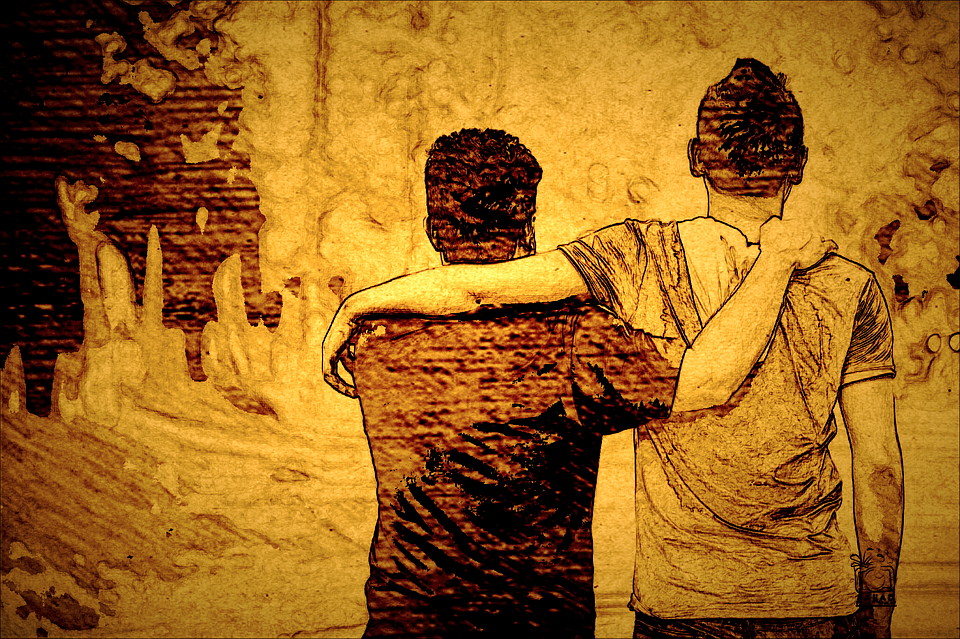
BFF: A Covenant Between Brothers

I Samuel 18:1-4 

It seems that Saul met with David immediately after the altercation with Goliath, a sort of debriefing. I can still see David carrying the decapitated head of the Philistine warrior. It would’ve been a bloody sight. 

After this meeting with Saul, he was no longer just a shepherd; David was now a warrior. 

There is something else–a new development, a commitment, or a covenant between David and Jonathan. Something significant happened there, and like most matters of the heart, it was difficult to explain. Some might think it was erotic, but that sullies and distorts this relationship. No, it was far more than that. 

Men generally avoid real friendship. In my 65 years I can think of 1-2 similar connections that approach this kind of depth or attachment. Almost all of my friends are more or less superficial. I rarely press beyond this. Maybe it’s kind of scary? 

David was anointed by Samuel to be the next king. He had been chosen to wield the power and authority of Israel with humility and grace. David knew it, but Jonathan saw it. 

I believe that Jonathan’s calling was perhaps more difficult: he had to yield the throne to David. Jonathan had to renounce ambition and pride. He would turn his back on his ego and drive. He would never be king. (Some would destroy themselves before we did this.) 

The text reveals some of the “covenant love” between these two men. Jonathan sheds off the trappings of his identity and gives them to David. In doing so, David is declared to be the future king.  

Jonathan commits to serving David. In his mind he rejects the notion of a hereditary monarchy. Being the king of Israel must be one of anointing, not who your father is. Both men recognize this implicitly. 

Romans 12:10, ESV

Decapitating the Monster

1 Samuel 17:51-54, NKJV

The war has been decided, Goliath is quite dead. The shepherd boy David has killed him, and the “coup de grace’ is when he chops the head of his (or, God’s) enemy.

There’s a finality about it all. When David raises up the severed head, the Philistines run. They understand that it was God who has given the victory to the army of Israel. They weren’t fighting against them, they were fighting against the Lord God.

I believe that the “battle is the Lords.”

As believing Christians, we’re starting to understand that we live in battle–a war has developed around us. It came about when we committed ourselves to walk in the grace of God. The enemy understands, even before we do. It’s the believer that is a threat.

We are dangerous to Satan, a very real threat to his kingdom.

Clothed in God’s grace, and wearing His “invisible” armor, we stand like David before Goliath. Our faith in the living God will always give us the victory. I believe that it was the Lord who guided the stone that was slung from David’s sling.

We must step out in faith–the victory is ours, and God guides the rock.

R.A. Torrey

“The Battle is the Lords”

David knew what would happen before it actually did. Most likely it had to do with a faith that understood God, he truly accepted that “the battle was/is the Lord’s. He accepted this.

Not only did David see this in Goliath, but notice this in the text, “I will give the dead bodies of the host of the Philistines this day to the birds of the air and to the wild beasts of the earth, that all the earth may know that there is a God in Israel.”

David understood that David would be killed by him, but the entire army would also die that day.

It would be a total victory over the entire Philistine army.

Also, let’s consider this phrase “the battle is the Lord’s. David says this and establishes something each believer must embrace today. We live in a war that Satan has instigated. Each of us must know exactly what we’re up against. A killer, and a destroyer of people!

Check this out:

“The thief comes only to steal and kill and destroy. I came that they may have life and have it abundantly.” John 10:10

(Notice Jesus’ ministry on us though in this “wonderful” verse.)

Let’s go back to David. It seems when he was good he was very good, but if we’re to be honest, when he was bad, he was very bad. (But forgiven.) Now I don’t understand what you think about all of this. But he did repent, and he was pardoned.

David Faces Goliath

David Kills Goliath

1 Samuel 17:48-51

He moved in to attack. David had no sword, no shield. It was just him, and this monster from Philistia. He entered this valley, and he had nothing. Well, he did have his sling.

There was no one else from the Israelite who would engage the giant. No one but David. All were frightened, and yet all watched David step up. Keep in mind that Goliath blasphemed God, and even that didn’t matter. It seemed to have no effect. This was an army of cowards.

David was a man of faith.

He stepped out with courage and confidence, actually running to meet Goliath. And Goliath ran out to attack him. From the story of David and Goliath, we can learn that the God we serve is capable of defeating any of the giants in our lives—fear, depression, financial issues, doubts of faith—if we know Him and His nature well enough to step out in faith. When we do not know what the future holds, we have to trust Him. 

David becomes a vote of faith even for us today When he slung that rock he became our example. And we definitely need that.

“My attitude was and still is like that of David, who was ashamed that the armies of Israel would tremble before Goliath. Without hesitation he stepped forward with complete confidence in the God who had proven Himself to be faithful (1 Sam 17). For David, the size of the giant was irrelevant.”

David Hunt

Wearing Armor that Fits You

1 Samuel 17:38-39, see also NLT

I sense that king Saul was worried and scared. Facing Goliath was a man’s job, not for a skinny boy. A defeat would be catastrophic. But the terms offered by Goliath would allow the Philistines total control over Israel. This was unacceptable.

But David had heard Goliath’s bellowing blasphemy, The God of Israel was being challenged and mocked. Something inside of David rose up. God’s honor was at stake.

No one thought that David had a “snowball’s chance in hell.”

In this passage we read that Saul offered David his own armor. Now I don’t know what was going through Saul’s mine–did he feel guilty or embarrassed? Why did he do this?

To allow David the boy to go ahead and fight Goliath was disturbing but David presents his case rather forcibly; he tells of his encounters with bears and lions attacking his flock. (1 Samuel 17:34-36.)

So, what traits is he showing? I think the first is zeal, and then courage, faith, self-sacrifice and righteous anger. But perhaps the most significant (and easily forgotten) is love. He simply loved God, and loved the nation (and armies) of Israel. Love is not always gushy. It’s action. It pushes one to take risks.

As I survey this passage I’m struck by Psalm 23. Most commentators believe this particular Psalm was written previously before this fight with Goliath. It was composed while David was with his flock out in the pasture.

Wearing armor is necessary as a Christian. If you’re a born again believer, then it’s to be a critical part of who you are spiritually. When the apostle Paul writes to the Ephesian believers he pointedly refers to what we’re to wear spiritually when we stand against our personal “Goliath.” I would stress that this isn’t an optional feature.

Ephesians 6:11-12, NLT

The Smear of the Holy Spirit

I’d like to step back a little. Something quite significant happened when the boy David was anointed by the prophet Samuel. David the shepherd boy had been divinely chosen to become the future king of Israel.

Why two, not exactly sure. Maybe the first was done privately, but the second was done publicly. The first was for the boy, David, and his family. The second was done openly in front of the nation.

When David the boy was anointed by Samuel it gave him the power and strength to face Goliath. That first event was one of consecration for it gave David confidence and awareness of his destiny. He now operated with a new awareness that the sovereign God was now with him.

A.W. Tozer

I believe that these anointings gave David the awareness of the Father’s special presence to be bold and confident. The second anointing not only placed him as king but also assured the people that David was different. People needed to know that this new king had God’s special touch.

Later on David would sin greatly with Bathsheba and Uriah. Sin diminishes the anointing. Compromising with sin does this; it always drains away God’s favor. (We need to understand this.) David would lose much by turning away from his calling.

That is why Psalm 32 and 51 are quite critical in his (and God’s eyes). David frittered away God’s special touch, but he would regain it by his deep repentance.

Psalm 53:10-11

A Human Tank

1 Samuel 17:4-7, NLT

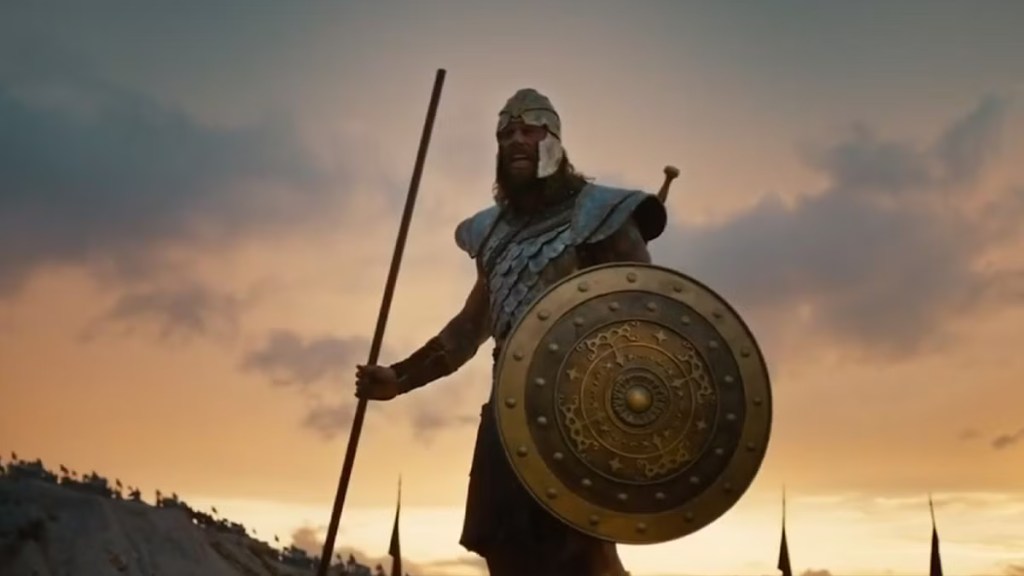
Goliath was like a human tank. First of all, he was almost twice the size of any other man. Secondly, decked out in his armor he was pretty much “bullet proof.”

The giant wore about 140 pounds of bronze armor, his thick spear weighed over 15 lbs. I guess Goliath wanted to keep it somewhat interesting, He “stood and shouted a taunt across to the Israelites.”

In the book of 1 Samuel 17 we read that the Israelite camp was “terrified.”

“I defy the armies of Israel today! Send me a man who will fight me!” 11 When Saul and the Israelites heard this, they were terrified and deeply shaken.”

Any infantry officer will tell you that if you can instill fear the battle is pretty much won. The Philistines already had the upper hand. The terror infected the Israel, in spite of some lucrative inducements no one moved–there still were no volunteers.

But here comes the boy David, “a man after God’s own heart.”

Goliath was arrogant and blasphemous. He believed that the Philistine army was superior in every way, and he was the ultimate Philistine.

How do you handle fear? As a believer do you listen to the enemy lies. If you are a believer (and I assume you are), the enemy has a “contract” out on you. Satan has marked you as a threat to his kingdom, and your fear is incredibly useful to him.

“Fear is born of Satan, and if we would only take time to think a moment we would see that everything Satan says is founded upon a falsehood.”

   A.B. Simpson

1 Thessalonians 3:2, LB