The Encourager

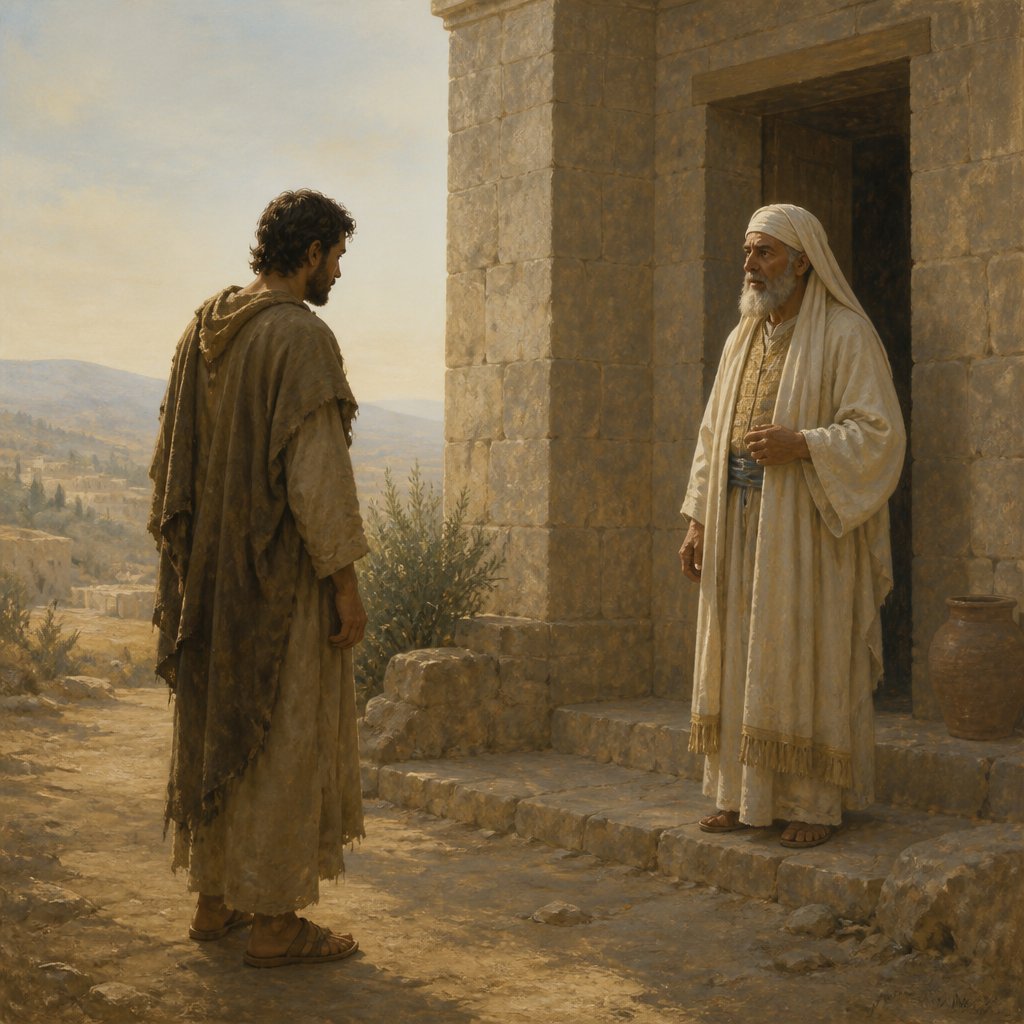
1 Samuel 20:1-4, ESV 

David leaves Naioth behind, as he realizes that Saul (and his soldiers) had been temporarily “disabled.” He knew that the threat to assassinate him had for the time being had been stalled, and yet David didn’t stay for the theatrics. He simply knew it was time for an escape. 

And yet David seems mystified, and he reaches out to Jonathan with 3 questions that trouble him. It seems David is loyal, but he simply doesn’t understand the intensions of Saul. In all three questions David asks “what.” He is mystified. 

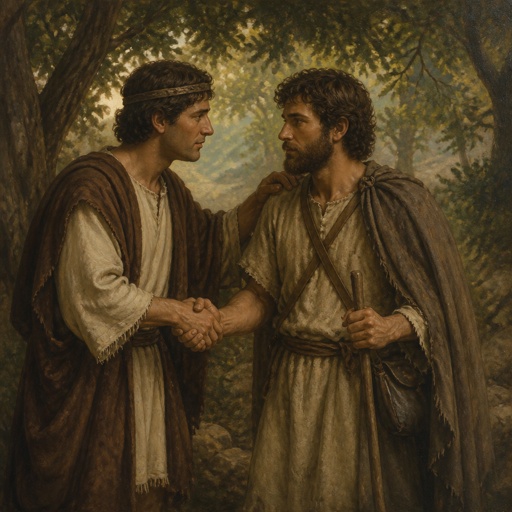
It takes the humility of Jonathan to attempt to ease David’s fear. 

Jonathan answers in an oblique way. He assures David that he can protect him with what he knows. Jonathan is aware of Saul’s treacherous plans and assures David of the strategies and plans that the enemy is concocting. He will do all that he can. 

It is here that we begin to understand that Saul is drawing near, and that David realizes that certain death has gotten very close. David understands how close he has come to being killed at the hand of Saul. “A step between me and death” is how David sees the plots of Saul. 

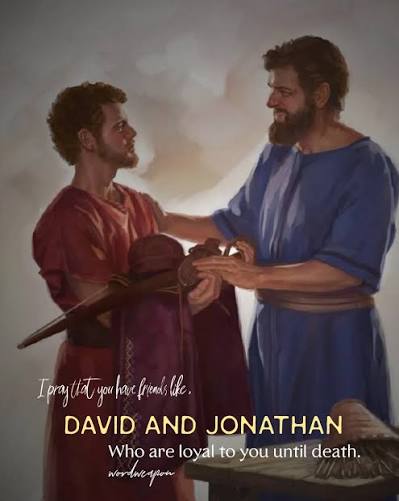
Again, Jonathan assures David of his commitment. Although he does not debate the claims of David, he simply assures him of his covenantal dedication. Jonathan encourages a discouraged man, and he speaks hope to the struggling David. 

This is what an encourager does. They bring comfort to the frustrated and weary. They stand in a remarkable place, and although they won’t deny the facts, they give strength to the weary. They declare all that God is to those who are overwhelmed and fearful. 

“He gives power to the weak and strength to the powerless.”  

Isa. 40:29, NLT 

This comfort usually comes through people—servants of God who do not debate but encourage. They have renounced their own agenda and now live for others. They embolden, spurring others to be faithful to their calling. 

Charles Spurgeon 

Jonathan Understands

“And Saul spoke to Jonathan his son and to all his servants, that they should kill David. But Jonathan, Saul’s son, delighted much in David. And Jonathan told David, “Saul my father seeks to kill you. Therefore be on your guard in the morning. Stay in a secret place and hide yourself. And I will go out and stand beside my father in the field where you are, and I will speak to my father about you. And if I learn anything I will tell you.”  

4 “And Jonathan spoke well of David to Saul his father and said to him, “Let not the king sin against his servant David, because he has not sinned against you, and because his deeds have brought good to you. For he took his life in his hand and he struck down the Philistine, and the Lord worked a great salvation for all Israel. You saw it, and rejoiced. Why then will you sin against innocent blood by killing David without cause?” And Saul listened to the voice of Jonathan. Saul swore, “As the Lord lives, he shall not be put to death.”  

7 “And Jonathan called David, and Jonathan reported to him all these things. And Jonathan brought David to Saul, and he was in his presence as before.” 

1 Samuel 19:1-7 

What a strange sequence of events, but stranger things have happened and will happen to David (the future king of Israel). 

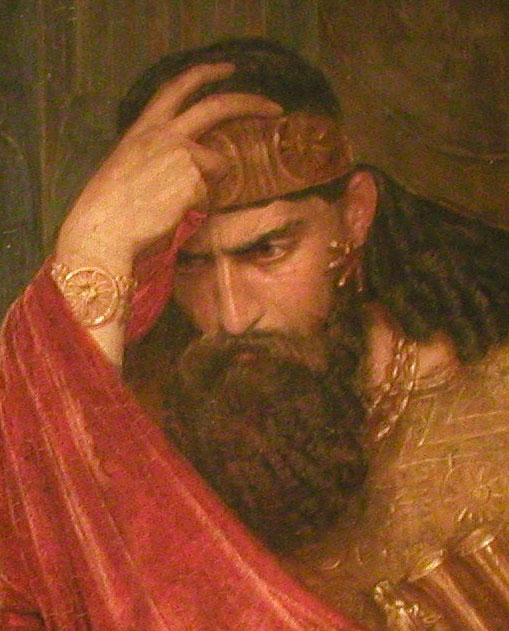
Saul finally takes his rage out into the open. He wants David to be executed, but he never offers any justification for his anger or decision. All he wants is David’s head. No explanation is given. David is regarded as a traitor, but to whom? 

Saul requires his court to take action. The king wants David dead. This proclamation has never happened before—the king of Israel demanding the death of another Israelite. This is the deep power of wickedness coming from a twisted heart. This can only come from something quite satanic. 

Jonathan, at this critical point, understands the strong power of covenant. He has vowed to defend David, no matter what the cost is. He will be true forever. So Jonathan determines to defend his “brother.” 

Jonathan has now become a spy. He listens closely and then passes to David about what has heard. He will defend him no matter the cost. Jonathan understands that the very life of David is in his hands. 

Jonathan reminds king Saul of the heroics of David on behalf of the nation of Israel. He speaks truth into untruth. Saul listens and is persuaded that his decrees are wrong. He backs off and vows to treat David favorably. 

Saul swears that David should not be touched (executed). That will be temporary as we can see. It seems that Saul’s wrath is simmering below the surface. His repentance is only for show, at least for this moment. Oh, the depth of an angry unforgiveness. 

Because of Jonathan’s intercession, David is forgiven temporarily, and he is restored to his place in court. Perhaps David’s past triumphs are the key to his present survival, at least for the moment.  

Saul Hates David

1 Samuel 18:28-30 

David was fighting two battles at once. He had to face King Saul’s hostility, and the ongoing war with the Philistine’s army. I suppose that it was a tremendous drain. After the battle he came home and found nothing but jealousy and anger. 

Saul was very afraid of David. 

Fear like this turned into deep seated malevolence and hatred. Despite his tremendous success he, upon returning home, found zero recognition. To many he was a hero, but to Saul he was despised and detested. And again, Saul was deeply afraid of David. 

Fear accomplishes nothing. Fear only destroys. 

Saul was in a spiritual downward spiral. It was just a matter of time before the end. King Saul had become evil. God’s Spirit had left him, and he was nothing more than a shell, vacant and empty of anything good. Perhaps David was grieved to see the king turn into something unrecognizable and dark. 

David had been anointed as the next king. 

The prophet’s word had been spoken. There would be resistance and hostility which seemed to contradict this prophecy. David would soon discover the enemies battle against what God had declared. (But what choice did he have?) 

God’s declaration of David’s anointing didn’t matter to Saul. He would continue the path he had chosen. David would continue to find success against the Philistines.

David Guzik 

The Shield of Meekness

1 Samuel 18:20-24 

There are a couple of layers here. In this passage we read 1) Saul’s thinking. 2) Saul’s men being faithful, 3) David’s response about it all. I suggest that we should gather up all three to understand what exactly is happening. 

In #1 we see something a bit sinister. Saul’s heart is full of evil. He wants David dead. When he finds that Michel really loves David, he manipulates that into his purposes. Saul doesn’t rejoice, rather he hates it. He devises a way to destroy David. 

In #2 we see that the king’s trusted men are those who smooth it all out. They manipulate it all to declare Saul’s “wonderful” offer of advancement. They are faithful, but not to the truth, but to Saul. (Every king, president or prime minister needs these sorts to do what he wishes.) 

In #3 we read about the thinking of David. He seems unaware of the evil that he has stepped into. We hear of his humility about it all. He recognizes that he’s unworthy to become a son-in-law. He brings up the subject of a dowery, the payment he must give to earn a marriage. 

It’s here that King Saul’s efforts seem to advance.  

Again, it’s how Saul works. He is still thinking that he’s in control (but he really isn’t). Saul doesn’t realize it, but he’s fighting against the purposes of God. It all seems simple to us now, but at that moment it’s not so easy. 

Andrew Murray 

An Irrational Fear

1 Samuel 18:12-16 

This account is saturated with Saul’s fear. He dreads David’s success, and he’s terrified by it. Saul wants David dead. Obviously, the spears didn’t work. David was not dead. 

I suspect that Saul was not only disturbed by David’s success, but more importantly he no longer had the presence of God. Saul was uncomfortable around David. Afraid, and that fear now motivates him to hate, and also throw spears. He wanted to murder David. 

David must now have to face a new “Goliath.” 

He innately understood this. And what must he do to defuse this? Israel loved David, and that was a good thing, but it was also difficult. The praise of the people only stirred up Saul. That was very dangerous. David has now become a target. 

I think that when God took His presence away it only accelerated the destruction of Saul. “Nature abhors a vacuum,” and if God withholds Himself nothing but jealousy would control him. Murder was now free to rule Saul.

Saul now has an intimate understanding of being afraid.

Leave the Spear Behind

And Saul hurled the spear, for he thought, “I will pin David to the wall.” But David evaded him twice.

1 Samuel 18:11, ESV

And Saul sought to pin David to the wall with the spear, but he eluded Saul so that he struck the spear into the wall. And David fled and escaped that night.

Saul attacked David twice.

But David spiritually understood God’s heart. He understood the spiritual principle of “turning the other cheek” and “loving your enemies.” He overcame with love and kindness. And lots of grace.

“Do not be overcome by evil, but overcome evil with good

Romans 12:21, ESV

The Greek word for “overcome” is νικάω which can be translated as “to conquer or to come forth victorious.” It is also used when someone is arraigned before a court of law but wins the case.

You cannot attack another without destroying yourself.

“We win by tenderness. We conquer by forgiveness.”

Frederick W. Robertson

We must leave the spear in the wall. You must not throw it back.

David Faces Goliath

David Kills Goliath

1 Samuel 17:48-51

He moved in to attack. David had no sword, no shield. It was just him, and this monster from Philistia. He entered this valley, and he had nothing. Well, he did have his sling.

There was no one else from the Israelite who would engage the giant. No one but David. All were frightened, and yet all watched David step up. Keep in mind that Goliath blasphemed God, and even that didn’t matter. It seemed to have no effect. This was an army of cowards.

David was a man of faith.

He stepped out with courage and confidence, actually running to meet Goliath. And Goliath ran out to attack him. From the story of David and Goliath, we can learn that the God we serve is capable of defeating any of the giants in our lives—fear, depression, financial issues, doubts of faith—if we know Him and His nature well enough to step out in faith. When we do not know what the future holds, we have to trust Him. 

David becomes a vote of faith even for us today When he slung that rock he became our example. And we definitely need that.

“My attitude was and still is like that of David, who was ashamed that the armies of Israel would tremble before Goliath. Without hesitation he stepped forward with complete confidence in the God who had proven Himself to be faithful (1 Sam 17). For David, the size of the giant was irrelevant.”

David Hunt

A Human Tank

1 Samuel 17:4-7, NLT

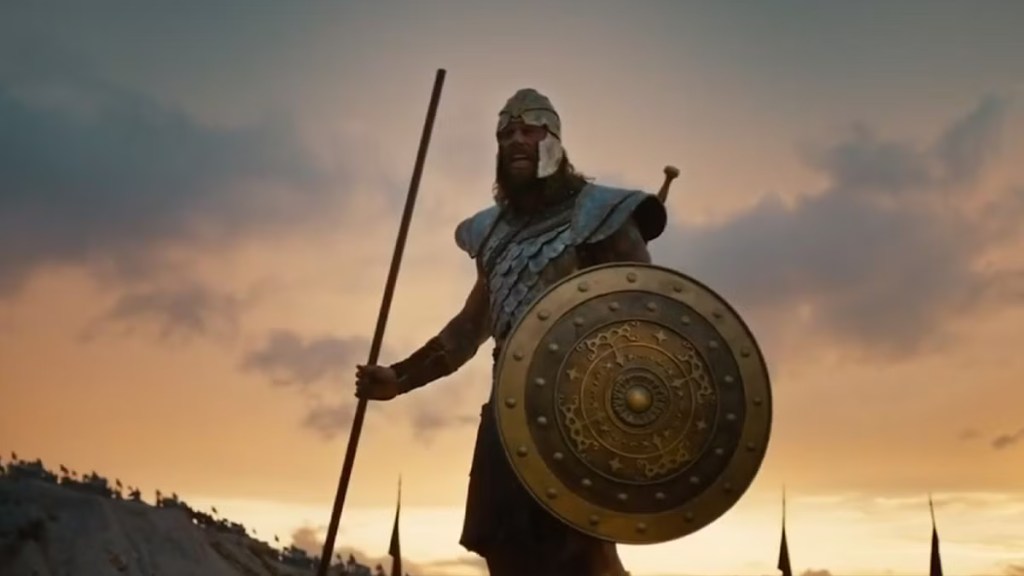
Goliath was like a human tank. First of all, he was almost twice the size of any other man. Secondly, decked out in his armor he was pretty much “bullet proof.”

The giant wore about 140 pounds of bronze armor, his thick spear weighed over 15 lbs. I guess Goliath wanted to keep it somewhat interesting, He “stood and shouted a taunt across to the Israelites.”

In the book of 1 Samuel 17 we read that the Israelite camp was “terrified.”

“I defy the armies of Israel today! Send me a man who will fight me!” 11 When Saul and the Israelites heard this, they were terrified and deeply shaken.”

Any infantry officer will tell you that if you can instill fear the battle is pretty much won. The Philistines already had the upper hand. The terror infected the Israel, in spite of some lucrative inducements no one moved–there still were no volunteers.

But here comes the boy David, “a man after God’s own heart.”

Goliath was arrogant and blasphemous. He believed that the Philistine army was superior in every way, and he was the ultimate Philistine.

How do you handle fear? As a believer do you listen to the enemy lies. If you are a believer (and I assume you are), the enemy has a “contract” out on you. Satan has marked you as a threat to his kingdom, and your fear is incredibly useful to him.

“Fear is born of Satan, and if we would only take time to think a moment we would see that everything Satan says is founded upon a falsehood.”

   A.B. Simpson

1 Thessalonians 3:2, LB