The Cave of Adullam

1 Samuel 22:1-2, NKJV. (Background: Psalm 57 and Psalms 142.) 

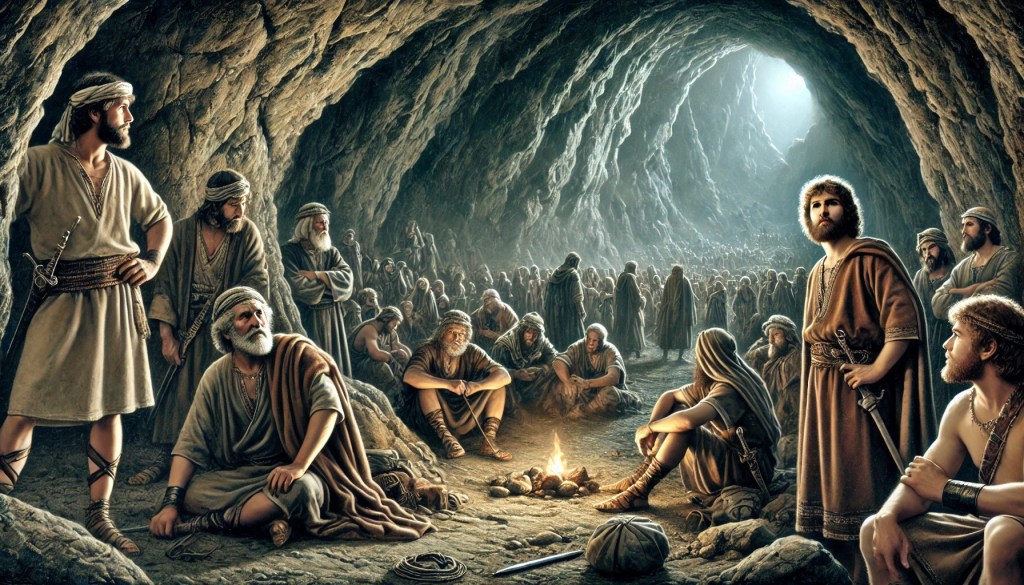
The cave of Abdullam is now a national park in Israel. It’s part of a system of caves, but this is the biggest and most well-known. Thousands visit it every year; it’s on the list that tourists want to visit. 

Our passage today tells us that immediately after the “insane” David skedaddled from Gath, he travelled to this cave. I suspect that Saul had spied everywhere, so the king had a general idea where David was. But the cave of Adullam was very close to the Philistine border. 

A state of war between Israel and Philistia existed, and king Saul could not risk any appearance of violating that without causing an incident. Perhaps Saul was somewhat content that David was isolated in a “hole in the ground,” and everyone would simply forget him. 

But the was not the case. 

First, it was family, then others came. I suspect David’s brothers may have realized that they now were on Saul’s “list.” 

The others had other reasons. Most knew of David’s prowess as a warband leader; some may have served with him. They may have known of his anointing by the prophet to be the next king. 

Now these I call the “three Ds.” The distressed, the debtors, the discontented, sought out David. Our text tells us there was 400 men (plus their families). If David thought, he was hidden and alone he was mistaken. 

Logistically, I’m not sure how that works out. Where did their support come from? And again, what was Saul thinking? 

I suspect that some of these would develop and become the “mighty men” of David, and they would become some of his generals that David would rely on when he became king. 

Verse 3 tell us that “he became captain over them.” They submitted to David and meshed themselves into whatever destiny may come.

Psalm 57:1, from a song written by David while in the cave of Adullum.

The Encourager

1 Samuel 20:1-4, ESV 

David leaves Naioth behind, as he realizes that Saul (and his soldiers) had been temporarily “disabled.” He knew that the threat to assassinate him had for the time being had been stalled, and yet David didn’t stay for the theatrics. He simply knew it was time for an escape. 

And yet David seems mystified, and he reaches out to Jonathan with 3 questions that trouble him. It seems David is loyal, but he simply doesn’t understand the intensions of Saul. In all three questions David asks “what.” He is mystified. 

It takes the humility of Jonathan to attempt to ease David’s fear. 

Jonathan answers in an oblique way. He assures David that he can protect him with what he knows. Jonathan is aware of Saul’s treacherous plans and assures David of the strategies and plans that the enemy is concocting. He will do all that he can. 

It is here that we begin to understand that Saul is drawing near, and that David realizes that certain death has gotten very close. David understands how close he has come to being killed at the hand of Saul. “A step between me and death” is how David sees the plots of Saul. 

Again, Jonathan assures David of his commitment. Although he does not debate the claims of David, he simply assures him of his covenantal dedication. Jonathan encourages a discouraged man, and he speaks hope to the struggling David. 

This is what an encourager does. They bring comfort to the frustrated and weary. They stand in a remarkable place, and although they won’t deny the facts, they give strength to the weary. They declare all that God is to those who are overwhelmed and fearful. 

“He gives power to the weak and strength to the powerless.”  

Isa. 40:29, NLT 

This comfort usually comes through people—servants of God who do not debate but encourage. They have renounced their own agenda and now live for others. They embolden, spurring others to be faithful to their calling. 

Charles Spurgeon 

War Band Leader

1 Samuel 18:5, NKJV 

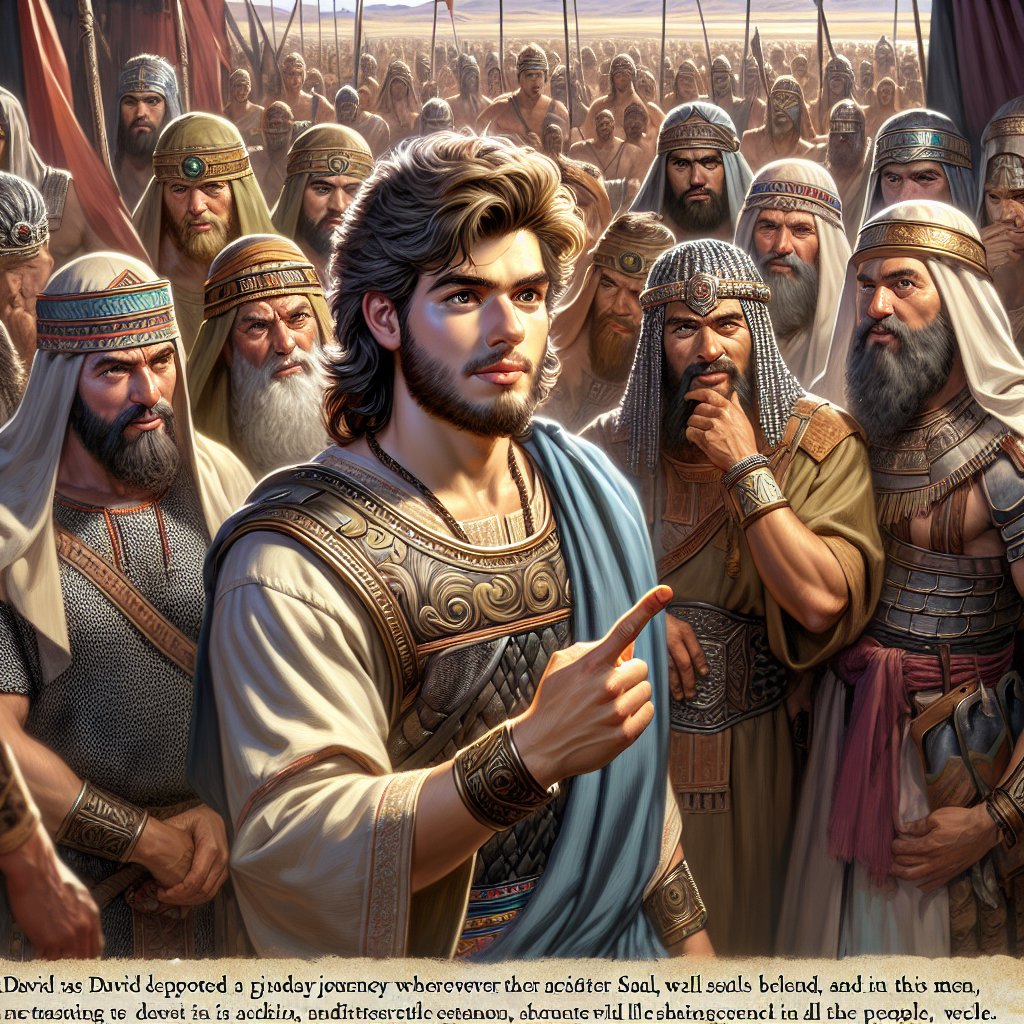
David was now part of Saul’s army. The Goliath incident had propelled him into serving as a “man of war” now. The shepherd now led a war band. Saul seems to recognize David’s faith and skill. I don’t believe King Saul recognized exactly who this young man really was. 

The humble shepherd was soon given authority, “over the men of war.” 

David would have known little of the practical aspects of being a leader and the obligations involved. That would need to be earned before it could be appreciated. I really believe that King Saul was quite pleased with David at this point. 

Maybe though Saul’s need was for leadership in the top ranks of his army? We read that, “Now there was a fierce war with the Philistines all the days of Saul. And when Saul saw any strong man or any valiant man, he took him for himself.” (1 Sam. 14:52.) 

Saul saw with his own eyes Goliath being slaughtered. He recognized the audacious faith of the shepherd boy, and the incredible faith it instilled in the Israelite army. Yes, the king knew that David was a prodigy. 

Verse 10 points out what David’s strength was that he “behaved wisely.” In Hebrew is śāḵal, a verb that explains much. It means to be prudent, to have insight or to comprehend, or even to be an alert student. It seems that he grasped all that happened, whether good or bad. 

David understood that he was under the king’s authority. 

The people accepted the young David. The men in Saul’s government also supported David. He was accepted and well received. However, this is going to be a problem in the future. 

Wisdom is the power to see and the inclination to choose the best and highest goal, together with the surest means of attaining it. (JI Packer.)

Proverbs 4:7