When We Sing, We Soar

“And Saul said, “May you be blessed by the Lord, for you have had compassion on me. 22 Go, make yet more sure. Know and see the place where his foot is, and who has seen him there, for it is told me that he is very cunning. 23 See therefore and take note of all the lurking places where he hides and come back to me with sure information. Then I will go with you. And if he is in the land, I will search him out among all the thousands of Judah.” 24 And they arose and went to Ziph ahead of Saul.”

1 Samuel 23:21-24

At this point, a little before and a little later David wrote Psalms 13, 34, 52, 57, 59, and 142. We know this by the superscription written above each of them. All are desperate observations and praises.

We also know that David wrote almost ½ of the book of Psalms.

In this passage (chapter 23) we read of King Saul’s continual pursuit of David. It’s the Ziphites, in verses 19-20 we read of their cooperation with Saul, and they become his willing accomplices. They pass on David’s general location.

But Saul needs specifics. It’s a fairly large area and David and his men are constantly moving. King Saul is also aware that the Philistines are watching and ready to pounce. Saul really needs precise info. He needs to reduce his exposure to the enemy army and avoid a long-drawn search for David.

During this time, David writes and sings.

These Psalms have been passed down to us and we can (if we wish) find a deep source of strength. We read of the Lord’s care for believers who are also being pursued, attacked by the enemy of our souls. Satan may pressure us, but he can never destroy us.

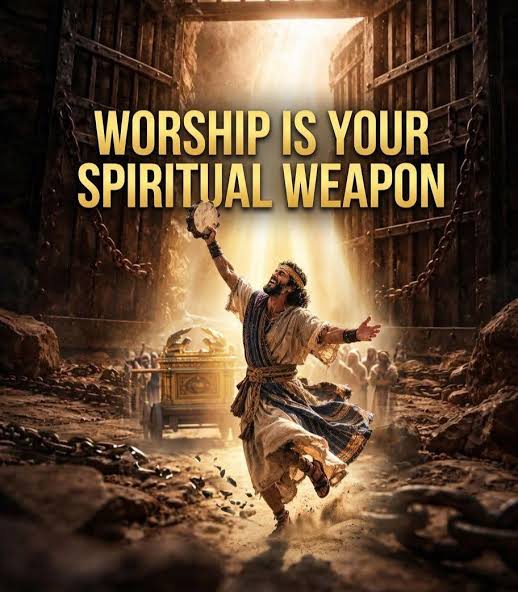
Worship is warfare.

Throughout scripture we defend and advance through praise and worship. When our hearts sing we defeat the enemy and rout the presence of darkness. David understood this, strumming his harp was not just a casual action of meditative relaxation.

We are commissioned to go to war against evil. The Psalms teach us how this is done. Too often we let the enemy advance because we are too quiet. When Israel went to war, the musicians went first.

Psalm 13:3-6, ESV

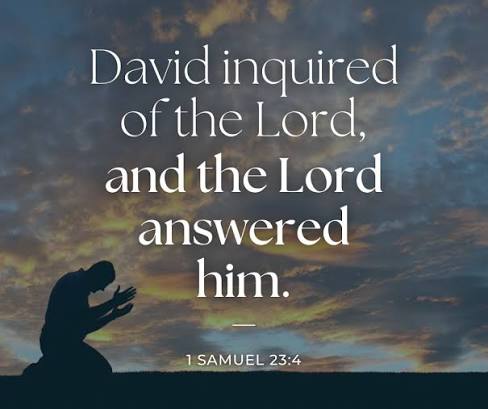
Consider and answer me, O Lord my God;
light up my eyes, lest I sleep the sleep of death,
4 lest my enemy say, “I have prevailed over him,”
lest my foes rejoice because I am shaken.

5 But I have trusted in your steadfast love;
my heart shall rejoice in your salvation.
6 I will sing to the Lord,
because he has dealt bountifully with me.

kingdavid101.com

“You Shall Be King”

KingDavid101.com

1 Samuel 23:15-18

Somehow I think that if a hitman was actively following me, I would become fearful and a bit paranoid. I would see everyone through these fallen filters. I don’t know what I would do, and fear would consume everything.

Jonathan finds David hiding in the wilderness. Saul’s son, a man who could be king himself rejects the throne himself. Jonathan correctly sees the good in David: the anointing by Samuel, Goliath, the psalms David wrote, and all the victories over the Philistines.

There is no doubt in Jonathan’s heart. He believes in David and humbly steps aside. There is no bluster and no prideful desire for taking Saul’s throne. He understands that David will be the next king of Israel.

Jonathan’s presence to the wilderness of David was significant and timely. It’s written in verse 16 that he “strengthened his hand in God.” The word in Hebrew is somewhat broad, but it often means “to restore to strength” or “to make hard.” This is exactly what David needed to hear.

We all desperately need encouragement from someone else.

And we must be an encouragement to God’s people who are in a deep wilderness.

Sure, the Word, worship, and communion are places of encouragement for me. The “home groups” and my elders build me up (or edify).

1 Thessalonians 5:11, ESV

Jonathan become God’s agent to support and reassure David who hides from King Saul in a difficult place in the wilderness. What a powerful ministry. To come along the side of another and remind someone else of God’s calling, and to strengthen them of God’s purpose and work.

This passage should bless both the “would be king,” and those 600 men who have attached to David. What a blessing Jonathan is to David.

We are called to do what Jonathan did for David.

John Greenleaf Whittier

Being Betrayed

1 Samuel 23:7-12, NLT

This passage reveals three details that are especially important to the reader.

  • Saul still believes that he has God’s approval and blessing.
  • David is still seeking the Father’s will and wisdom
  • Keilah, freed from attack by the Philistines by David, will turn right around and betray David.

Saul still believes.

It’s odd how someone like King Saul can still believe that the Lord is guiding him. His heart is honeycombed with jealousy and murder, and yet he doesn’t see it. He still thinks that wearing a crown gives him the automatic privileges of divine kingship and blessing.

What self-deception, Saul has not had God’s approval for a very long time, (see 1 Samuel 15:10-30). Obedience is far better than any sacrifice. Saul has been living outside of the presence for a long time.

“As the salt flavors every drop in the Atlantic, so does sin affect every atom of our nature. It is so sad there, so abundantly there, that if you cannot detect it, you are deceived.”

Charles Spurgeon

David is still seeking.

Hearing the desperation of Keilah, and then seeking the Lord of what to do, he directs his men to protect the city. He makes no strategic decision that could possibly put him outside of God’s will. He will not do this.

“The greatest mistake any Christian can make is to substitute his own will for the will of God.”

Harry Ironside

Keilah, will betray David.

This is so treacherous, it can hardly be believed or understood. The hearts of lost men only seek their own benefit. The elders of Keilah turn around and sell out those who had just delivered them. David seeks again God’s will and finds out that they will be betrayed. What should have been a celebration of joy only discloses lies and falsehoods.

Ironic, isn’t it. David and his 400 men escape the town they had just saved.

Psalm 17:9

David Hood & His Merry Men

David can’t shake off the desperation of the Keilahites. Their plight becomes a passionate purpose for David. He hears of the need, and understands the injustice of these Philistine raiders. He knows deep down that they must be stopped.

Spiritual “wealth” is found here in this passage. Gold nuggets, and flawless diamonds for the taking. Let’s get started. 

But here’s a few things that might be helpful. 

  • It seems that David is quite approachable. He listens to the guidance of his men. He listens and then responds. David never diminishes their concerns, they’re depending upon him.
  • David seeks the guidance and will of the Lord twice because of their caution. 
  • David is going to do what King Saúl was supposed to do; to protect and defend the city of Keilah. It seems Saul had abdicated his call as king in his desperate pursuit of David. 
  • There seems to be a real risk involved. This was not a summer stroll. 
  • David knows in his heart what he has to do. Since Saul didn’t come to defend Keilah, he must do what is needed. 
  • God does not chide David for asking twice. There seems that there were several men in the Old Testament that required another ‘conversation’ with God. 

Can we do what is right when the situation demands it? Sometimes we see a need that others have neglected to meet. Can we step into what is needed at that moment?

What if the “detours” and the interruptions are really the path we were meant to take?  

These are good questions to ask ourselves.  Our compassion should not be rigid. I remember a time when the Lord asked me to be interruptible. That is, to set aside what I thought was essential, to take up something that made little sense, but did matter to the one asking. 

When I learned to be interrupted, it ended up giving me a blessing that came out of nowhere. Hitting the pause button is rarely a mistake if you believe the Holy Spirit is leading you. 

War Crime: Aftermath

1 Samuel 22:20-23 

The terrible slaughter of the town of Nob had been total—well, almost. One man escaped and ran to David.  His name is Abiathar. He brought the report to David of the complete massacre of everyone. Abiathar also identified Doeg the Edomite as the murderer. 

David has a soul searching, reflective response to this news.  

This intrigues me. “I knew…” and “I caused…” David now realized his actions had terrible consequences. He voices his complicity out loud. In his heart he sees his guilt (at least partially). This dark murder would change him. 

His sin was lying to the high priest.  

David deceived him. Doeg also saw David manipulating Ahimelech and Doeg remembered this. In a sense David in his awful duplicity created death for the priestly city of Nob. In his heart, he understood what he had done. 

We must realize how our evil has ramifications.  

It’s like throwing a rock in a still pool. Concentric waves happen as a result, and they cannot be stopped. Consequences to sin affect others and often we never realize it. But here we see David seeing it and responding like he did. 

David seems to have a tender heart to respond to what he has done. It becomes the impetus of Psalm 52 which was written during this time. Here we can read what he was thinking. Here’s the title and verses 1-3. 

Psalm 52:1-3

It’s quite apparent that David survives his guilt, and that is a powerful lesson for us. There are things that must be turned over to God. There is forgiveness for the evil we have done. We must give that to God. 

Psalm 103:12

“Until I know what God is going to do for me.”

David and 400 (“the 3D men”) are together in the Cave of Abdullam waiting for what, I do not know. I suspect they didn’t know either. For any of us who are in a “holding .pattern,” David’s stay can be understood. But God hasn’t forsaken you, not a bit. Waiting on God is never easy. Every disciple goes through this. 

David takes up this time to care for his parents. You see they followed David out into the wilderness. I’m pretty sure that were prime candidates for blackmailing David. They could be easily taken as hostages by Saul, to manipulate David who is hiding. 

Now there is a reason that they went to Moab. David’s great-grandmother Ruth was a Moabite (Ruth 4:18-22, 1:4). That would mean that one of his parents could claim that Ruth was a grandma to one of them. It’s said that “blood is thicker than water.” That proverb has a powerful theological meaning. 

In his heart he’s taking it one step at a time, and he really doesn’t know what the next step is going to be. He’s walking by faith, not by sight. And you know that is how God works out His will. We don’t always understand, but we do obey. 

Gad the prophet steps up and speaks the word of God to David. He must return to Judah. That is probably not what David wanted to hear; after all, it’s moving toward danger. King Saul rules Judah, and David must be thinking that he would be moving into peril. 

King Saul hears of this and he’s waiting for David.

The safest place to be is in the center of God’s will. Perhaps it’s here that David pens this verse. David is learning that the Cave of Adullam is not a safe place, he must understand his real safety is in the Rock of God. 

Psalm 91:2