True Colors

Saul wants to kill David

Jonathan now knows; his father’s true colors were now obvious, which almost always happens over time. Saul hates David and now begins an even more effort to murder him. His hatred now consumes him. The king is no longer rational. He wants to kill him. 

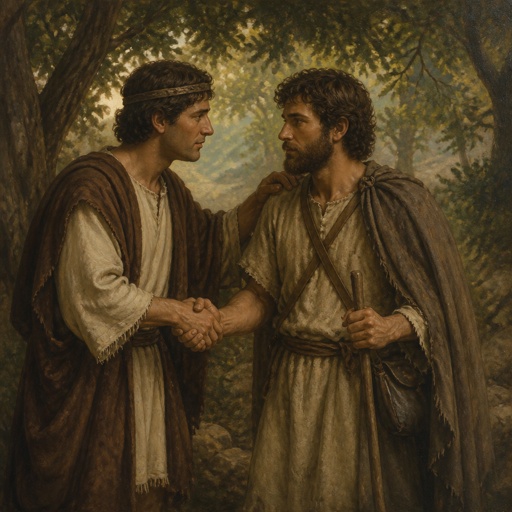
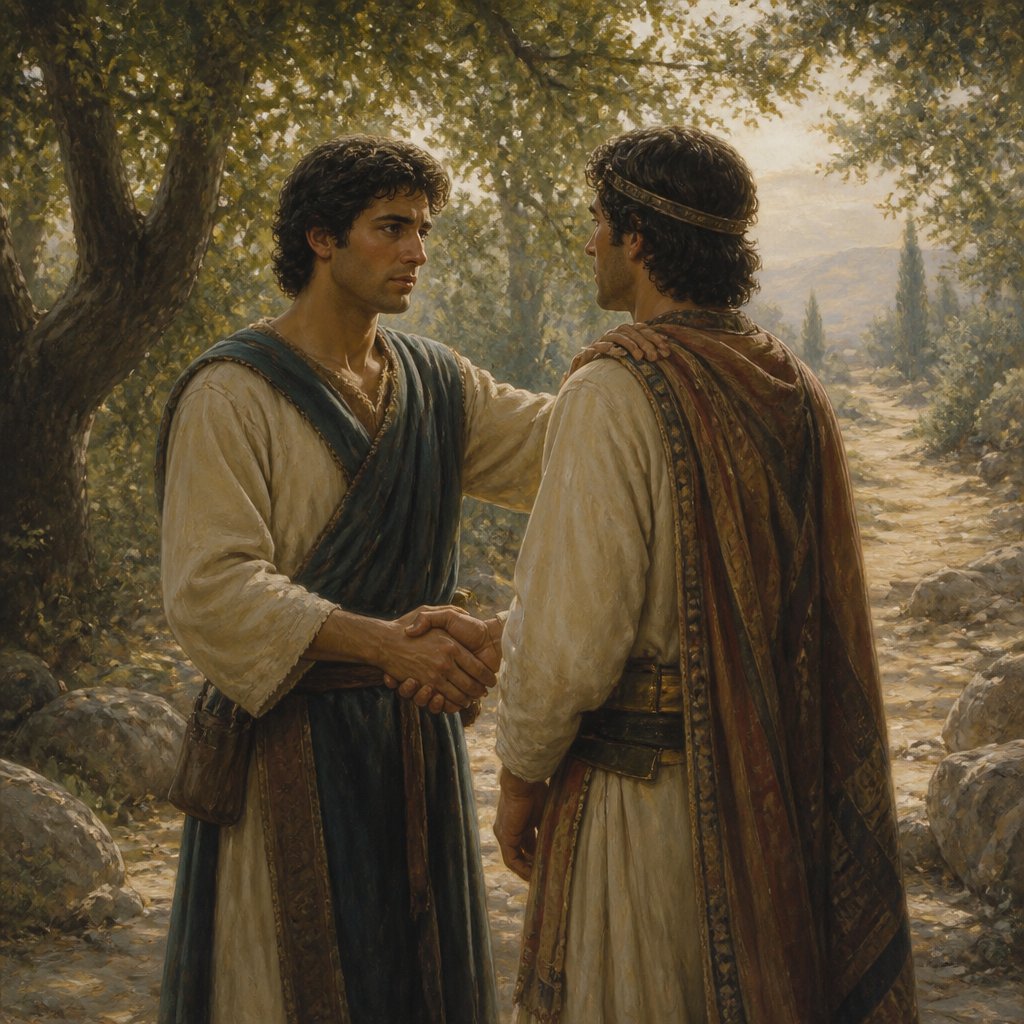
But Jonathan is committed to warning David. He loves his friend; and so, he sticks with a prearranged signal. He will risk everything. David must be warned. 

1 Samuel 20:36-38, ESV 

Those arrows were genius—a plan that was wonderful and kept Jonathan safe. And David would now know his next step. I must admit I see no reference to prayer or seeking God, that troubles me. (But I must assume the singer of Psalm 23 understood God’s protection and care.) 

1 Samuel 20:41-42 

David saw the arrows and heard Jonathan speak. I suspect his heart sank. He wanted reconciliation and he didn’t want to leave in this way. And he didn’t want to go out in the wilderness. He was now a fugitive on the run. 

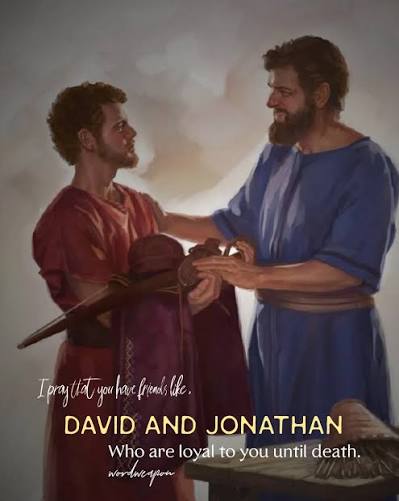
David loved Jonathan and it showed it. There was nothing cold or professional. He expressed a love that went beyond “bad news.” It wasn’t contingent on terrible news, for it was real, authentic. He had made a covenant. 

David will now spend the next 10-15 years on the run from Saul. 

He will try to live in the wilderness. But David would be protected by the Lord, and although he didn’t realize it, he was on a timetable set by God Himself. The clock was running but David was learning many things about being a king. His education would be long and hard. 

“Experience: that most brutal of teachers. But you learn, my God, do you learn.” 

 C.S. Lewis 

I believe David still had his harp, and I believe he would still worship the Lord God. He would compose even more psalms. And much of the wilderness would be woven into what he would sing. Worship was at his very core. 

And worship is why we exist.

The Bow and the Arrows

I will shoot three arrows.” So much depends on these three, will David be restored to the court of king Saul, or will he need to flee into the wilderness?  

Then Jonathan said to David, “Tomorrow is the New Moon; and you will be missed, because your seat will be empty. And when you have stayed three days, go down quickly and come to the place where you hid on the day of the deed; and remain by the stone Ezel. Then I will shoot three arrows to the side, as though I shot at a target; and there I will send a lad, saying, ‘Go, find the arrows.’ If I expressly say to the lad, ‘Look, the arrows are on this side of you; get them and come’—then, as the LORD lives, there is safety for you and no harm. But if I say thus to the young man, ‘Look, the arrows are beyond you’—go your way, for the LORD has sent you away. And as for the matter which you and I have spoken of, indeed the LORD be between you and me forever.”  

1 Samuel 20:18-24 

Jonathan’s plan is simple. It’s a setup after observing the response of Saul to David’s absence at a feast. He is being secretive, his father’s spies are everywhere, but his heart and covenant with David compel him. 

It was the second day, and David’s chair was still empty. Saul noticed this and became furious. It’s this furious anger that betrays him.  

“Then Saul became angry with Jonathan and shouted, “You son of a perverse and rebellious woman! Don’t I know that you are siding with Jesse’s son to your own shame and to the disgrace of your mother? 31 Every day Jesse’s son lives on earth you and your kingship are not secure. Now send for him and bring him to me—he must die!” 

It’s here we see Saul broadcasts his hatred toward David. It exposes everything and now Jonathan knows what is in his father’s heart. It’s a rage that bubbles up for all to see; it is uncontrollable and obvious. David “must die.” 

Pay attention now. Saul attacks Jonathan’s mother in verse 30. We don’t know the details, but it seems that in his anger he disparages the character of Jonathan’s mother. Anger has the tendency to completely twist and distort one’s perception of reality. It’s like a wildfire that can’t be controlled. 

“An angry person stirs up conflict, and a hot-tempered person commits many sins.” 

Proverbs 29:22 

Jonathan’s plan has now become active. He now knows what he must do. He picks up his bow and gets his arrows. He must communicate with David about what he knows. His covenant with David supersedes everything, even the chance to rule as the next king of Israel. 

The wilderness in desperate hiding is the last place David wants to be. As I read the life of David, I see that he doesn’t want this—he has done everything possible to avoid it. This isn’t a choice he makes, rather it’s been thrust on him by God himself. And who can walk with God without doing His will?  

Jonathan shoots his arrows in the field, but wide of the mark. This is David’s cue that he must run; Saul intends to murder him. He dares not remain under Saul as his king. He must escape into the desert. 

Jonathan Has a Plan

Jonathan’s commitment to David is being tested, and yet his covenant to David is rock solid. With this quite sure he advances a plan. It will reveal Saul’s thinking. The plan is simple, but effective. Everything hinges on king Saul’s attitude and approach concerning David.  

1 Samuel 20:12-13

The foundation of this is that of covenant. Jonathan is “locked” into providing David’s next step—will it be restoration, or will it turn him into a fugitive? It amazes me that David is still holding on to hope. But remember that Saul’s hostility had already turned into attempted murder Twice he tried to kill David by throwing spears at David. 

Saul had even ordered his men to snuff out David. (1 Sam. 19:1-2.) 

“Saul now urged his servants and his son Jonathan to assassinate David. But Jonathan, because of his strong affection for David, told him what his father was planning.” 

Perhaps this was a temporary phase, and just maybe it was just a short-term moment of passion. Despite Saul’s past anger, David remained loyal and true to his king. If it were me, I would have already left. I’m struck by David’s heart. And perhaps he’s aware of the challenges of the wilderness. 

Jonathan’s plan is perfect, though. 

It’s up to him to discern his father’s heart. Jonathan will “drop” David’s name, and watch Saul’s reaction. If it’s positive, David will stay. If it’s anger, then David will flee. Here, in this passage we see that all is contingent on this. It is quite simple actually. 

It’s also a concern of David that Jonathan returns quickly. David needs to know this promptly. Minutes matter, and he knows it’s a matter of time before he’s discovered by Saul’s men.  

“There are “friends” who destroy each other, but a real friend sticks closer than a brother.” 

Proverbs 18:24 

God has knitted these two together, and a covenant was made. That makes all the difference. Having this is a rarity; we seldom experience this today. That is a shame. How different our lives would be if such covenants could be made. A lot of pain might be elevated. 

Jonathan understands that the Lord is no longer a real part of Saul’s life. A shift has been made. Jonathan acknowledges this and understands enough to speak it to David. I think that this would be difficult to put into words, but it is real and David now carries God’s presence and anointing.  

Jonathan accepts this and understands. 

Jonathan’s actions showed his commitment to David, even when it meant putting David’s needs before his own family’s interests.

A Plan to Understand Saul

This entire scene is a bit strange. David and Jonathan meet; they are careful as they should be. David is hiding and I strongly suspect that David is discouraged. He has done nothing wrong—quite the opposite. David suspects that king Saul’s bitterness and jealousy, and bitterness are out of control. Saul intends to murder David. The entire story is found in 1 Samuel 20:5-23.  

“Tomorrow, we celebrate the new moon festival. I’ve always eaten with the king on this occasion, but tomorrow I’ll hide in the field and stay there until the evening of the third day. If your father asks where I am, tell him I asked permission to go home to Bethlehem for an annual family sacrifice. If he says, ‘Fine!’ you will know all is well. But if he is angry and loses his temper, you will know he is determined to kill me.” 

1 Samuel 20:5-7 

These verses reveal David’s plan. They describe a maneuver that will reveal Saul’s heart toward David: will it be reinstatement or will it be murder? Obviously, David must find out. Will he continue to run and evade death or will he be restored? He obviously must know. 

David has no idea, but he has a plan to find out for sure. 

But let’s switch to Jonathan as he will be David’s eyes and ears into the banquet room. David will rely on the report of Jonathan, one way or the other. The plan is carefully made, and it seems like a wise one. Obviously, it involves Jonathan’s participation.   

“Jonathan’s response to David’s discouragement wasn’t theological rebuke but practical help; he offered concrete assistance to a friend walking through despair, modeling genuine support.” -David Guzik 

Jonathan only asks for a promise from David. (Which David fulfills later to Mephibosheth in 2 Samuel 9). He asks that, “If I am still alive, show me the steadfast love of the Lord, that I may not die; 15 and do not cut off your steadfast love from my house forever, when the Lord cuts off every one of the enemies of David from the face of the earth.” 

Jonathan reminds David of their covenant together after the slaying of Goliath. There’s now a political element added: David will need to protect the house of Jonathan, his heirs.  

It is Jonathan and not Saul who understands God’s heart. 

It is Jonathan’s humility that makes the whole plan work. There seems to be no guile here; he understands what the Lord wants to do. Many believers want to be a “David,” but it is Jonathan that seems to show more integrity, decency and honor. 

Jonathan proves that he is a man of integrity, and he asks that David be one also. It’s Jonathan that models that deep decency to the heart of David. 

This plan will reveal Saul’s motives; it’s designed to uncover his heart. That’s what the Holy Spirit does. David must know; his life depends on it. Jonathan is key to David’s survival and he must trust him. He depends on him to “pull off” this off. This strategy will determine David’s next step. 

I believe David still praises God.

I believe David still writes and sings. Worship is in his blood, and even if he sits on a knife’s edge, David praises Jehovah even if it seems illogical. 

God has anointed Davd and nothing has changed; when Samuel poured oil on his head it became the evidence of the Lord’s choice, blessing and approval. David’s calling was a done deal. David worships. 

    Rick Warren

The Encourager

1 Samuel 20:1-4, ESV 

David leaves Naioth behind, as he realizes that Saul (and his soldiers) had been temporarily “disabled.” He knew that the threat to assassinate him had for the time being had been stalled, and yet David didn’t stay for the theatrics. He simply knew it was time for an escape. 

And yet David seems mystified, and he reaches out to Jonathan with 3 questions that trouble him. It seems David is loyal, but he simply doesn’t understand the intensions of Saul. In all three questions David asks “what.” He is mystified. 

It takes the humility of Jonathan to attempt to ease David’s fear. 

Jonathan answers in an oblique way. He assures David that he can protect him with what he knows. Jonathan is aware of Saul’s treacherous plans and assures David of the strategies and plans that the enemy is concocting. He will do all that he can. 

It is here that we begin to understand that Saul is drawing near, and that David realizes that certain death has gotten very close. David understands how close he has come to being killed at the hand of Saul. “A step between me and death” is how David sees the plots of Saul. 

Again, Jonathan assures David of his commitment. Although he does not debate the claims of David, he simply assures him of his covenantal dedication. Jonathan encourages a discouraged man, and he speaks hope to the struggling David. 

This is what an encourager does. They bring comfort to the frustrated and weary. They stand in a remarkable place, and although they won’t deny the facts, they give strength to the weary. They declare all that God is to those who are overwhelmed and fearful. 

“He gives power to the weak and strength to the powerless.”  

Isa. 40:29, NLT 

This comfort usually comes through people—servants of God who do not debate but encourage. They have renounced their own agenda and now live for others. They embolden, spurring others to be faithful to their calling. 

Charles Spurgeon 

Jonathan Understands

“And Saul spoke to Jonathan his son and to all his servants, that they should kill David. But Jonathan, Saul’s son, delighted much in David. And Jonathan told David, “Saul my father seeks to kill you. Therefore be on your guard in the morning. Stay in a secret place and hide yourself. And I will go out and stand beside my father in the field where you are, and I will speak to my father about you. And if I learn anything I will tell you.”  

4 “And Jonathan spoke well of David to Saul his father and said to him, “Let not the king sin against his servant David, because he has not sinned against you, and because his deeds have brought good to you. For he took his life in his hand and he struck down the Philistine, and the Lord worked a great salvation for all Israel. You saw it, and rejoiced. Why then will you sin against innocent blood by killing David without cause?” And Saul listened to the voice of Jonathan. Saul swore, “As the Lord lives, he shall not be put to death.”  

7 “And Jonathan called David, and Jonathan reported to him all these things. And Jonathan brought David to Saul, and he was in his presence as before.” 

1 Samuel 19:1-7 

What a strange sequence of events, but stranger things have happened and will happen to David (the future king of Israel). 

Saul finally takes his rage out into the open. He wants David to be executed, but he never offers any justification for his anger or decision. All he wants is David’s head. No explanation is given. David is regarded as a traitor, but to whom? 

Saul requires his court to take action. The king wants David dead. This proclamation has never happened before—the king of Israel demanding the death of another Israelite. This is the deep power of wickedness coming from a twisted heart. This can only come from something quite satanic. 

Jonathan, at this critical point, understands the strong power of covenant. He has vowed to defend David, no matter what the cost is. He will be true forever. So Jonathan determines to defend his “brother.” 

Jonathan has now become a spy. He listens closely and then passes to David about what has heard. He will defend him no matter the cost. Jonathan understands that the very life of David is in his hands. 

Jonathan reminds king Saul of the heroics of David on behalf of the nation of Israel. He speaks truth into untruth. Saul listens and is persuaded that his decrees are wrong. He backs off and vows to treat David favorably. 

Saul swears that David should not be touched (executed). That will be temporary as we can see. It seems that Saul’s wrath is simmering below the surface. His repentance is only for show, at least for this moment. Oh, the depth of an angry unforgiveness. 

Because of Jonathan’s intercession, David is forgiven temporarily, and he is restored to his place in court. Perhaps David’s past triumphs are the key to his present survival, at least for the moment.