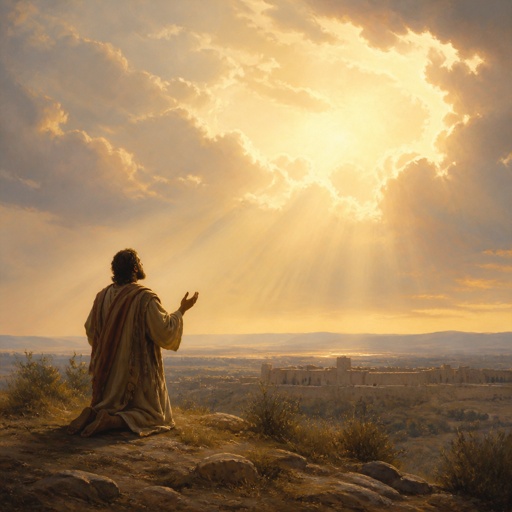
Bread From the Table

1 Samuel 21:4-6, ESV 

From reading this passage, we see that David wants to stay one step ahead of Saul. He pretends he’s leading a group of men. This is not true. The reality is that he’s on the run trying to evade the king, and the soldiers. Arriving at the priestly city of Nob he is very hungry. David needs food to continue on. 

For some reason David flees to Nob, a town that has been given to the priests. It also is where the tabernacle was kept during the reign of Saul. That tabernacle was the precursor to the temple. 

I believe that David was drawn to this place because of that. It was a sanctuary. 

I also believe that Ahimelech knew nothing of the conflict between David and Saul. Not that it would change anything, but still David concocted a lie that he was under orders from Saul (v. 3). 

The high priest knew that David had been anointed by the prophet Samuel to be the future king. Perhaps that is why Ahimelech trembled when he first met David (v. 1). “Why has he come here?” 

David was tired, frightened, and hungry. He had made no provision for food, which explains the rapidity of his flight from Saul. David had left as fast as he could. David also knew that the tabernacle at least had bread.

There were 12 loaves (representing the 12 tribes and God’s special covenant with them) of consecrated bread. These loaves were replaced daily. In Leviticus it made it clear that only the priests and their families could eat them.

Each morning, fresh hot bread would be set in the Lord’s presence. Perhaps this signifies God wants fresh fellowship from us every day. Believers will hunger for Him; He will give us “our daily bread.” What He offers us is always fresh, and Jesus knows exactly what we need.

“So the priest gave him holy bread; for there was no bread there but the showbread: In giving David the bread, Ahimelech broke with priestly custom but not with God’s word. He rightly understood that human need was more important than Levitical observance.” 

David Guzik 

But David’s presence would create awful consequences for the priests living in Nob. Terrible things will happen very shortly. 

We will see this in a future post. 

David at Nob

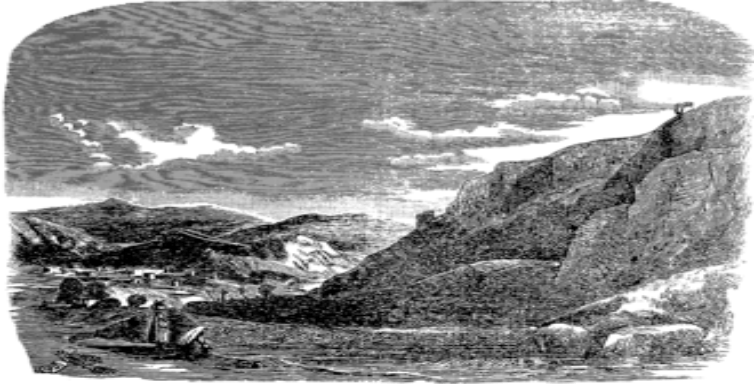
Biblical village of Nob

David was afraid and anxious; he really doesn’t seem to have a plan. So where did he go? He went straight to Nob, the city of priests overseen by Ahimelech the High Priest of Israel. David did right; when you’re confused go to God. 

The Ark of the Covenant was still in Nob. 

We have a fleshly tendency to lean on our understanding. We think we know what is right as we calculate our best move. However, when we lean on our own understanding bad things are apt to happen. Proverbs 3:5-6 fits well here: 

Ahimelech was on edge by David’s arrival. He saw something in David, but he wasn’t exactly sure what it was. I think he also was nervous. The passage points that he “trembled” when he saw David. Why, I’m not sure. 

The word “trembled” has an interesting meaning. Literally it means “terror,” or even an earthquake. Ahimelech was disturbed by David’s arrival, and it seems that he didn’t understand what was happening politically. David had fallen out of favor for some time now. 

David lied to Ahimelech, claiming he was on a secret mission for the king. 

David’s world was complicated; he could trust no one, not even the high priest. These verses advance the idea of paranoia and fear affecting everyone. Ahimelech asked two questions. I believe that he couldn’t really discern David’s reasons for coming to Nob.

It was a bald-faced lie.

David demanded bread. He was hungry and no provision was made before his escape. It would be nice if they had planned better—a secret cache of food and weapons would have been incredibly helpful. 

We will pick this story up in the next post

Jonathan’s Secret Message

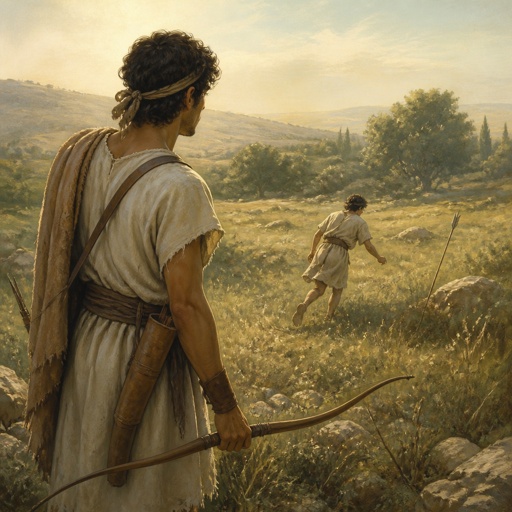
In verses 36-39 a young boy was chasing down arrows. The plan was one both David and Jonathan understood. If the arrows fell short, it meant David could return safely and securely to the court of Saul. But if the arrows went long, David had better run. 

1 Samuel 20:39-42, ESV

As I read these last few chapters, I’m amazed by David’s desire for reconciliation with the king. He desperately wants peace; David wants restoration, but the “ball” is in Saul’s court now. Now, I guess that I wouldn’t be as patient as David. But that only emphasizes the wonderful character of David. 

I also sense that David wanted to avoid the wilderness. He never wanted to go there, maybe the wilderness was a place of “death.” Maybe not a physical one, but a death to everything David knew. It would be a hard place: thirsting, scavenging, and hiding. A difficult place to survive. 

There is one last time that David and Jonathan will meet. I think it was something bittersweet, and each reassured their covenant to each other. There must’ve been much pain. Neither wanted this, of all things to happen. Sometimes we’ll be put in a similar situation. It’s always difficult. 

Jonathan, knowing that David has been anointed the next king of Israel, submits his heart to what the Lord God has decided though the prophet Samuel. He accepts this and refuses to take the route of Saul, rather Jonathan appeals to David as the future king. 

The request is a bit bold maybe, but Jonathan asks that David would honor this, “between my offspring and your offspring, forever.’” Jonathan is asking David to refuse revenge and not try to get even with the house of Saul. Now David could have made an end to Saul’s progeny; that could mean stability for him, and for Israel. 

It’s then that must say goodbye, each goes on their very separate paths. This is the very last time they were together, but I doubt they would never forget their covenant. 

True Colors

Saul wants to kill David

Jonathan now knows; his father’s true colors were now obvious, which almost always happens over time. Saul hates David and now begins an even more effort to murder him. His hatred now consumes him. The king is no longer rational. He wants to kill him. 

But Jonathan is committed to warning David. He loves his friend; and so, he sticks with a prearranged signal. He will risk everything. David must be warned. 

1 Samuel 20:36-38, ESV 

Those arrows were genius—a plan that was wonderful and kept Jonathan safe. And David would now know his next step. I must admit I see no reference to prayer or seeking God, that troubles me. (But I must assume the singer of Psalm 23 understood God’s protection and care.) 

1 Samuel 20:41-42 

David saw the arrows and heard Jonathan speak. I suspect his heart sank. He wanted reconciliation and he didn’t want to leave in this way. And he didn’t want to go out in the wilderness. He was now a fugitive on the run. 

David loved Jonathan and it showed it. There was nothing cold or professional. He expressed a love that went beyond “bad news.” It wasn’t contingent on terrible news, for it was real, authentic. He had made a covenant. 

David will now spend the next 10-15 years on the run from Saul. 

He will try to live in the wilderness. But David would be protected by the Lord, and although he didn’t realize it, he was on a timetable set by God Himself. The clock was running but David was learning many things about being a king. His education would be long and hard. 

“Experience: that most brutal of teachers. But you learn, my God, do you learn.” 

 C.S. Lewis 

I believe David still had his harp, and I believe he would still worship the Lord God. He would compose even more psalms. And much of the wilderness would be woven into what he would sing. Worship was at his very core. 

And worship is why we exist.