David Deceives the High Priest

1 Samuel 21:7-9, ESV 

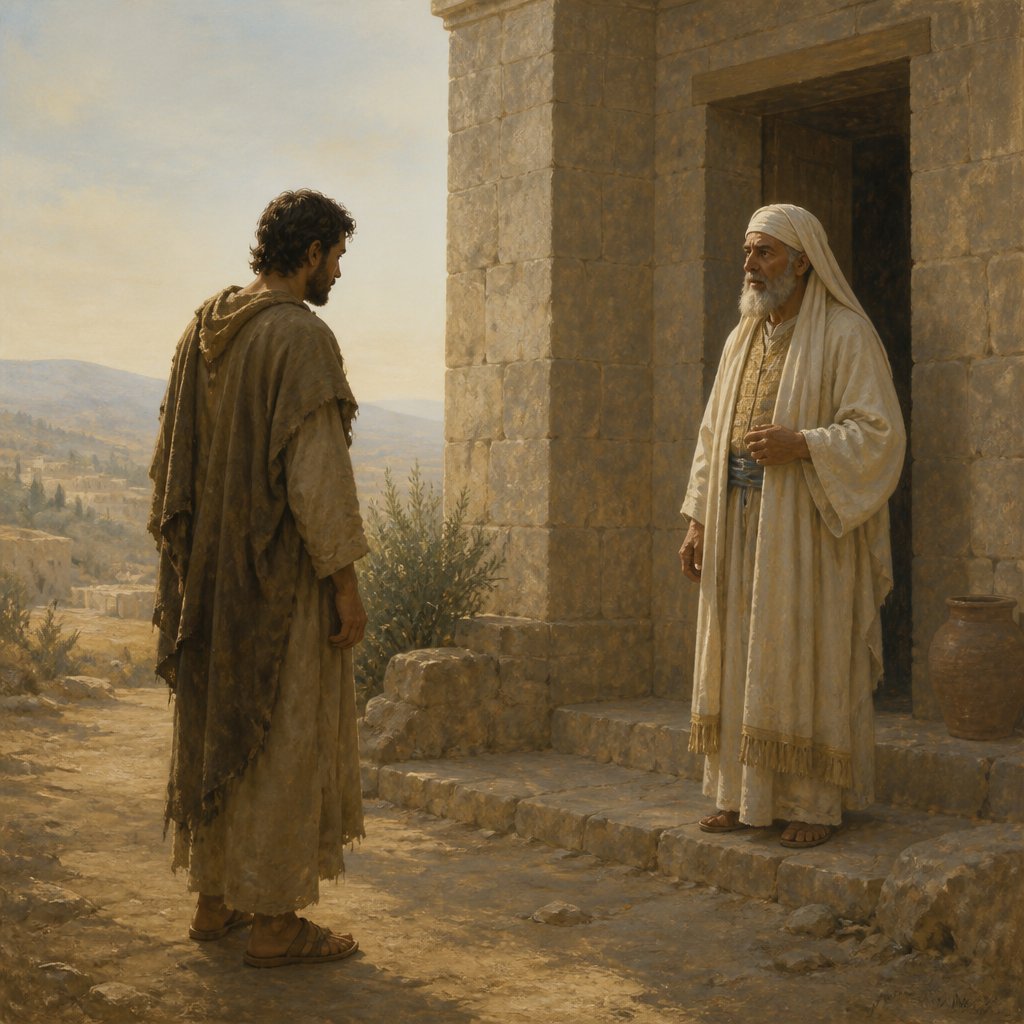
Mark my words; Doeg the Edomite was an evil man. Evil men do very evil things. He is immortalized forever in the pages of 1 Samuel as terribly wicked. Doeg is not a Hebrew, and he is called a chief shepherd overseeing other shepherds, and he was in the service of King Saul. 

Was he a captive? Was he a traitor? And what about this phrase, “detained before the Lord?” I got curious so I looked up the word, “detained.” The Hebrew word is pretty broad and I didn’t get any real insight. It’s used 46x and has several meanings, but the general sense is “restrained, halted, or stopped.” Why? 

(If you want, you can jump ahead to 1 Sam. 22:19 to understand Doeg’s heart.) 

In vv. 7-8 the spotlight is turned back on David and Ahimelech. David continues the charade. His deception lies continue as he presses his need to the high priest of Israel. David takes the holy loaves of bread, but he wants more. He really needs a sword. 

Apparently, the sword that Goliath carried had been kept in Nob in safe keeping. For the priests it was special, maybe even holy. No matter, it was a memento of a glorious victory, but everything is different now. 

“It is painful to the last degree to see one whose faith towered to such a lofty height in the encounter with Goliath, coming down from that noble elevation, to find him resorting for self-protection to the lies and artifices of an impostor.” William Blaikie 

Did you catch that? An imposter. David had become a deceiver, a liar. What do we do with that ugly indictment? I guess I have more questions than answers. Just maybe, in the heat of the moment lying became permissible. 

In Psalm 34 David wrote, Does anyone want to live a life that is long and prosperous?  Then keep your tongue from speaking evil and your lips from telling lies!” 

Wow, David. Are you sure about that? To be honest, I don’t want to malign with David. After all he was fleeing for his very life. Undoubtably there was a price on his head, and the bounty hunters would be out in force. David was scared out of his wits. 

You might say he was just being resourceful, and he didn’t want to implicate anyone else in his escape. Saul and his army were hunting him, and maybe David thought that the priests would be beyond Saul’s reach. Maybe they would have. 

Except for Doeg, the Edomite. 

Bread From the Table

1 Samuel 21:4-6, ESV 

From reading this passage, we see that David wants to stay one step ahead of Saul. He pretends he’s leading a group of men. This is not true. The reality is that he’s on the run trying to evade the king, and the soldiers. Arriving at the priestly city of Nob he is very hungry. David needs food to continue on. 

For some reason David flees to Nob, a town that has been given to the priests. It also is where the tabernacle was kept during the reign of Saul. That tabernacle was the precursor to the temple. 

I believe that David was drawn to this place because of that. It was a sanctuary. 

I also believe that Ahimelech knew nothing of the conflict between David and Saul. Not that it would change anything, but still David concocted a lie that he was under orders from Saul (v. 3). 

The high priest knew that David had been anointed by the prophet Samuel to be the future king. Perhaps that is why Ahimelech trembled when he first met David (v. 1). “Why has he come here?” 

David was tired, frightened, and hungry. He had made no provision for food, which explains the rapidity of his flight from Saul. David had left as fast as he could. David also knew that the tabernacle at least had bread.

There were 12 loaves (representing the 12 tribes and God’s special covenant with them) of consecrated bread. These loaves were replaced daily. In Leviticus it made it clear that only the priests and their families could eat them.

Each morning, fresh hot bread would be set in the Lord’s presence. Perhaps this signifies God wants fresh fellowship from us every day. Believers will hunger for Him; He will give us “our daily bread.” What He offers us is always fresh, and Jesus knows exactly what we need.

“So the priest gave him holy bread; for there was no bread there but the showbread: In giving David the bread, Ahimelech broke with priestly custom but not with God’s word. He rightly understood that human need was more important than Levitical observance.” 

David Guzik 

But David’s presence would create awful consequences for the priests living in Nob. Terrible things will happen very shortly. 

We will see this in a future post. 

David at Nob

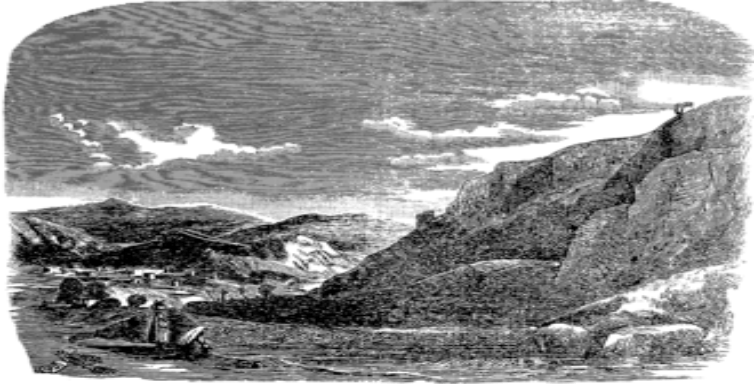
Biblical village of Nob

David was afraid and anxious; he really doesn’t seem to have a plan. So where did he go? He went straight to Nob, the city of priests overseen by Ahimelech the High Priest of Israel. David did right; when you’re confused go to God. 

The Ark of the Covenant was still in Nob. 

We have a fleshly tendency to lean on our understanding. We think we know what is right as we calculate our best move. However, when we lean on our own understanding bad things are apt to happen. Proverbs 3:5-6 fits well here: 

Ahimelech was on edge by David’s arrival. He saw something in David, but he wasn’t exactly sure what it was. I think he also was nervous. The passage points that he “trembled” when he saw David. Why, I’m not sure. 

The word “trembled” has an interesting meaning. Literally it means “terror,” or even an earthquake. Ahimelech was disturbed by David’s arrival, and it seems that he didn’t understand what was happening politically. David had fallen out of favor for some time now. 

David lied to Ahimelech, claiming he was on a secret mission for the king. 

David’s world was complicated; he could trust no one, not even the high priest. These verses advance the idea of paranoia and fear affecting everyone. Ahimelech asked two questions. I believe that he couldn’t really discern David’s reasons for coming to Nob.

It was a bald-faced lie.

David demanded bread. He was hungry and no provision was made before his escape. It would be nice if they had planned better—a secret cache of food and weapons would have been incredibly helpful. 

We will pick this story up in the next post

Writing Down The Early Psalms

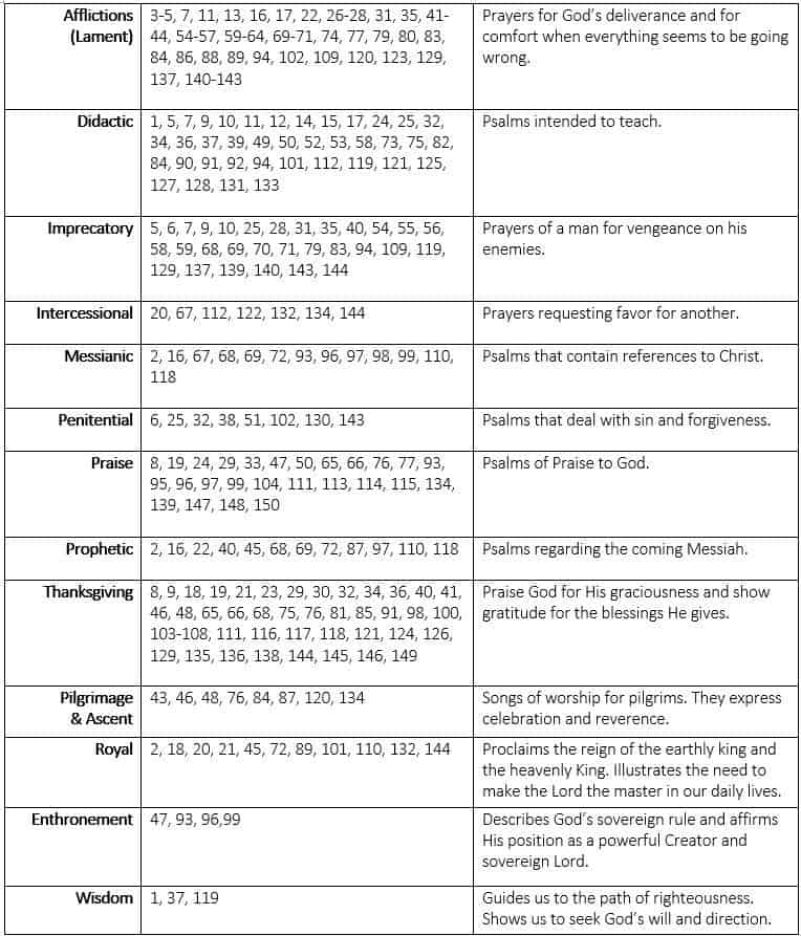
As I dug around, I found this: it’s the order of the early Psalms. Basically, a chronological way of seeing when, and why he wrote a “song.” I found it quite interesting to see the backdrop or setting of each one. 

Please remember two words when you read the Psalms: 

  • Authentic observations 
  • Profound theology 

It’s a collection of songs, not in any real order. Interestingly David only wrote about ½ of them. Also, they are lyrics, we don’t have notes or melodies. Which is somewhat sad. I guess we’ll hear them when we go to heaven. 

The psalms cover over the span of 1000 years. Psalm 90 was written as the earliest; Moses was the author in 1407 BC. The latest was written anonymously in the mid-400s BC. Thus, the book of Psalms was written over the span of about 1,000 years. 

New Testament leaders, including Jesus quotes the Psalms frequently. Some of these were directly connected. For example, the work of Jesus is directly revealed in Psalm 22. Many others are linked to specific verses. It’s all is pretty fascinating. 

Here’s some interesting trivia: 

  1. Psalm 119 is the longest chapter in the Bible, containing 176 verses. 
  1. Psalm 117 is the shortest chapter, containing only two verses. So, the Psalms contain both the longest and shortest chapters in the Bible. 
  1. Psalm 117 is also the middle chapter of the whole Bible out of a total of 1,189 chapters. 
  1. Psalm 118:8 is the absolute center of the Bible. It states, “It is better to trust in the LORD than to put confidence in man.” What a great verse for our day and age.1 
  1. Did you know that there are duplicate Psalms? A lot of people don’t realize that. Psalms 14 and 53 are word-for-word identical descriptions of fallen mankind. And there is a reason why those duplications are needed in each of the books one and two. They are structurally important for understanding those books. Likewise, all of Psalm 108 is included as part of Psalm 60, and all of Psalm 70 is included as part of Psalm 40. 

When and where: 

The entire list can be found at https://biblehub.com/timeline/psalms/34.htm 

Also, https://dailypax.com/p-is-for-psalms/ 

See also, https://biblicalblueprints.com/Sermons/BibleSurvey/16%20psalms 

Jonathan’s Secret Message

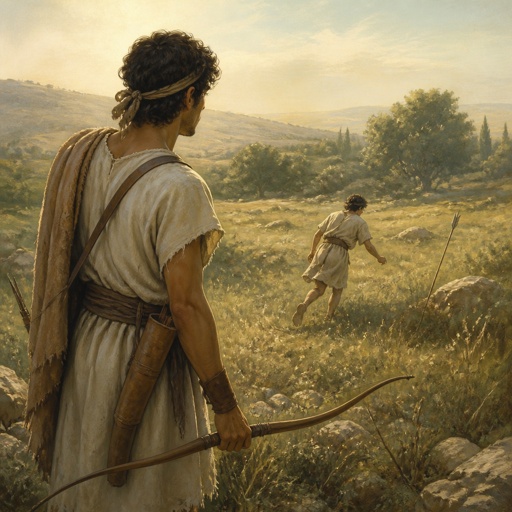
In verses 36-39 a young boy was chasing down arrows. The plan was one both David and Jonathan understood. If the arrows fell short, it meant David could return safely and securely to the court of Saul. But if the arrows went long, David had better run. 

1 Samuel 20:39-42, ESV

As I read these last few chapters, I’m amazed by David’s desire for reconciliation with the king. He desperately wants peace; David wants restoration, but the “ball” is in Saul’s court now. Now, I guess that I wouldn’t be as patient as David. But that only emphasizes the wonderful character of David. 

I also sense that David wanted to avoid the wilderness. He never wanted to go there, maybe the wilderness was a place of “death.” Maybe not a physical one, but a death to everything David knew. It would be a hard place: thirsting, scavenging, and hiding. A difficult place to survive. 

There is one last time that David and Jonathan will meet. I think it was something bittersweet, and each reassured their covenant to each other. There must’ve been much pain. Neither wanted this, of all things to happen. Sometimes we’ll be put in a similar situation. It’s always difficult. 

Jonathan, knowing that David has been anointed the next king of Israel, submits his heart to what the Lord God has decided though the prophet Samuel. He accepts this and refuses to take the route of Saul, rather Jonathan appeals to David as the future king. 

The request is a bit bold maybe, but Jonathan asks that David would honor this, “between my offspring and your offspring, forever.’” Jonathan is asking David to refuse revenge and not try to get even with the house of Saul. Now David could have made an end to Saul’s progeny; that could mean stability for him, and for Israel. 

It’s then that must say goodbye, each goes on their very separate paths. This is the very last time they were together, but I doubt they would never forget their covenant. 

True Colors

Saul wants to kill David

Jonathan now knows; his father’s true colors were now obvious, which almost always happens over time. Saul hates David and now begins an even more effort to murder him. His hatred now consumes him. The king is no longer rational. He wants to kill him. 

But Jonathan is committed to warning David. He loves his friend; and so, he sticks with a prearranged signal. He will risk everything. David must be warned. 

1 Samuel 20:36-38, ESV 

Those arrows were genius—a plan that was wonderful and kept Jonathan safe. And David would now know his next step. I must admit I see no reference to prayer or seeking God, that troubles me. (But I must assume the singer of Psalm 23 understood God’s protection and care.) 

1 Samuel 20:41-42 

David saw the arrows and heard Jonathan speak. I suspect his heart sank. He wanted reconciliation and he didn’t want to leave in this way. And he didn’t want to go out in the wilderness. He was now a fugitive on the run. 

David loved Jonathan and it showed it. There was nothing cold or professional. He expressed a love that went beyond “bad news.” It wasn’t contingent on terrible news, for it was real, authentic. He had made a covenant. 

David will now spend the next 10-15 years on the run from Saul. 

He will try to live in the wilderness. But David would be protected by the Lord, and although he didn’t realize it, he was on a timetable set by God Himself. The clock was running but David was learning many things about being a king. His education would be long and hard. 

“Experience: that most brutal of teachers. But you learn, my God, do you learn.” 

 C.S. Lewis 

I believe David still had his harp, and I believe he would still worship the Lord God. He would compose even more psalms. And much of the wilderness would be woven into what he would sing. Worship was at his very core. 

And worship is why we exist.

Climbing Out the Window

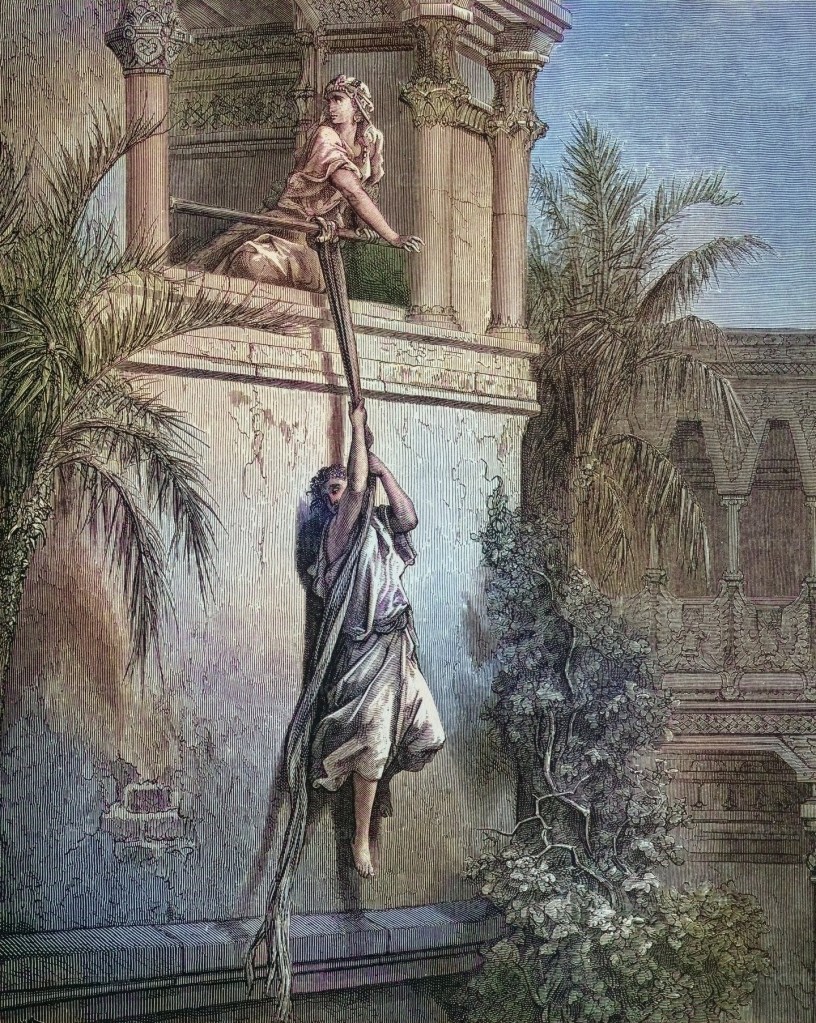
Engraving by Gustave Doré (1886)

1 Samuel 19:11-17 

Let’s consider the resourcefulness of Michal: 

Much of this passage deals with Michel, David’s first wife. She is clever, showing ingenuity in helping David escape. An explanation– When Saul realized that the Lord was with David and how much his daughter Michal loved him, 29 Saul became even more afraid of him, and he remained David’s enemy for the rest of his life. (18:28-29.) 

Her actions enabled David to escape. First, she warned him. Second, she gave him directions to leave their bed chamber. Third, put a facsimile of David in their bed to buy him more time to escape. They both knew that Saul’s troops were coming. 

Notice Saul’s distorted thinking; he considered her actions as a “betrayal.” He knew that David escaped due to her actions to gain David some time, 

Saul interrogated her himself; he strongly asserted that she helped David escape. She lied to protect herself–” “He threatened to kill me if I didn’t help him.” (v. 17.) Now this wasn’t true, but her own life was at stake. Whether or not the lie was necessary, it created enough latitude for her to escape any punishment. 

Her crafty wisdom would give David a chance to escape. 

One thing struck me reading the text. These troops were most likely man who had served under the direction of David against the Philistines. There is something false about them, a betrayal of what they knew as false orders to apprehend and to kill David. 

David would face these men again. Saul’s hatred and his attempted murder of David had just begun.